


Biochemical and pharmacological characterizations of ESI-09 based EPAC inhibitors: defining the ESI-09 "therapeutic window"
- PMID: 25791905
- PMCID: PMC4366844
- DOI: 10.1038/srep09344
Biochemical and pharmacological characterizations of ESI-09 based EPAC inhibitors: defining the ESI-09 "therapeutic window"
Abstract
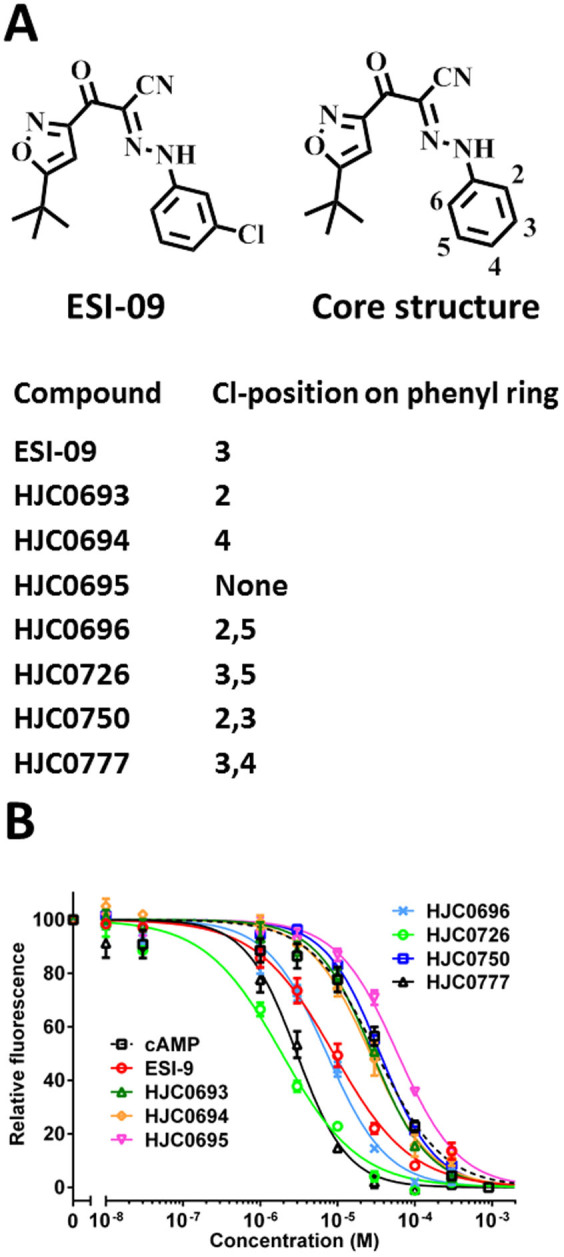
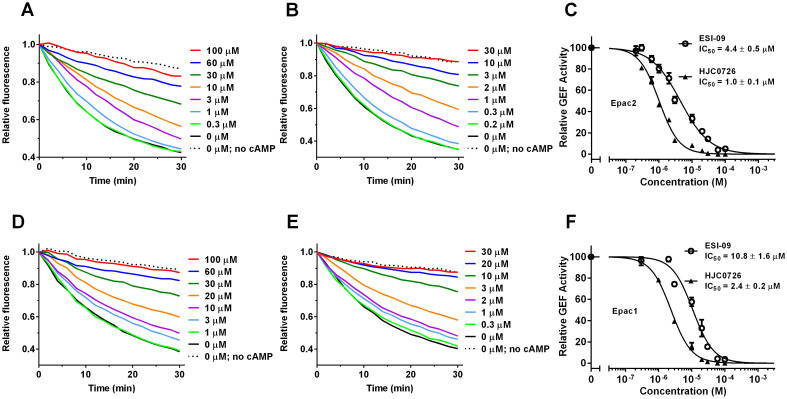
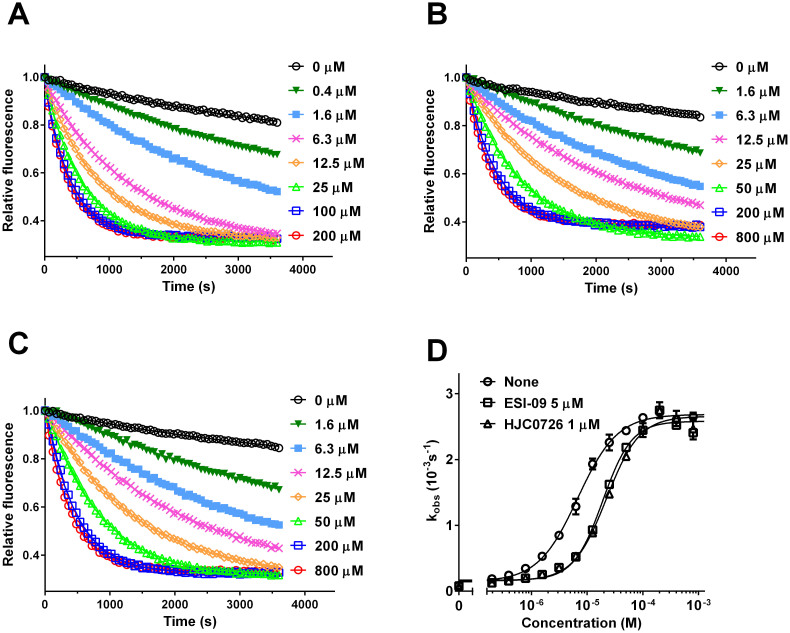
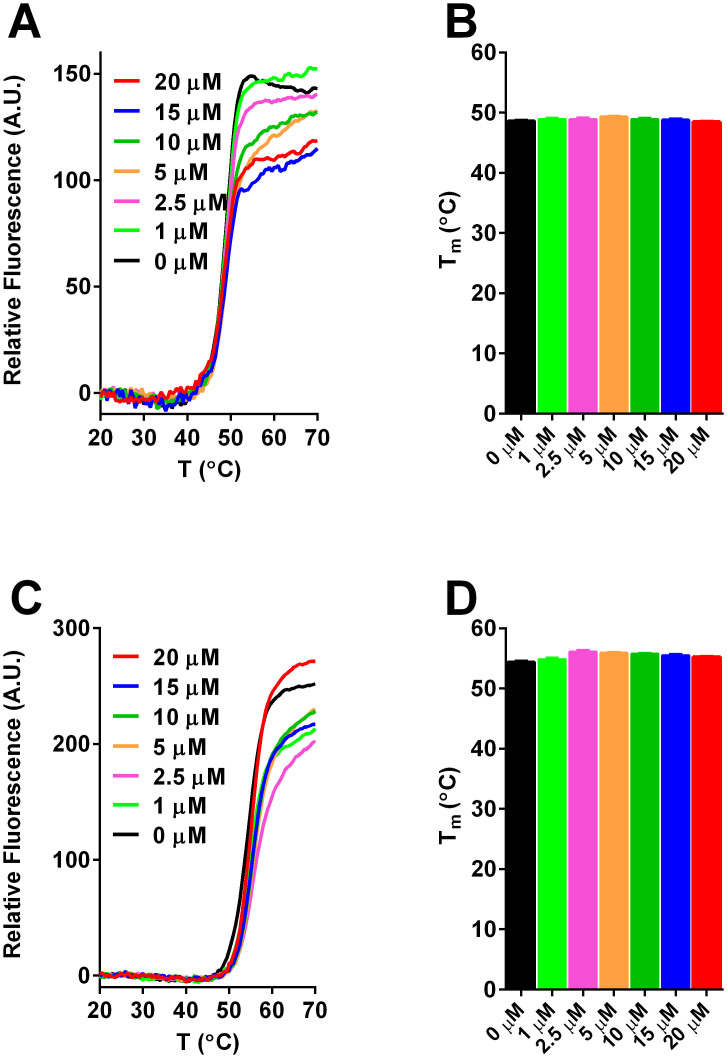
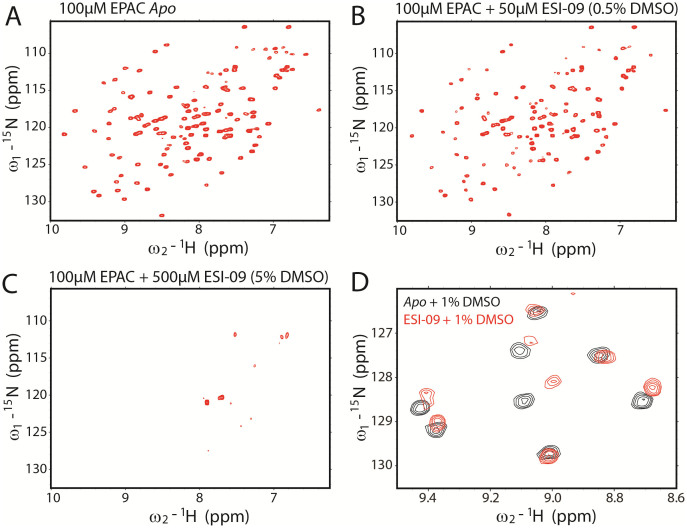
The cAMP signaling cascade is one of the most frequently targeted pathways for the development of pharmaceutics. A plethora of recent genetic and pharmacological studies suggest that exchange proteins directly activated by cAMP (EPACs) are implicated in multiple pathologies. Selective EPAC inhibitors have been recently developed. One specific inhibitor, ESI-09, has been shown to block EPAC activity and functions, as well as to recapitulate genetic phenotypes of EPAC knockout mice when applied in vivo. However, a recent study raised concern that ESI-09 might act as a non-specific protein denaturant. Herein, we present a detailed biochemical and pharmacological characterization, as well as a structure-activity relationship (SAR) analysis of ESI-09. Our studies show that ESI-09 dose-dependently inhibits activity of both EPAC1 and EPAC2 with apparent IC50 values well below the concentrations shown to induce "protein denaturation". Moreover, the ESI-09's action towards EPAC proteins is highly sensitive to minor modifications of the 3-chlorophenyl moiety. Taken together, these results demonstrate that ESI-09 indeed acts as an EPAC specific antagonist and does not significantly destabilize/denature proteins at pharmacological effective concentrations. This conclusion is further supported by NMR data showing that ESI-09 induces residue-dependent chemical shift changes at low concentrations, while preserving well dispersed peaks.
Figures
References
-
- Craven K. B. & Zagotta W. N. CNG and HCN channels: two peas, one pod. Annu Rev Physiol 68, 375–401 (2006). - PubMed
-
- de Rooij J. et al. Epac is a Rap1 guanine-nucleotide-exchange factor directly activated by cyclic AMP. Nature 396, 474–477 (1998). - PubMed
-
- Kawasaki H. et al. A family of cAMP-binding proteins that directly activate Rap1. Science 282, 2275–2279 (1998). - PubMed
Publication types
MeSH terms
Substances
Grants and funding
LinkOut - more resources
Full Text Sources
Other Literature Sources
Molecular Biology Databases
Miscellaneous
