8-Hydroxyguanine: From its discovery in 1983 to the present status
- PMID: 25792776
- PMCID: PMC4323045
- DOI: 10.2183/pjab.82.127
8-Hydroxyguanine: From its discovery in 1983 to the present status
Abstract
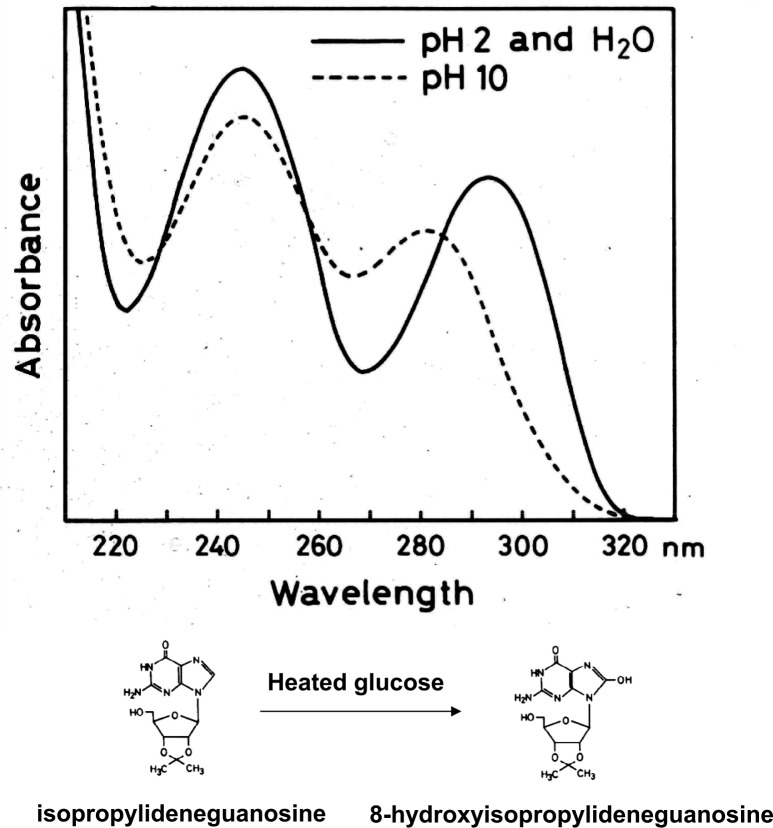
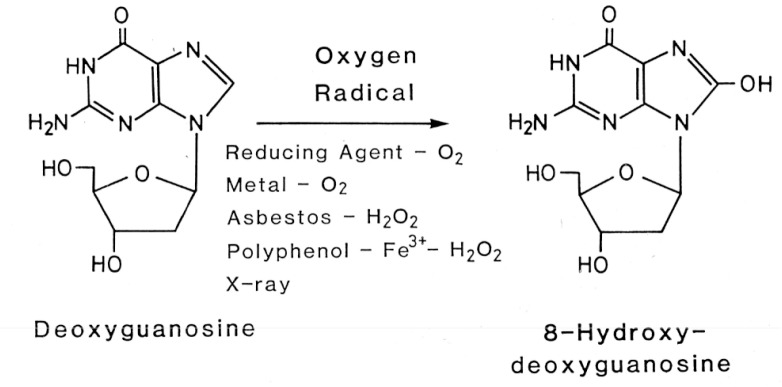
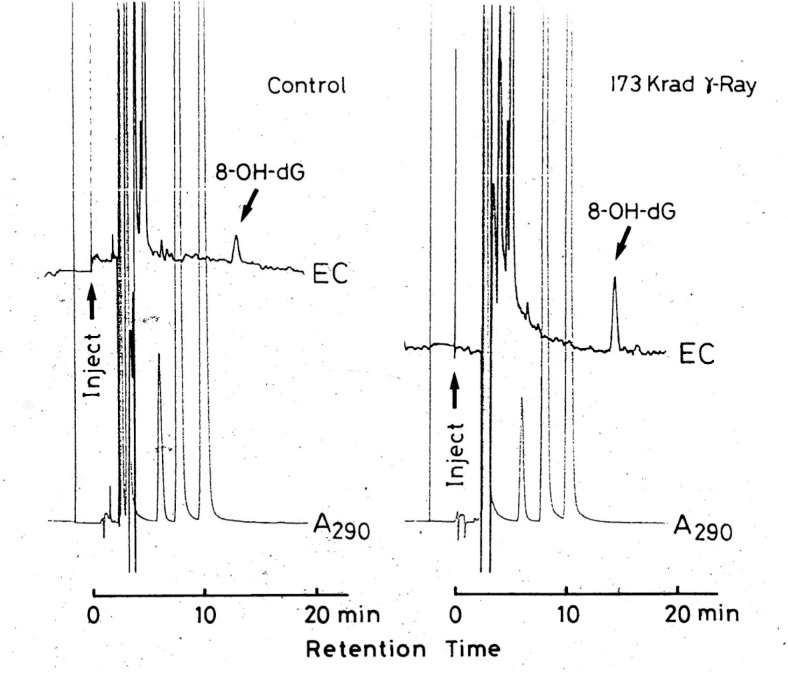
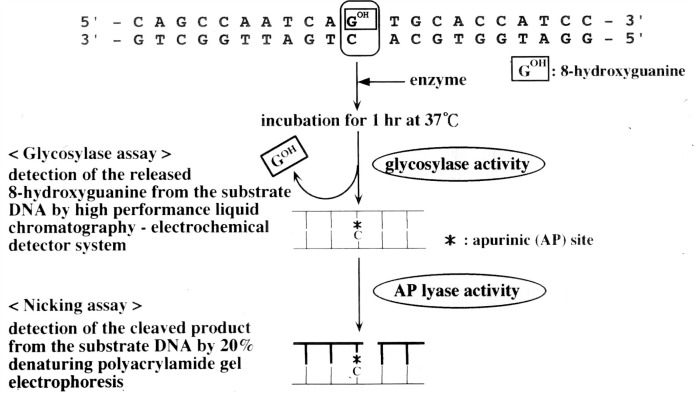
8-Hydroxyguanine (8-OH-G) was discovered in 1983 in our laboratory at the National Cancer Center Research Institute, Tokyo. Since it could be formed in DNA not only in vitro but also in vivo by oxygen radical forming agents, we immediately hypothesized the importance of this discovery in connection with its biological consequence. Further intensive efforts by us from 1983 to 1990 confirmed that 8-OH-G is a highly significant oxidated DNA lesion involved in mutation and/or carcinogenesis in mammals, including humans. With the subsequent entry of many investigators to this research field the number of publications on 8-OH-G increased exponentially, reaching more than several thousands by the end of 2005. In this article, a summary is given of the important works carried out in the early days, and further notable contributions by many investigators are reviewed, focusing on 8-OH-G in the mammalian system. A special emphasis is given to research on knockout mice that are deficient in genes involved in the repair systems of the 8-OH-G lesion. Lastly, our own recent work is summarized involving a one-year carcinogenesis study of Ogg1 (the gene for 8-OH-G specific glycosylase/AP lyase) knockout mice that have been exposed to oxidative stress.
Keywords: 8-Hydroxyguanine; DNA repair; Mut M; mutagenesis, carcinogenesis; oxygen radical.
Figures
References
-
- Sugimura, T. (2004) Establishment of the concept that cancer is a disease of DNA: Serendipitous discoveries in my research career concerning the science of carcinogenesis. Selected Topics in the History of Biochemistry: Personal Recollections VIII. In Comprehensive Biochemistry, Vol 43 (eds. by Semenza G., and Turner A. J.). Elsevier B. V., pp. 355–392.
-
- Sugimura, T. (1997) Overview of carcinogenic heterocyclic amines. Mutation Res. 376, 211–219. - PubMed
-
- Kasai, H., Yamaizumi, Z., Wakabayashi, K., Nagao, M., Sugimura, T., Yokoyama, S., Miyazawa, T., Springan, N. E., Weisburger, J. H., and Nishimura, S. (1980) Potent novel mutagens produced by broiling fish under normal conditions. Proc. Jpn. Acad., Ser. B 56, 278–283.
-
- Kasai, H., Yamaizumi, Z., Wakabayashi, K., Nagao, M., Sugimura, T., Yokoyama, S., Miyazawa, T., and Nishimura, S. (1980) Structure and chemical synthesis of Me-IQ, a potent mutagen isolated from broiled fish. Chem. Lett., 1931–1934.
Publication types
LinkOut - more resources
Full Text Sources
Research Materials