


Trends in socioeconomic inequalities in HIV prevalence among young people in seven countries in eastern and southern Africa
- PMID: 25793608
- PMCID: PMC4368573
- DOI: 10.1371/journal.pone.0121775
Trends in socioeconomic inequalities in HIV prevalence among young people in seven countries in eastern and southern Africa
Abstract
Background: In Eastern and Southern Africa, HIV prevalence was highest among higher socioeconomic groups during the 1990s. It has been suggested that this is changing, with HIV prevalence falling among higher-educated groups while stable among lower-educated groups. A multi-country analysis has not been undertaken.
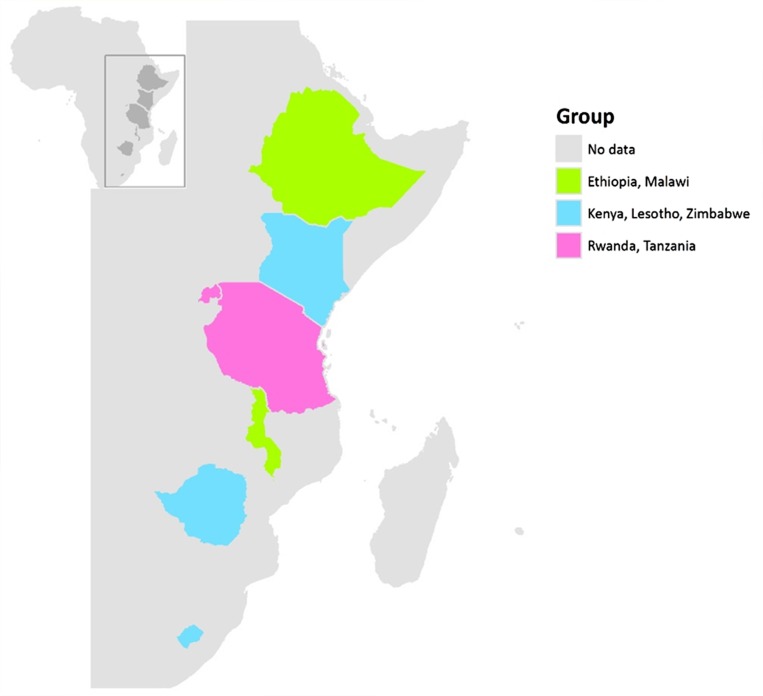
Methods: We analysed data on socio-demographic factors and HIV infection from 14 nationally representative surveys of adults aged 15-24 (seven countries, two surveys each, 4-8 years apart). Sample sizes ranged from 2,408-12,082 (72,135 total). We used logistic regression to assess gender-stratified associations between highest educational level attended and HIV status in each survey, adjusting for age and urban/rural setting. We tested for interactions with urban/rural setting and age. Our primary hypothesis was that higher education became less of a risk factor for HIV over time. We tested for interaction between survey-year and the education-HIV association in each country and all countries pooled.
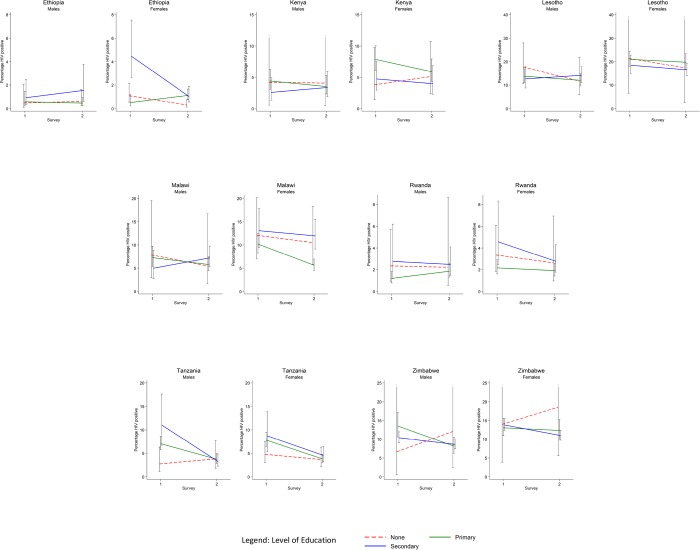
Findings: In Ethiopia and Malawi, HIV prevalence was higher in more educated women in both surveys. In Lesotho, Kenya and Zimbabwe, HIV prevalence was lower in higher educated women in both surveys. In Ethiopia, HIV prevalence fell among no and secondary educated women only (interaction p<0·01). Only among young men in Tanzania there was some evidence that the association between education and HIV changed over time (p=0·07). Pooled analysis found little evidence for an interaction between survey year and the education-HIV association among men (p=0·60) or women (p=0·37).
Interpretation: The pattern of prevalent HIV infection among young adults by level of education in different sub-Saharan African countries was heterogeneous. There was little statistical evidence that this pattern changed between 2003-5 and 2008-12. Explanations for the social epidemiology of HIV in Africa will need to account for time-trends and inter-country differences.
Conflict of interest statement
Figures
References
-
- UNAIDS. Report on the Global AIDS Epidemic. UNAIDS: Geneva. 2013.
-
- UNAIDS. Report on the Global AIDS epidemic. Joint United Nations Programme on HIV/AIDS. 1998
-
- Hargreaves J, Glynn JR. Educational attainment and HIV-1 infection in developing countries: a systematic review. Trop Med Int Health. 2002;7: 489–498. - PubMed
-
- Gregson S, Waddell H, Chandiwana S. School education and HIV control in sub-Saharan Africa: from discord to harmony? J Int Dev. 2001;13: 467–485.
Publication types
MeSH terms
LinkOut - more resources
Full Text Sources
Other Literature Sources
Medical
