Changes in adolescents' and parents' intakes of sugar-sweetened beverages, fruit and vegetables after 20 months: results from the HEIA study - a comprehensive, multi-component school-based randomized trial
- PMID: 25797051
- PMCID: PMC4369556
- DOI: 10.3402/fnr.v59.25932
Changes in adolescents' and parents' intakes of sugar-sweetened beverages, fruit and vegetables after 20 months: results from the HEIA study - a comprehensive, multi-component school-based randomized trial
Abstract
Background: Interventions conducted in school-aged children often involve parents, but few studies have reported effects on parents' own behaviour as a result of these interventions.
Objective: To determine if a multi-component, cluster randomized controlled trial targeting 11-13 year olds influenced their consumption of fruit, vegetables, sugar-sweetened soft drinks and fruit drinks, and to explore whether the results varied by gender, adolescent weight status or parental educational level. A final aim was to assess whether the parents' intakes were affected by the intervention.
Design: Participants were 1,418 adolescents, 849 mothers and 680 fathers. Baseline and post-intervention data from the 20 months intervention study HEIA (HEalth In Adolescents) were included. Data were collected assessing frequency (and amounts; beverages only).
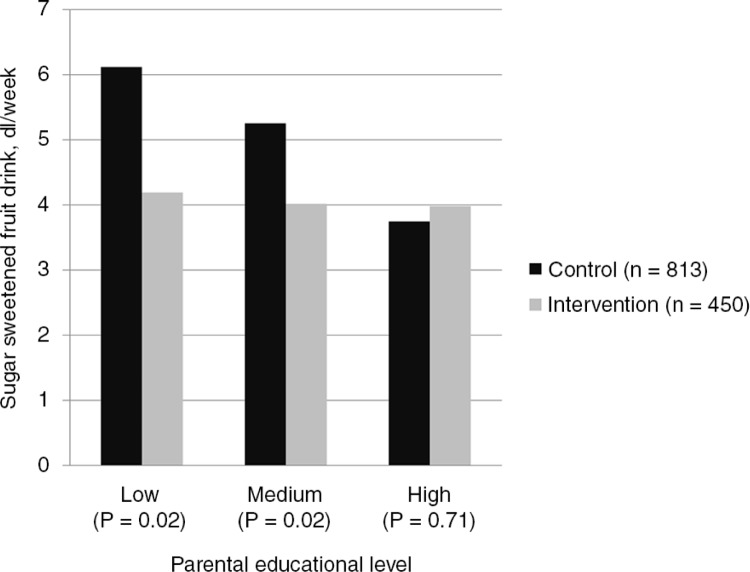
Results: No significant differences were found at baseline between the intervention and control groups, except for the parental groups (educational level and intakes). At post-intervention, the adolescents in the intervention group consumed fruit more frequently (P<0.001) and had a lower intake of sugar-sweetened fruit drinks compared to the control group (P=0.02). The parental educational level moderated the effect on intake of sugar-sweetened fruit drinks in adolescents. The intake was less frequent in the intervention groups compared to the control groups (P=0.02) for those who had parents with low and medium educational level. Furthermore, the intervention may have affected mothers' fruit intake and the vegetable intake in higher educated fathers.
Conclusion: Favourable effects in favour of the intervention group were found for intake of fruit and sugar-sweetened fruit drinks among the adolescents in the HEIA study. Our results indicate that it is possible to reduce adolescents' intake of sugar-sweetened fruit drinks across parental education, and potentially affect sub-groups of parents.
Keywords: beverages; children; fruit; parent; vegetables.
Figures
References
-
- Van Der Horst K, Oenema A, Ferreira I, Wendel-Vos W, Giskes K, van Lenthe F, et al. A systematic review of environmental correlates of obesity-related dietary behaviors in youth. Health Educ Res. 2007;22:203–26. - PubMed
-
- Monasta L, Batty GD, Cattaneo A, Lutje V, Ronfani L, van Lenthe FJ, et al. Early-life determinants of overweight and obesity: a review of systematic reviews. Obes Rev. 2010;11:695–708. - PubMed
-
- de Vet E, de Ridder DT, de Wit JB. Environmental correlates of physical activity and dietary behaviours among young people: a systematic review of reviews. Obes Rev. 2011;12:130–42. - PubMed
LinkOut - more resources
Full Text Sources
Other Literature Sources