


Healthcare-associated pathogens and nursing home policies and practices: results from a national survey
- PMID: 25797334
- PMCID: PMC4472566
- DOI: 10.1017/ice.2015.59
Healthcare-associated pathogens and nursing home policies and practices: results from a national survey
Abstract
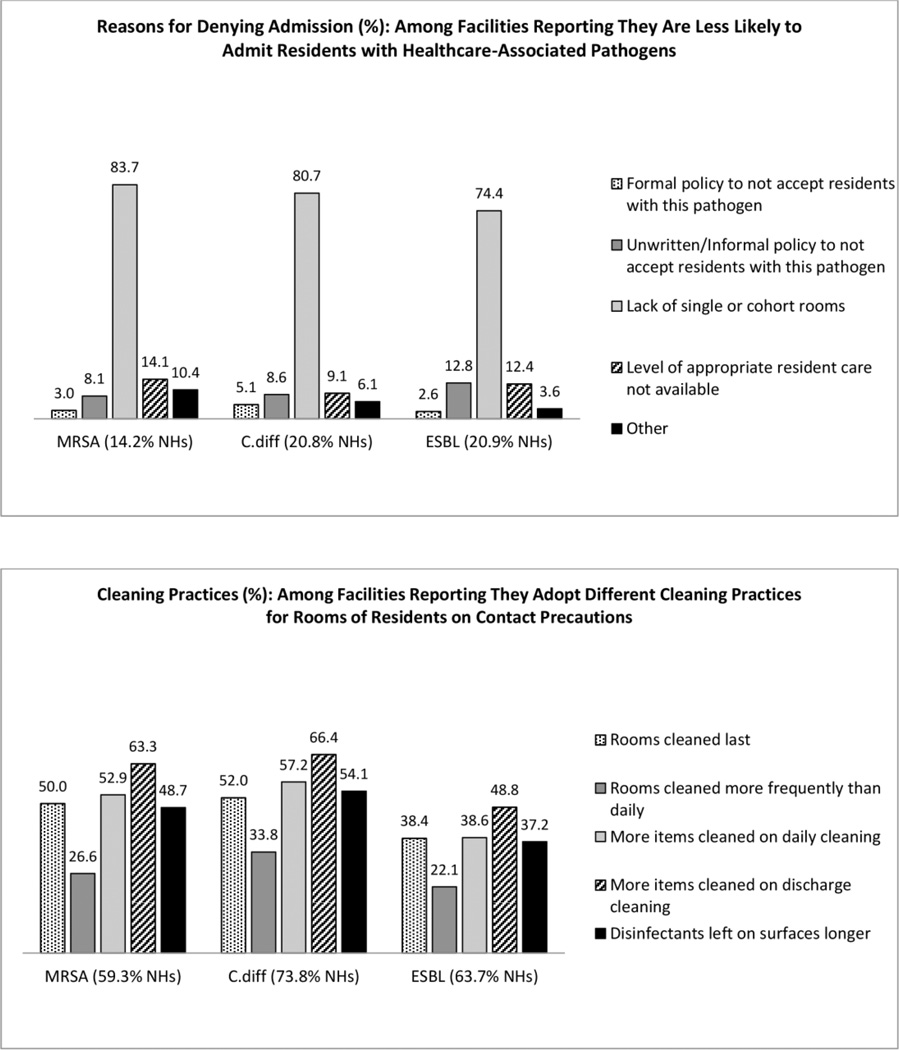
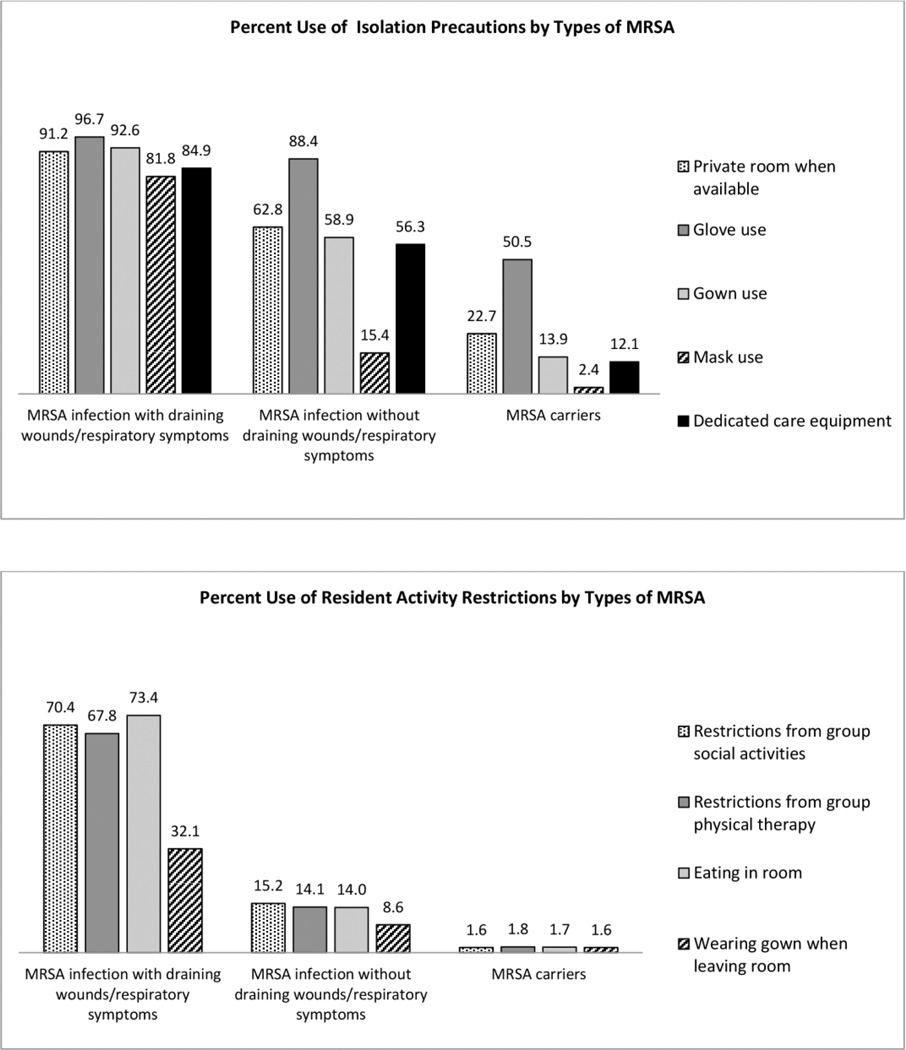
OBJECTIVE To examine the prevalence of healthcare-associated pathogens and the infection control policies and practices in a national sample of nursing homes (NHs). METHODS In 2012, we conducted a national survey about the extent to which NHs follow suggested infection control practices with regard to 3 common healthcare-associated pathogens: methicillin-resistant Staphylococcus aureus, Clostridium difficile, and extended-spectrum β-lactamase producers, and their prevalence in NHs. We adapted a previously used and validated NH infection control survey, including questions on prevalence, admission and screening policies, contact precautions, decolonization, and cleaning practices. RESULTS A total of 1,002 surveys were returned. Of the responding NHs, 14.2% were less likely to accept residents with methicillin-resistant Staphylococcus aureus, with the principal reason being lack of single or cohort rooms. NHs do not routinely perform admission screening (96.4%) because it is not required by regulation (56.2%) and would not change care provision (30.7%). Isolation strategies vary substantially, with gloves being most commonly used. Most NHs (75.1%) do not decolonize carriers of methicillin-resistant Staphylococcus aureus, but some (10.6%) decolonize more than 90% of residents. Despite no guidance on how resident rooms on contact precautions should be cleaned, 59.3% of NHs report enhanced cleaning for such rooms. CONCLUSION Overall, NHs tend to follow voluntary infection control guidelines only if doing so does not require substantial financial investment in new or dedicated staff or infrastructure.
Figures
References
-
- Strausbaugh LJ, Sukumar SR, Joseph CL. Infectious disease outbreaks in nursing homes: an unappreciated hazard for frail elderly persons. Clin Infect Dis. 2003;36:870–876. - PubMed
-
- Richards CL., Jr. Infection control in long-term care facilities. J Am Med Dir Assoc. 2007;8:S18–S25. - PubMed
-
- Richards CL, Jr, Steele L. Antimicrobial-resistant bacteria in long-term care facilities: infection control considerations. J Am Med Dir Assoc. 2003;4:S110–S114. - PubMed
-
- Bradley SF. Staphylococcus aureus infections and antibiotic resistance in older adults. Clin Infect Dis. 2002;34:211–216. - PubMed
Publication types
MeSH terms
Substances
Grants and funding
LinkOut - more resources
Full Text Sources
Other Literature Sources
Medical
