. 2015 Mar 23;10(3):e0117003.
doi: 10.1371/journal.pone.0117003. eCollection 2015.

New insights into samango monkey speciation in South Africa

Affiliations

New insights into samango monkey speciation in South Africa

Desiré L Dalton et al. PLoS One. .

Erratum in

Abstract

The samango monkey is South Africa's only exclusively forest dwelling primate and represents the southernmost extent of the range of arboreal guenons in Africa. The main threats to South Africa's forests and thus to the samango are linked to increasing land-use pressure and increasing demands for forest resources, resulting in deforestation, degradation and further fragmentation of irreplaceable habitats. The species belongs to the highly polytypic Cercopithecus nictitans group which is sometimes divided into two species C. mitis and C. albogularis. The number of subspecies of C. albogularis is also under debate and is based only on differences in pelage colouration and thus far no genetic research has been undertaken on South African samango monkey populations. In this study we aim to further clarify the number of samango monkey subspecies, as well as their respective distributions in South Africa by combining molecular, morphometric and pelage data. Overall, our study provides the most comprehensive view to date into the taxonomic description of samango monkeys in South Africa. Our data supports the identification of three distinct genetic entities namely; C. a. labiatus, C. a. erythrarchus and C. a. schwarzi and argues for separate conservation management of the distinct genetic entities defined by this study.


Conflict of interest statement

Competing Interests: The authors have declared that no competing interests exist.

Figures

Fig 1
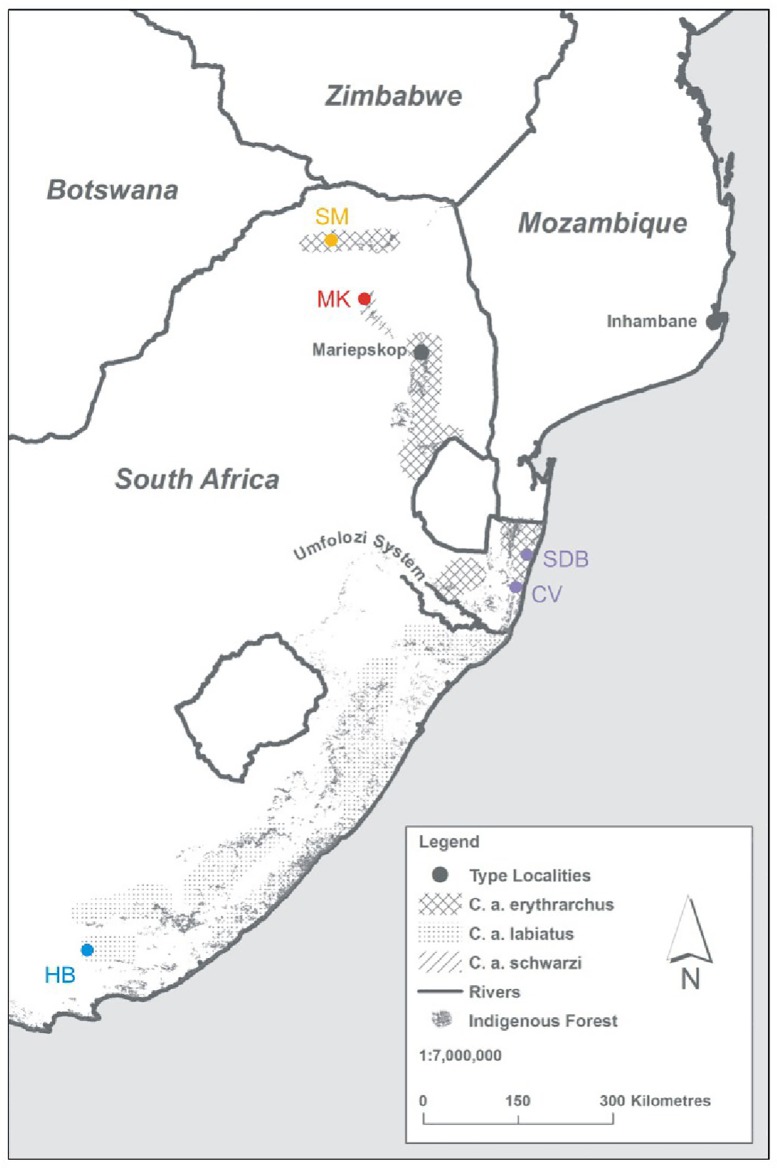
Fig 1. Sampling localities and distribution of proposed samango species.
Geographic distribution of the proposed samango species (Cercopithecus labiatus, Hogsback; Cercopithecus erythrarchus, Cape Vidal and Sodwana Bay; C. e. schwarzi, Magoebaskloof and Soutpansberg Mountain) from this study. Type localities are included for C. a. erythrarchus (Inhambane) and C a. schwarzi (Mariepskop). No exact type locality is available for the sub-species C. a. labiatus. Map based on the Endangered Wildlife Trust (EWT) 2004 distribution map and modified including additional distribution data from this study. Sampling localities (SM = Soutpansberg Mountains, MK = Magoebaskloof, SDB = Sodwana Bay, CV = Cape Vidal, HB = Hogsback) are shown in relation to indigenous forests (DWAF 2004) and the Umfolozi System (Black and White Umfolozi Rivers).
Fig 2
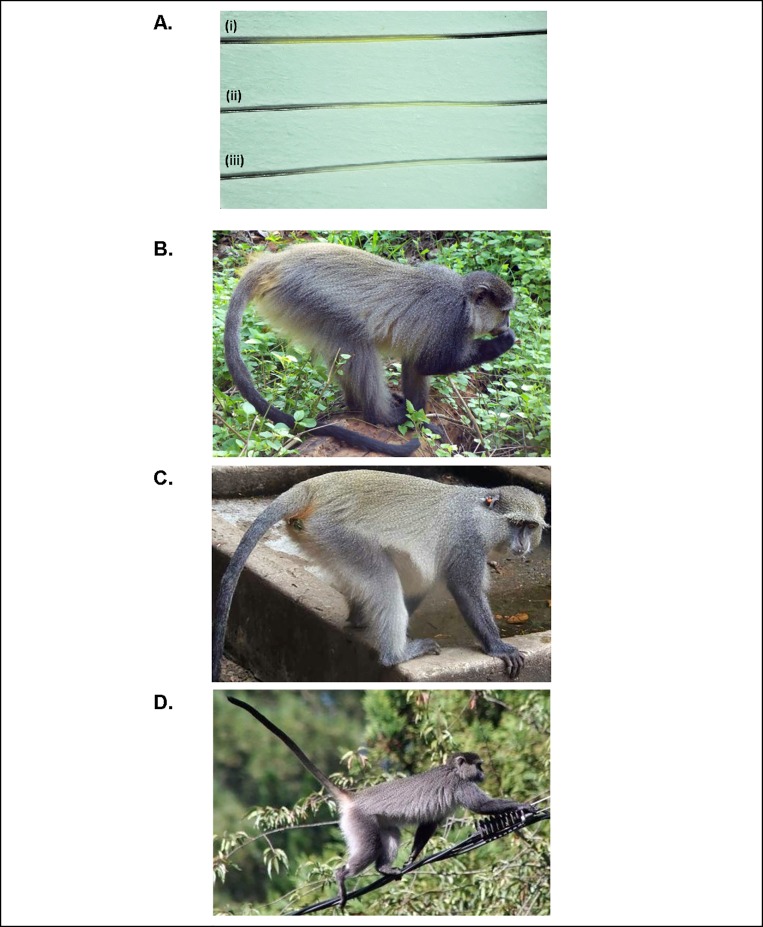
Fig 2. Three different colour categories identified for samango hair samples from different geographic locations.
(A). (i) Cape Vidal (dark yellow category), (ii) Soutpansberg Mountain (light yellow category), (iii) Hogsback (white category).The image also illustrates the typical, alternating dark and light banding of hairs. B to D: Comparisons of pelage colouration between samango monkeys from three geographic locations. B: Adult female, Soutpansberg (Inland) (photo: Birthe Linden), C: Adult female, Cape Vidal (Coast) (photo: Joan Chalmers), D: Adult female, Hogsback (Hogsback) (photo: Kirsten Wimberger).
Fig 3
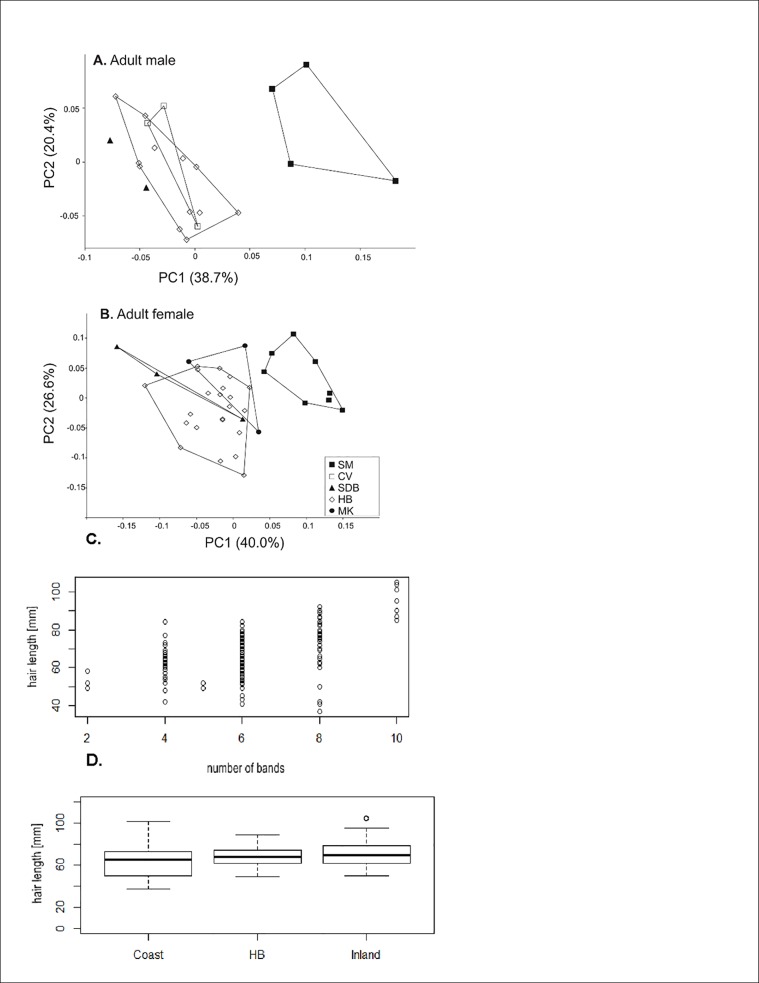
Fig 3. PCA of log-transformed morphometric variables.
(A) adult male and (B) female samangos from five populations (closed squares = Soutpansberg Mountain (SM); open squares = Cape Vidal (CV); closed triangle = Sodwana Bay (SDB); open diamonds = Hogsback (HB); closed circles—Magoebaskloof (MK). (C) Pearson’s Correlation between hair length and number of bands per hair from all study sites. (D) Boxplots illustrating variation of hair length between three different geographic locations (Coast = Cape Vidal, Sodwana Bay, HB = Hogsback and Inland = Soutpansberg Mountain, Magoebaskloof.
Fig 4
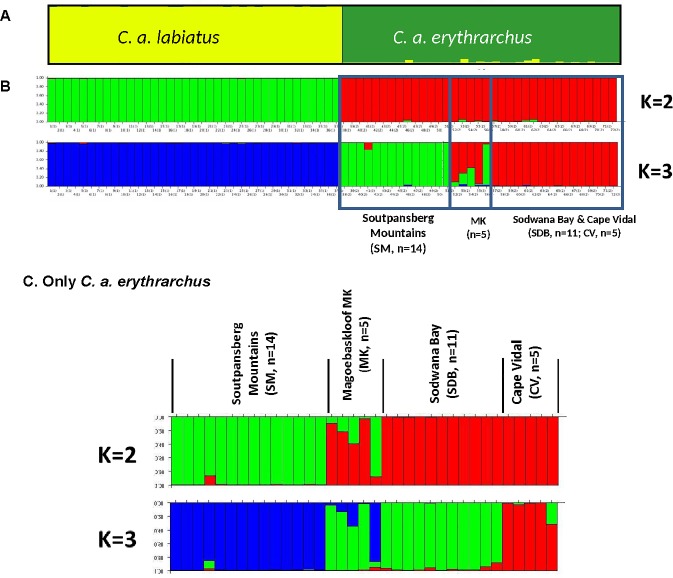
Fig 4. Bayesian cluster analysis in STRUCTURE.
(A) The average cluster membership (over 20 runs) for K = 2 of microsatellite genotypes of C. a. labiatus and C. a. erythrarchus. (B) Example bar plots of runs where k = 2 and k = 3. (C) Example histograms from STRUCTURE analysis for K = 2 and K = 3 where only C. a. erythrarchus individuals are included. Each individual is represented by a single horizontal line, with lengths proportional to the estimated membership in each cluster.
Fig 5
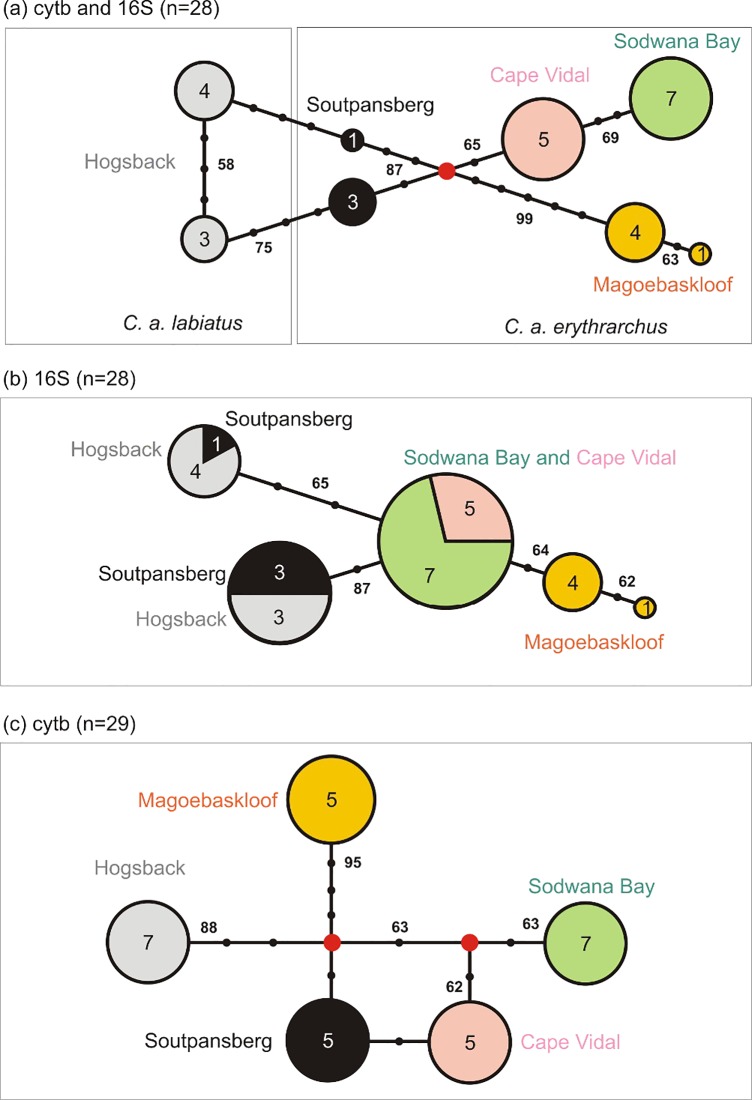
Fig 5. Maximum Parsimony reduced-median haplotype networks.
(a) Combined 16S and cyt b data, (b) 16S data and (c) cytochrome b data. The sizes of circles, and numbers in circles, represent the number of individuals sharing a haplotype, red circles represent missing haplotypes, and tick marks along connecting lines are nucleotide changes. Numbers in bold along the connecting lines are bootstrap support.

References

    1. Skinner JD, Chimimba CT (2006) The Mammals of the Southern African Sub-region. Cambridge University Press.
    1. Grubb P, Butynski TM, Oates JF, Bearder SK, Disotell TR, et al. (2003) Assessment of the Diversity of African Primates. Int J Primatol 24:1301–1357.
    1. Groves C (2001) Primate Taxonomy. Smithsonian Institution Press, Washington DC.
    1. Groves CP (2005) Order Primates In: Mammal Species of the World. A Taxonomic and Geographic Reference, Wilson DE and Reeder DM (eds.), pp.111–184. Third Edition Johns Hopkins University Press, Baltimore.
    1. Napier PH (1981) Catalogue of Primates in the British Museum (Natural History) and Elsewhere in the British Isles Part III: Family Cercopithecidae, Subfamily Cercopithecinae. British Museum (Natural History), London.

Publication types

Substances

LinkOut - more resources