


Effects of reinforcer distribution during response elimination on resurgence of an instrumental behavior
- PMID: 25798714
- PMCID: PMC4397183
- DOI: 10.1037/xan0000061
Effects of reinforcer distribution during response elimination on resurgence of an instrumental behavior
Erratum in
-
Correction to Schepers and Bouton (2015).J Exp Psychol Anim Learn Cogn. 2017 Jan;43(1):47. doi: 10.1037/xan0000121. J Exp Psychol Anim Learn Cogn. 2017. PMID: 28045293
Abstract
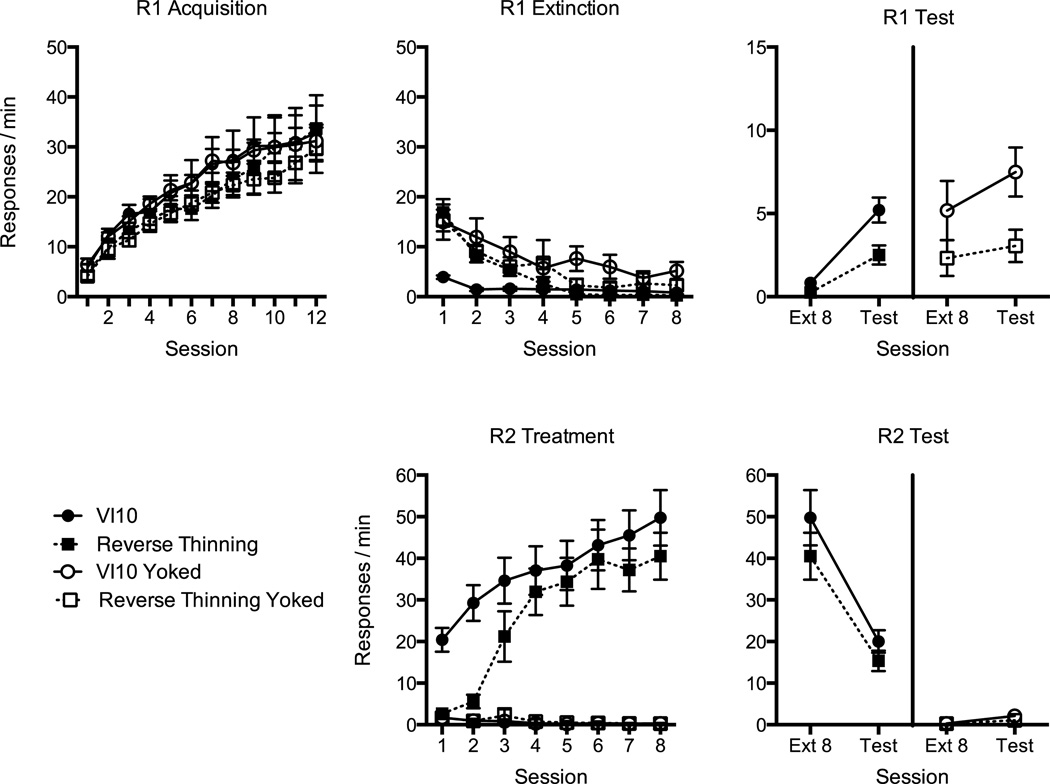
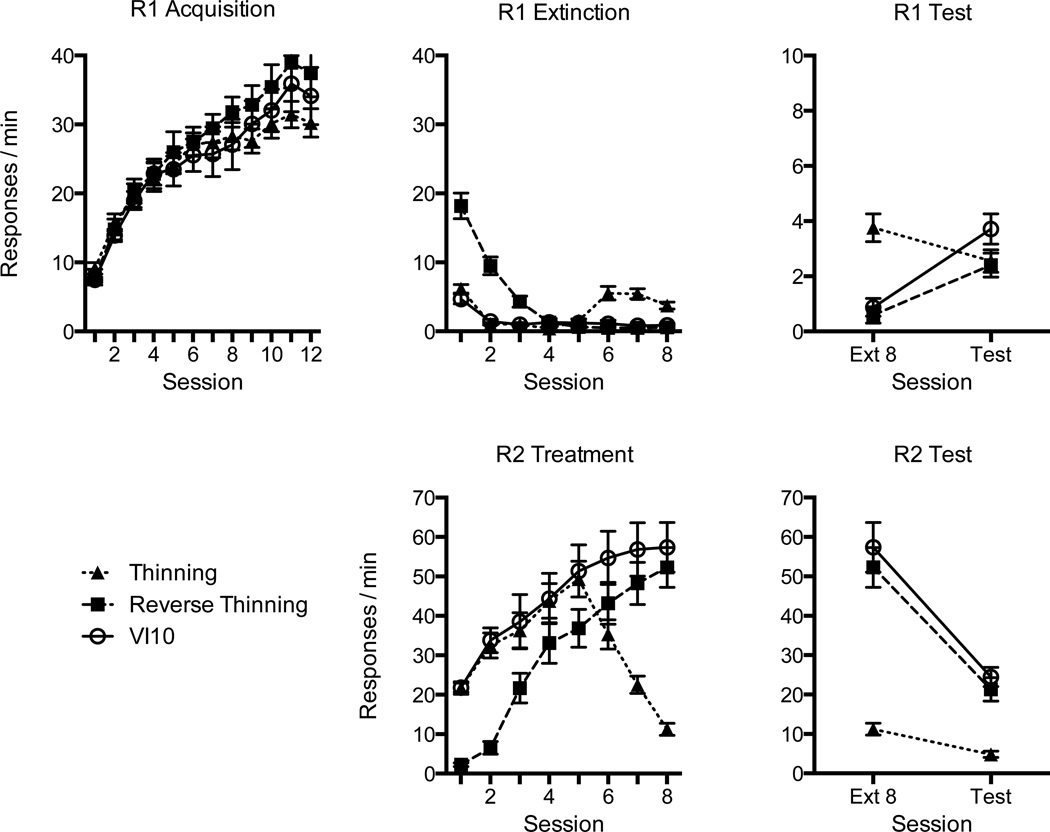
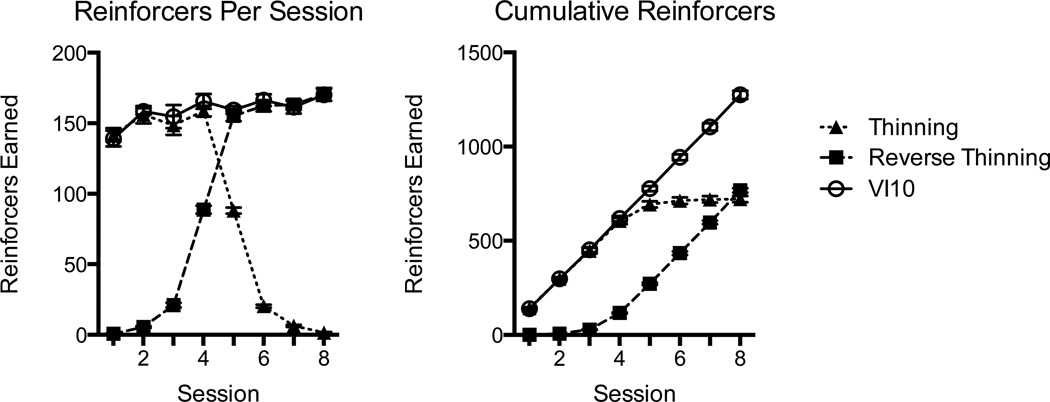
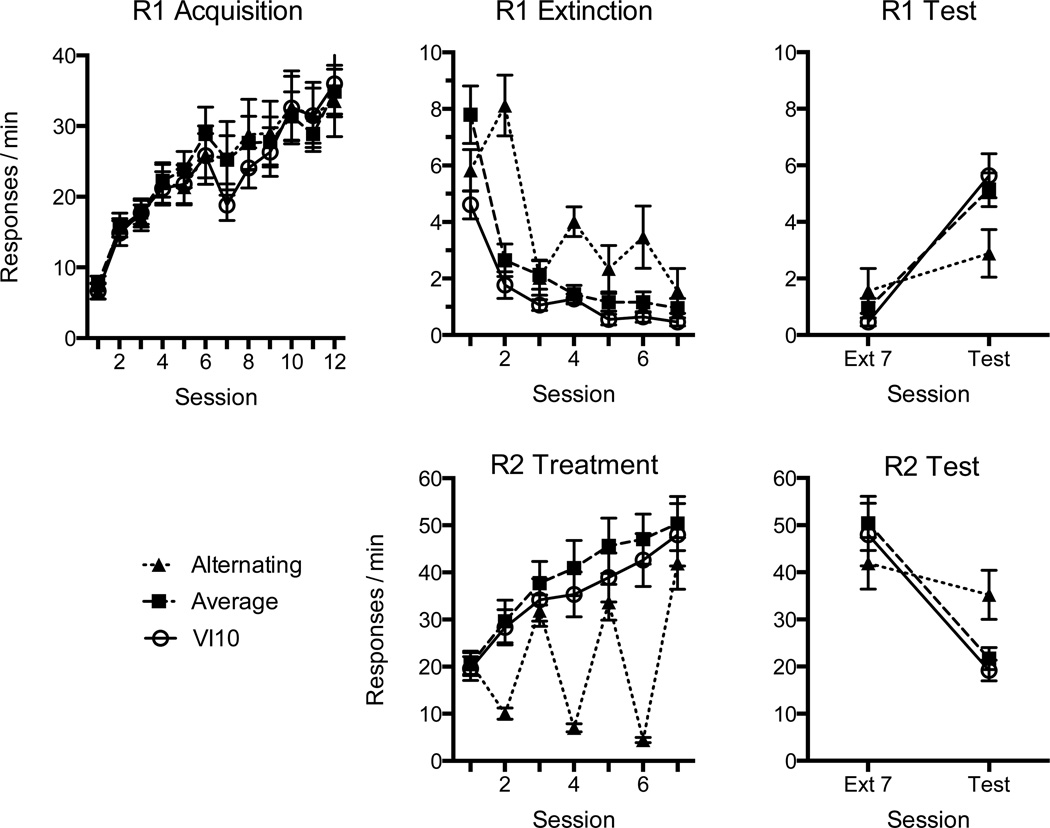
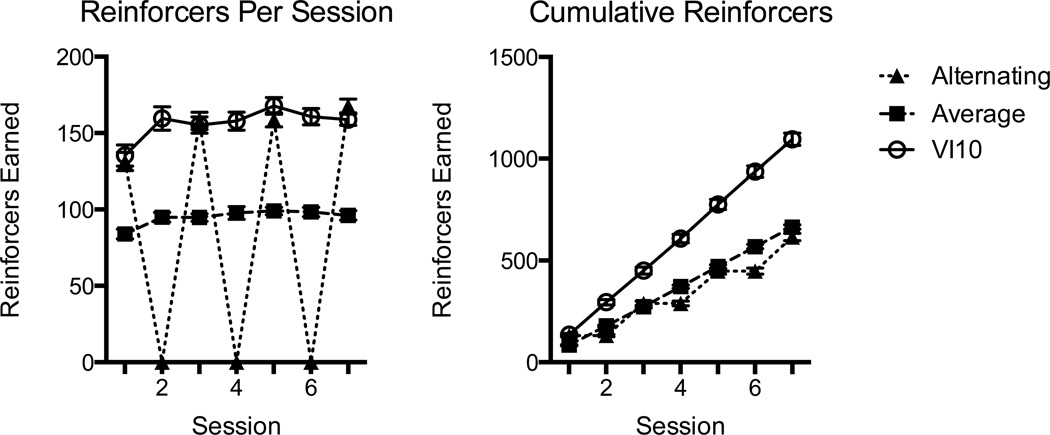
Resurgence has commonly been viewed as the recovery of an extinguished instrumental behavior that occurs when an alternative behavior that has replaced it is also extinguished. Three experiments with rat subjects examined the effects on resurgence of the temporal distribution of reinforcement for the alternative behavior that is presented while the first response is being eliminated. Experiments 1 and 2 examined resurgence when rich rates of reinforcement at the onset of response elimination became leaner over sessions (i.e., forward thinning) and when lean rates became richer (i.e., reverse thinning). Both procedures weakened resurgence compared with that in a group that received the richest rate during all sessions. However, forward thinning was more effective than reverse thinning at reducing the resurgence effect. Experiment 3 found that final resurgence was eliminated when the alternative behavior was reinforced and extinguished in alternating response elimination sessions. The results are consistent with the hypothesis that reinforcer delivery during response elimination provides a contextual stimulus for the extinction of the original behavior; its removal during resurgence testing causes ABC renewal to occur. The results are less consistent with an alternative account that emphasizes the removal of response disruption caused by alternative reinforcement (Shahan & Sweeney, 2011). Other theoretical and applied implications are discussed.
(c) 2015 APA, all rights reserved).
Figures
References
-
- Bouton ME. A contextual analysis of fear extinction. In: Martin PR, editor. Handbook of behavior therapy and psychological science: An integrative approach. New York: Pergamon Press; 1991. pp. 435–453.
-
- Bouton ME. Context, time, and memory retrieval in the interference paradigms of Pavlovian learning. Psychological Bulletin. 1993;114:80–99. - PubMed
-
- Bouton ME. Context, ambiguity, and unlearning: Sources of relapse after behavioral extinction. Biological Psychiatry. 2002;52:976–986. - PubMed
-
- Bouton ME. Context and behavioral processes in extinction. Learning & Memory. 2004;11:485–494. - PubMed
-
- Bouton ME, Rosengard C, Achenbach GG, Peck CA, Brooks DC. Effects of contextual conditioning and unconditional stimulus presentation on performance in appetitive conditioning. The Quarterly Journal of Experimental Psychology. 1993;46:63–95. - PubMed
Publication types
MeSH terms
Grants and funding
LinkOut - more resources
Full Text Sources
Other Literature Sources
