


Increasing the efficiency of precise genome editing with CRISPR-Cas9 by inhibition of nonhomologous end joining
- PMID: 25798939
- PMCID: PMC4618510
- DOI: 10.1038/nbt.3190
Increasing the efficiency of precise genome editing with CRISPR-Cas9 by inhibition of nonhomologous end joining
Erratum in
-
Corrigendum: Increasing the efficiency of precise genome editing with CRISPR-Cas9 by inhibition of nonhomologous end joining.Nat Biotechnol. 2016 Feb;34(2):210. doi: 10.1038/nbt0216-210c. Nat Biotechnol. 2016. PMID: 26849523 No abstract available.
Abstract
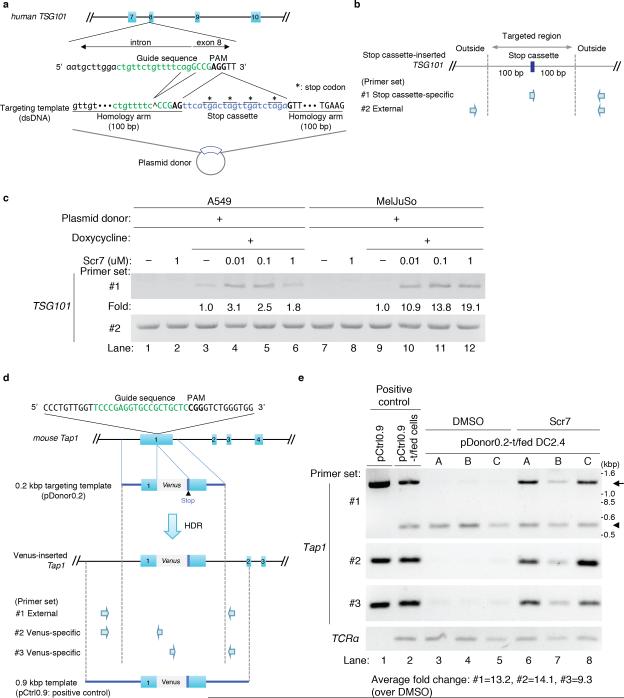
Methods to introduce targeted double-strand breaks (DSBs) into DNA enable precise genome editing by increasing the rate at which externally supplied DNA fragments are incorporated into the genome through homologous recombination. The efficiency of these methods is limited by nonhomologous end joining (NHEJ), an alternative DNA repair pathway that competes with homology-directed repair (HDR). To promote HDR at the expense of NHEJ, we targeted DNA ligase IV, a key enzyme in the NHEJ pathway, using the inhibitor Scr7. Scr7 treatment increased the efficiency of HDR-mediated genome editing, using Cas9 in mammalian cell lines and in mice for all four genes examined, up to 19-fold. This approach should be applicable to other customizable endonucleases, such as zinc finger nucleases and transcription activator-like effector nucleases, and to nonmammalian cells with sufficiently conserved mechanisms of NHEJ and HDR.
Figures

References
-
- Wiedenheft B, Sternberg SH, Doudna JA. RNA-guided genetic silencing systems in bacteria and archaea. Nature. 2012;482:331–338. - PubMed
Publication types
MeSH terms
Substances
Associated data
Grants and funding
LinkOut - more resources
Full Text Sources
Other Literature Sources
Molecular Biology Databases
Research Materials
