


Brain self-regulation in criminal psychopaths
- PMID: 25800672
- PMCID: PMC4371087
- DOI: 10.1038/srep09426
Brain self-regulation in criminal psychopaths
Abstract
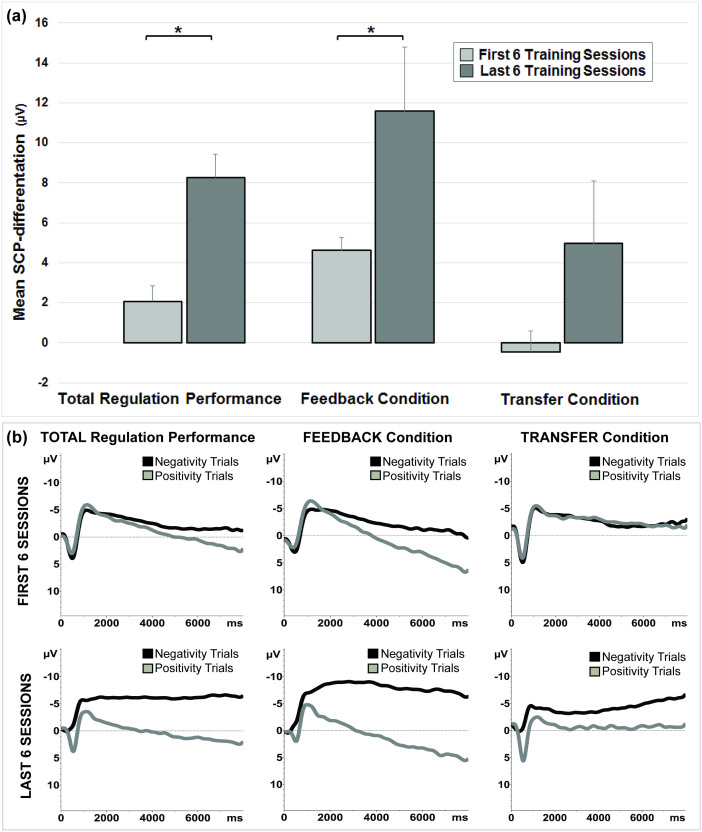
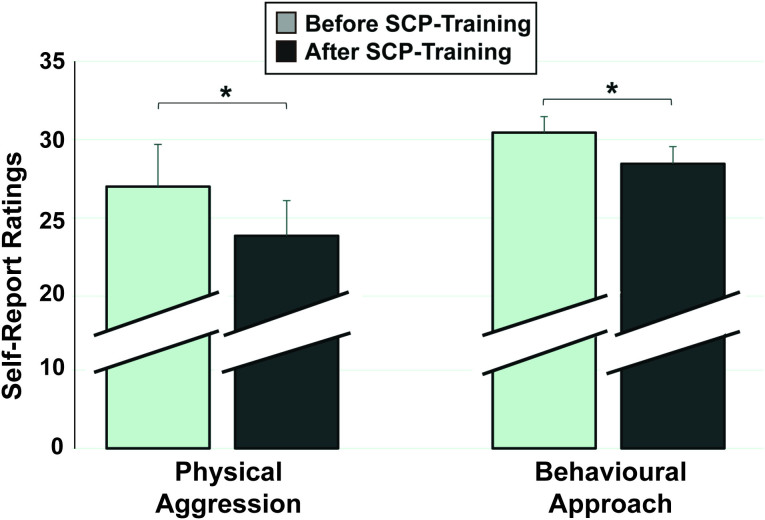
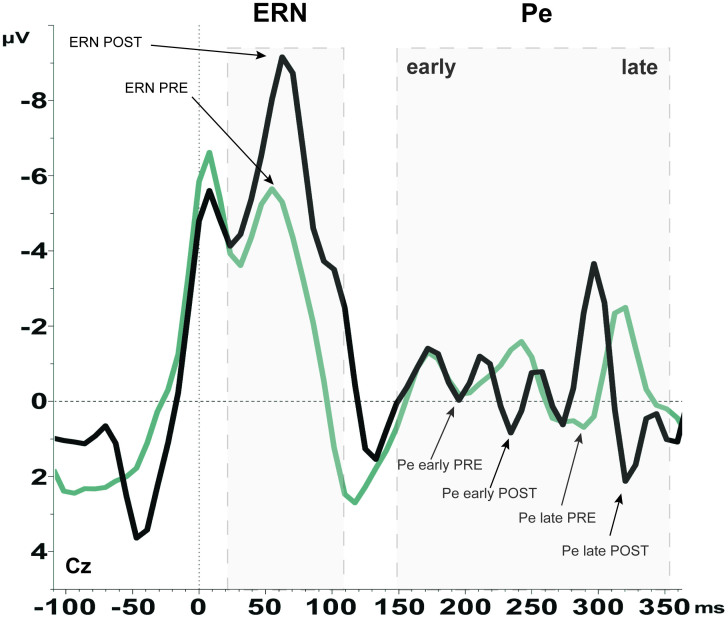
Psychopathic individuals are characterized by impaired affective processing, impulsivity, sensation-seeking, poor planning skills and heightened aggressiveness with poor self-regulation. Based on brain self-regulation studies using neurofeedback of Slow Cortical Potentials (SCPs) in disorders associated with a dysregulation of cortical activity thresholds and evidence of deficient cortical functioning in psychopathy, a neurobiological approach seems to be promising in the treatment of psychopathy. The results of our intensive brain regulation intervention demonstrate, that psychopathic offenders are able to gain control of their brain excitability over fronto-central brain areas. After SCP self-regulation training, we observed reduced aggression, impulsivity and behavioral approach tendencies, as well as improvements in behavioral-inhibition and increased cortical sensitivity for error-processing. This study demonstrates improvements on the neurophysiological, behavioral and subjective level in severe psychopathic offenders after SCP-neurofeedback training and could constitute a novel neurobiologically-based treatment for a seemingly change-resistant group of criminal psychopaths.
Figures
References
-
- Hare R. D. Hare Psychopathy Checklist-Revised (Multi-Health Systems, 2003).
-
- Newman J. P. & Wallace J. F. Diverse pathways to deficient self-regulation: implications for disinhibitory psychopathology in children. Annu. Rev. Clin. Psychol. 13, 699–720 (1993).
-
- Carver C. S. & Harmon-Jones E. Anger is an approach-related affect: evidence and implications. Psychol. Bull. 135, 183–204 (2009). - PubMed
-
- Harmon-Jones E. & Peterson C. K. Effect of trait and state approach motivation on aggressive inclinations. J. Res. Pers. 42, 1381–85 (2008).
-
- Blair R. J. R. et al. Passive avoidance learning in individuals with psychopathy: modulation by reward but not by punishment. J. Individ. Differ. 37, 1179–92 (2004).
Publication types
MeSH terms
LinkOut - more resources
Full Text Sources
Other Literature Sources
