


Breast cancer with brain metastases: clinicopathologic features, survival, and paired biomarker analysis
- PMID: 25802405
- PMCID: PMC4425375
- DOI: 10.1634/theoncologist.2014-0107
Breast cancer with brain metastases: clinicopathologic features, survival, and paired biomarker analysis
Abstract
Background: The aim of this study was to describe clinicopathologic features of patients with breast cancer brain metastasis (BCBM); to evaluate survival after diagnosis of BCBM; and to compare estrogen receptor (ER), progesterone receptor (PR), and HER2 expression in the paired primary and brain tumors.
Materials and methods: We identified 140 consecutive patients who underwent craniotomy for BCBM (either for diagnostic purpose or with therapeutic intent) at the University of Texas MD Anderson Cancer Center between 2002 and 2009.
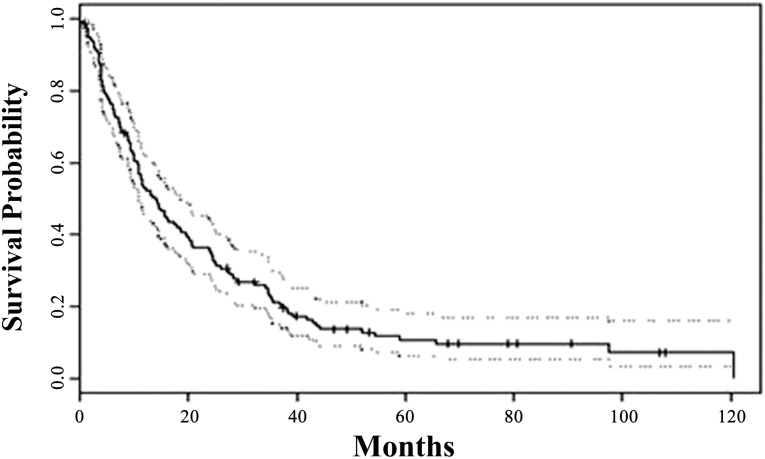
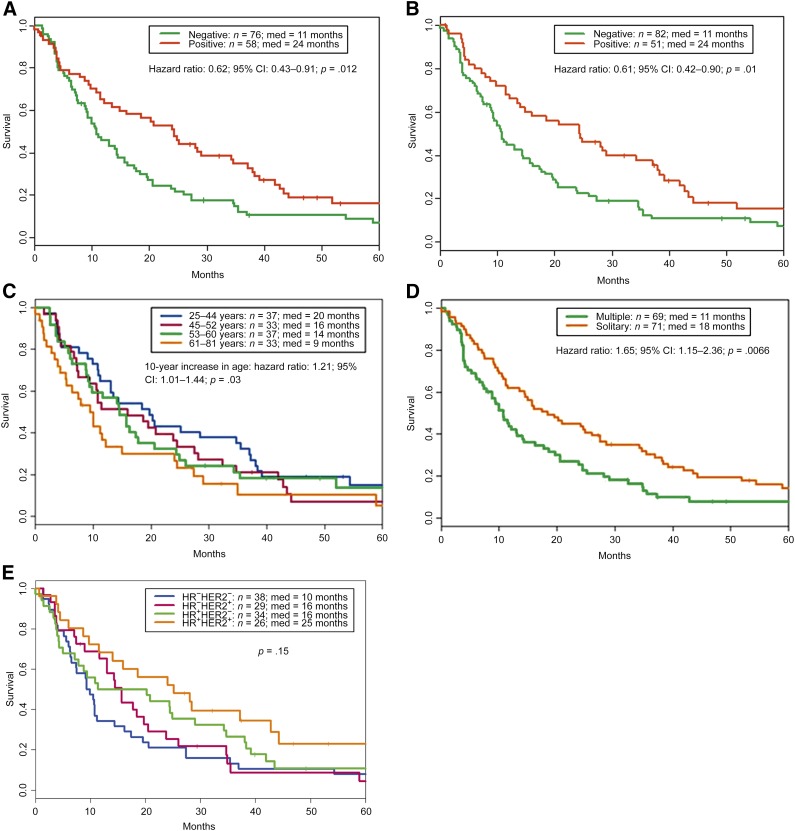
Results: Most patients had invasive ductal histology (91%), grade 3 tumors (67%), and positive axillary lymph node (64%). Of the tumors, 56% were ER-negative, 62% were PR-negative, 44% were HER2-positive, and 28% were triple negative (TN). Brain metastasis (BM) was solitary in 51% of patients. Median interval from breast cancer diagnosis to BM was 46 months; median survival after BM was 14.1 months. In the univariate analysis, younger age, solitary brain metastasis, and ER or PR positivity in the breast tumors were associated with longer survival. There was a statistical trend toward increased survival in HER2-positive patients compared with HER2-negative patients (18 vs. 11 months). In the multivariate analysis, predictors for longer survival included younger age, solitary brain lesion, and HER2 positivity in the breast cancer. Biomarkers were evaluated in paired primary and brain tumors in 35 patients for ER status, 34 for PR status, and 36 for HER2 status. Discordant rates were 28% for ER, 20% for PR, and 3% for HER2.
Conclusion: Compared with unselected breast cancer patients at the same institution, patients with breast cancer who had brain metastases had a higher proportion of hormone receptor-negative, HER2-positive, and TN tumors. Younger age, solitary brain lesion, and HER2 expression were independent predictors of better survival in patients with BCBM. HER2 status was highly concordant between the paired primary and brain tumors, whereas changes of ER and PR status occurred in a substantial proportion of the patients. These findings are important for making effective treatment decisions for patients with BCBM.
Keywords: Brain metastases; Breast cancer; HER2; Hormone receptor; Survival.
©AlphaMed Press.
Conflict of interest statement
Disclosures of potential conflicts of interest may be found at the end of this article.
Figures
References
-
- Barnholtz-Sloan JS, Sloan AE, Davis FG, et al. Incidence proportions of brain metastases in patients diagnosed (1973 to 2001) in the Metropolitan Detroit Cancer Surveillance System. J Clin Oncol. 2004;22:2865–2872. - PubMed
-
- Lee SS, Ahn JH, Kim MK, et al. Brain metastases in breast cancer: Prognostic factors and management. Breast Cancer Res Treat. 2008;111:523–530. - PubMed
-
- Lin NU, Winer EP. Brain metastases: The HER2 paradigm. Clin Cancer Res. 2007;13:1648–1655. - PubMed
-
- Leyland-Jones B. Human epidermal growth factor receptor 2-positive breast cancer and central nervous system metastases. J Clin Oncol. 2009;27:5278–5286. - PubMed
-
- Lin NU, Bellon JR, Winer EP. CNS metastases in breast cancer. J Clin Oncol. 2004;22:3608–3617. - PubMed
Publication types
MeSH terms
Substances
LinkOut - more resources
Full Text Sources
Other Literature Sources
Medical
Research Materials
Miscellaneous
