


"Hirnsymptome bei Carcinomatose" - Hermann Oppenheim and an Early Description of a Paraneoplastic Neurological Syndrome
- PMID: 25802985
- PMCID: PMC4673590
- DOI: 10.1080/0964704X.2015.1021120
"Hirnsymptome bei Carcinomatose" - Hermann Oppenheim and an Early Description of a Paraneoplastic Neurological Syndrome
Abstract
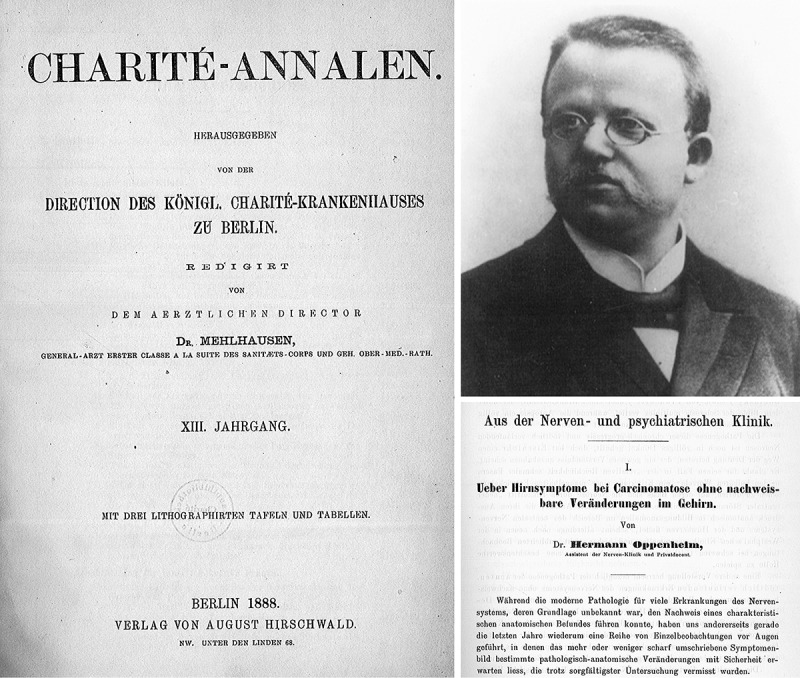
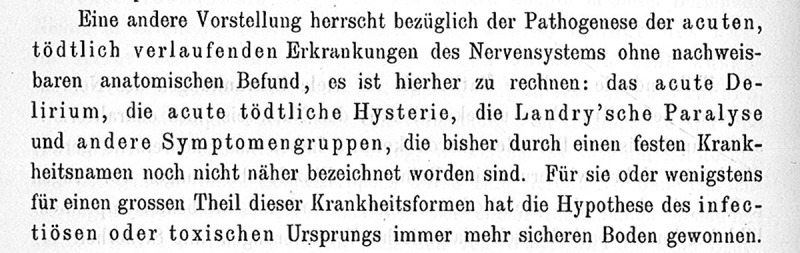
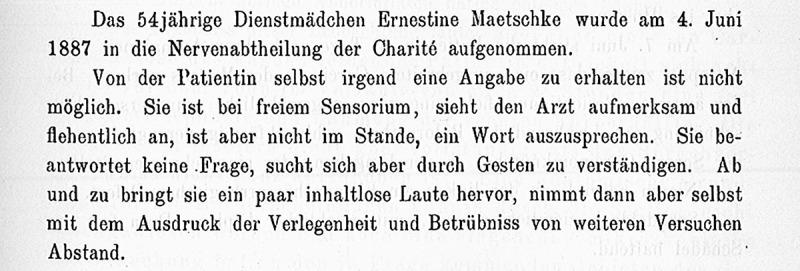
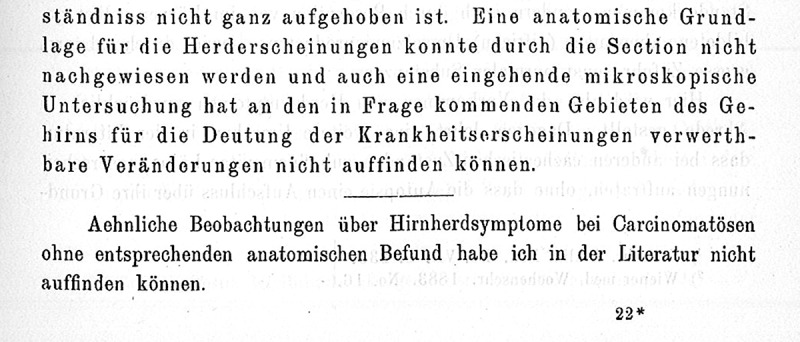
Paraneoplastic neurological syndromes belong to the most enigmatic and fascinating disorders. Their remarkable clinical spectrum ranges from sensory neuronopathy to cerebellar degeneration or limbic encephalitis. We retrace the clinical and pathological description of a forgotten case published by Hermann Oppenheim in 1888, which to our knowledge represents the first report of a paraneoplastic neurological syndrome. The young Oppenheim used thorough observation and good clinical judgment to suggest a causal link between the seemingly mere association of an underlying malignancy and a neurological syndrome, decades before Denny-Brown's identification of sensory neuronopathy in 1948 and a century before the discovery of "anti-Hu" antibodies. Oppenheim anticipated that scientific progress was required to prove this link, and he indicated his finding as "a pointer for future observers." In this way, he leaves the reader with the fascinating question of which observations during our current neurology practice could be the next "pointers" in medical research.
Keywords: Hermann Oppenheim; cancer; encephalitis; paraneoplastic neurological syndrome.
Figures




References
-
- Brierley JB, Corsellis JAN, Hierons R, Nevin S. Subacute encephalitis of later adult life mainly affecting the limbic areas. Brain. 1960;83:357–368.
-
- Darnell RB, Posner JB. Paraneoplastic Syndromes. New York: Oxford University Press; 2011.
-
- Graus F, Cordon-Cardo C, Posner JB. Neuronal antinuclear antibody in sensory neuronopathy from lung cancer. Neurology. 1985;35(4):538–543. - PubMed
-
- Guichard MMA, Vignon G. Le Journal de Médecine de Lyon 30: 1949. La Polyradiculonéurite cancéreuse métastatique; pp. 197–207. - PubMed
Publication types
MeSH terms
Personal name as subject
- Actions
LinkOut - more resources
Full Text Sources
