


Adherence Determinants in Cystic Fibrosis: Cluster Analysis of Parental Psychosocial, Religious, and/or Spiritual Factors
- PMID: 25803407
- PMCID: PMC4590021
- DOI: 10.1513/AnnalsATS.201408-379OC
Adherence Determinants in Cystic Fibrosis: Cluster Analysis of Parental Psychosocial, Religious, and/or Spiritual Factors
Abstract
Rationale: Cystic fibrosis is a progressive disease requiring a complex, time-consuming treatment regimen. Nonadherence may contribute to an acceleration of the disease process. Spirituality influences some parental healthcare behaviors and medical decision-making.
Objectives: We hypothesized that parents of children with cystic fibrosis, when classified into groups based on adherence rates, would share certain psychosocial and religious and/or spiritual variables distinguishing them from other adherence groups.
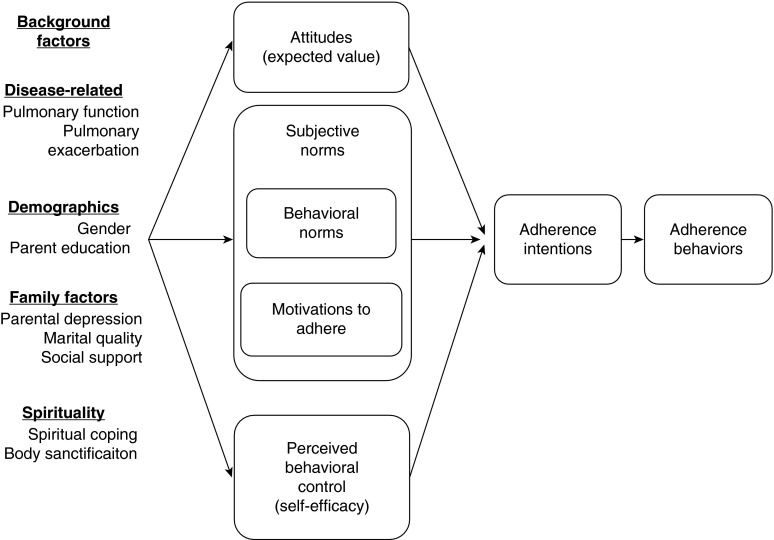
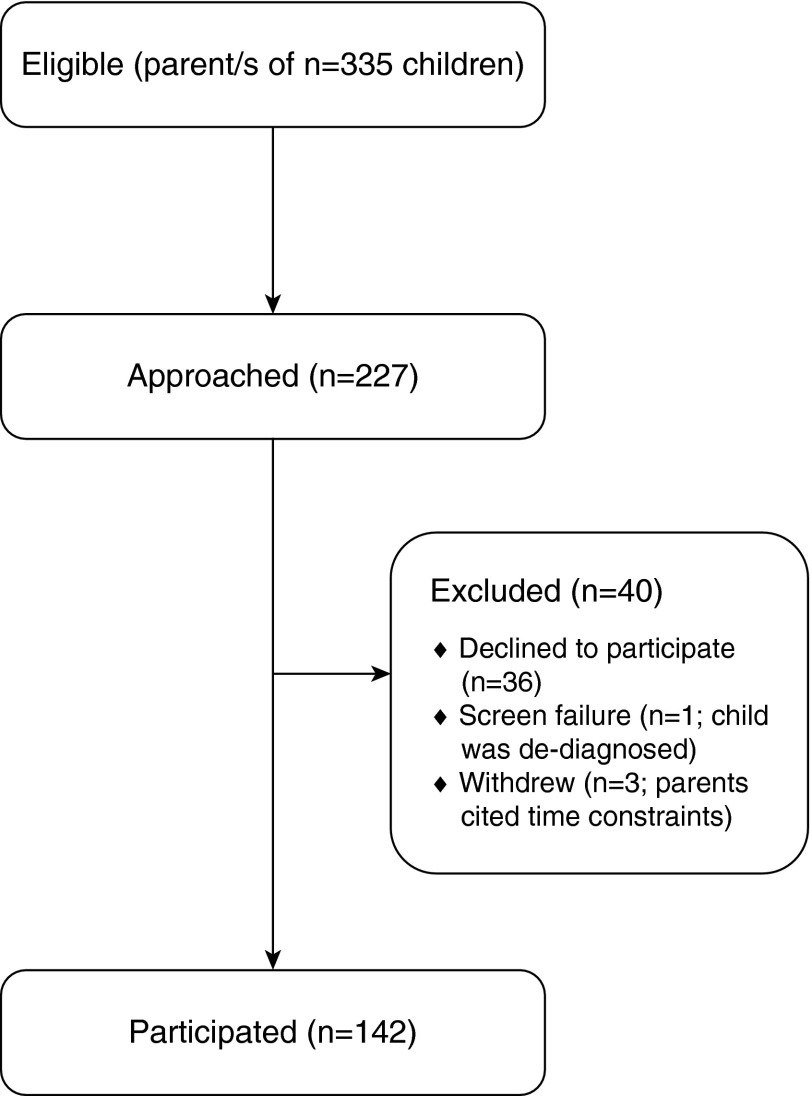
Methods: We conducted a multisite, prospective, observational study focused on parents of children younger than 13 years old at two cystic fibrosis center sites (Site 1, n= 83; Site 2, n = 59). Religious and/or spiritual constructs, depression, and marital adjustment were measured by using previously validated questionnaires. Determinants of adherence included parental attitude toward treatment, perceived behavioral norms, motivation, and self-efficacy. Adherence patterns were measured with the Daily Phone Diary, a validated instrument used to collect adherence data. Cluster analysis identified discrete adherence patterns, including parents' completion of more treatments than prescribed.
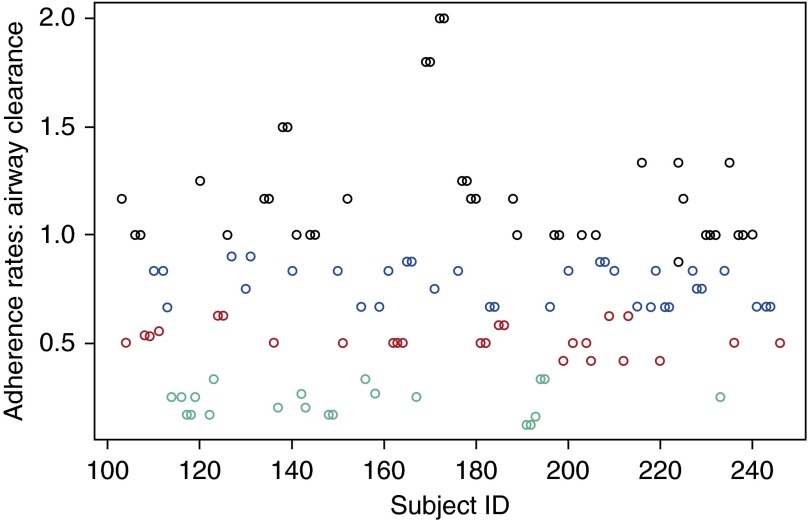
Measurements and main results: For airway clearance therapy, four adherence groups were identified: median adherence rates of 23%, 52%, 77%, and 120%. These four groups differed significantly for parental depression, sanctification of their child's body, and self-efficacy. Three adherence groups were identified for nebulized medications: median adherence rates of 35%, 82%, and 130%. These three groups differed significantly for sanctification of their child's body and self-efficacy.
Conclusions: Our results indicated that parents in each group shared psychosocial and religious and/or spiritual factors that differentiated them. Therefore, conversations about adherence likely should be tailored to baseline adherence patterns. Development of efficacious religious and/or spiritual interventions that promote adherence by caregivers of children with cystic fibrosis may be useful.
Keywords: cystic fibrosis; parents; psychosocial; spirituality; treatment adherence.
Figures

References
-
- Quittner AL, Zhang J, Marynchenko M, Chopra PA, Signorovitch J, Yushkina Y, Riekert KA. Pulmonary medication adherence and health-care use in cystic fibrosis. Chest. 2014;146:142–151. - PubMed
-
- Sawicki GS, Tiddens H. Managing treatment complexity in cystic fibrosis: challenges and opportunities. Pediatr Pulmonol. 2012;47:523–533. - PubMed
-
- Berg JS, Dischler J, Wagner DJ, Raia JJ, Palmer-Shevlin N. Medication compliance: a healthcare problem. Ann Pharmacother. 1993;27(9 Suppl):S1–S24. - PubMed
-
- Modi AC, Lim CS, Yu N, Geller D, Wagner MH, Quittner AL. A multi-method assessment of treatment adherence for children with cystic fibrosis. J Cyst Fibros. 2006;5:177–185. - PubMed
-
- Modi AC, Cassedy AE, Quittner AL, Accurso F, Sontag M, Koenig JM, Ittenbach RF. Trajectories of adherence to airway clearance therapy for patients with cystic fibrosis. J Pediatr Psychol. 2010;35:1028–1037. - PubMed
Publication types
MeSH terms
Grants and funding
LinkOut - more resources
Full Text Sources
Medical
