. 2015 Mar 24;10(3):e0120583.
doi: 10.1371/journal.pone.0120583. eCollection 2015.

MD-2 determinants of nickel and cobalt-mediated activation of human TLR4

Affiliations

MD-2 determinants of nickel and cobalt-mediated activation of human TLR4

Alja Oblak et al. PLoS One. .

Abstract

Recent findings unexpectedly revealed that human TLR4 can be directly activated by nickel ions. This activation is due to the coordination of nickel by a cluster of histidine residues on the ectodomain of human TLR4, which is absent in most other species. We aimed to elucidate the role of MD-2 in the molecular mechanism of TLR4/MD-2 activation by nickel, as nickel binding site on TLR4 is remote from MD-2, which directly binds the endotoxin as the main pathological activator of TLR4. We identified MD-2 and TLR4 mutants which abolished TLR4/MD-2 receptor activation by endotoxin but could nevertheless be significantly activated by nickel, which acts in synergy with LPS. Human TLR4/MD-2 was also activated by cobalt ions, while copper and cadmium were toxic in the tested concentration range. Activation of TLR4 by cobalt required MD-2 and was abolished by human TLR4 mutations of histidine residues at positions 456 and 458. We demonstrated that activation of TLR4 by nickel and cobalt ions can trigger both the MyD88-dependent and the -independent pathway. Based on our results we propose that predominantly hydrophobic interactions between MD-2 and TLR4 contribute to the stabilization of the TLR4/MD-2/metal ion complex in a conformation that enables activation.


Conflict of interest statement

Competing Interests: The authors have declared that no competing interests exist.

Figures

Fig 1
Fig 1. Nickel and cobalt trigger NF-κB activation, which is not inhibited by lipid IVa.
(A, B) Dose-dependent activation of human TLR4/MD-2 by nickel and cobalt. HEK293/hTLR4 cells were transfected with plasmid encoding hMD-2 and luciferase reporter plasmids. Cells were stimulated with LPS (0, 1, 5, 10, 100 ng/ml) and nickel (A) or cobalt (B) (0.10, 0.25, 0.50, 0.75, 1.0, 2.0, 4.0 mM) for 6 hours, lysed and tested for luciferase activity. (C) Copper and cadmium do not activate human TLR4/MD-2 receptor complex at low, non-toxic concentrations. (D) Tetraacylated lipid IVa (compound 406) does not inhibit human TLR4 activation by nickel or cobalt ions. #p≥0,01 (not significant); *p<0,01; ***p<0,0001 (t-test, compared to the unstimulated control unless indicated otherwise by brackets).
Fig 2
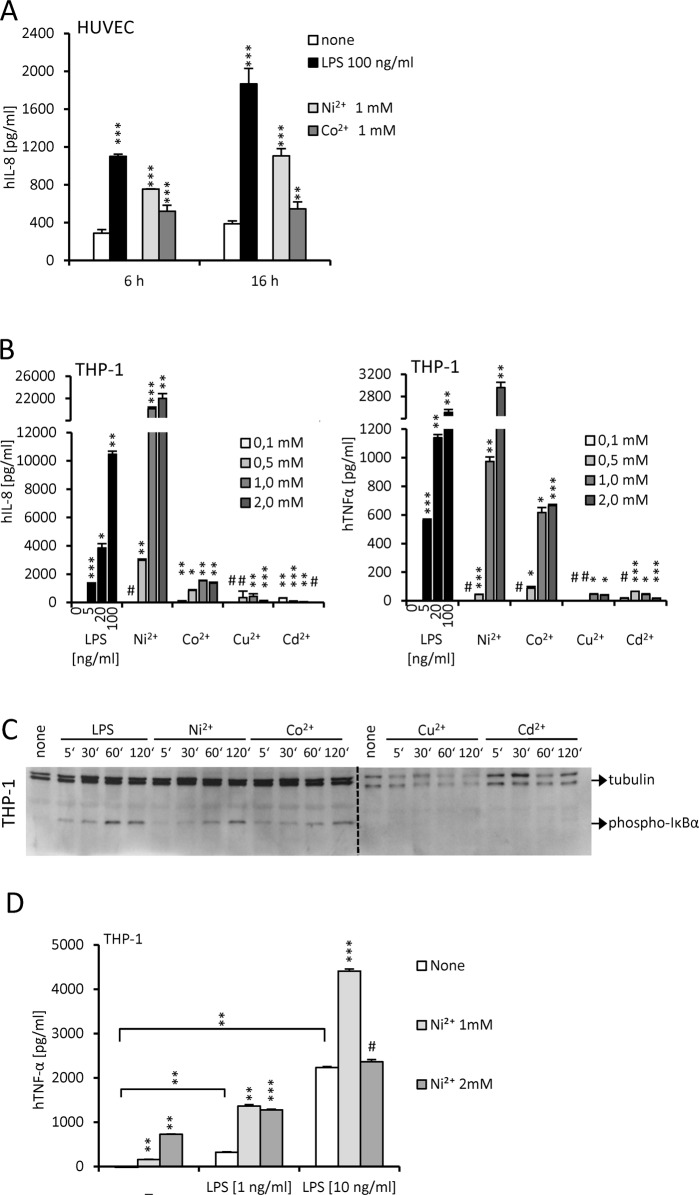
Fig 2. Nickel and cobalt trigger cytokine production and phosphorylation of intracellular signaling proteins.
(A) Nickel and cobalt stimulation elicits hIL-8 production. HUVEC cells were stimulated with LPS, nickel or cobalt for either 6 or 16 hours. hIL-8 concentration was measured in cell culture supernatants by ELISA. (B) THP-1 cells were stimulated with LPS or metal ions for 16 hours. Cytokine concentration was measured in cell culture supernatants by ELISA. (C) THP-1 cells were stimulated and the phosphorylation of the inhibitor of kappaB-alpha was detected with western blot. #p≥0,01 (not significant); *p<0,01; **p<0,001; ***p<0,0001 (t-test, compared to the unstimulated control). (D) THP-1 cells were stimulated with LPS alone or simultaneously with nickel for 6h. hTNF-α concentration was measured in cell culture supernatants by ELISA. #p≥0,01 (not significant); *p<0,01; **p<0,001; ***p<0,0001 (t-test, compared to the unstimulated control (as indicated by brackets) or compared to the cells not treated with nickel).
Fig 3
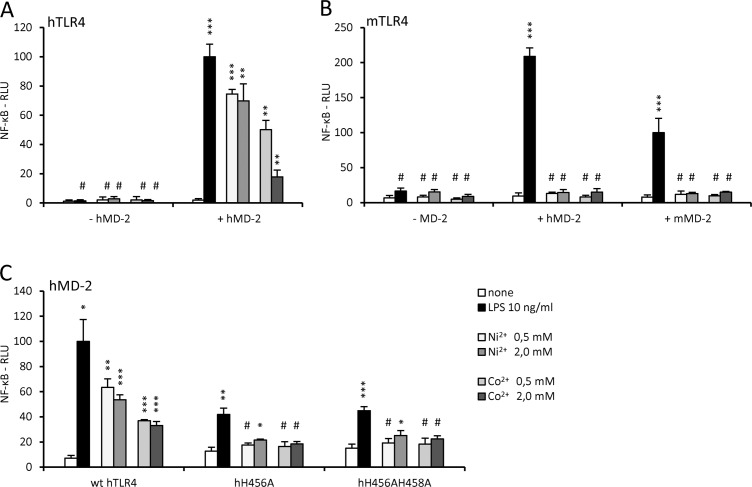
Fig 3. Nickel and cobalt activate HEK293 cells via human TLR4 and require MD-2 for activation.
(A) HEK293/hTLR4 cells were transfected with the luciferase reporter plasmids with or without the plasmid encoding hMD-2. After stimulation, the luciferase activity was measured. (B) Mouse TLR4 with either mouse or human MD-2 does not support activation by nickel or cobalt. HEK293/mTLR4 cells were transfected with the luciferase reporter plasmids with or without plasmid encoding MD-2. (C) Mutation of histidines at positions 456 and 458 in hTLR4 nearly abolishes responsiveness to nickel and cobalt ions. HEK293 cells were transfected with luciferase reporter plasmids, plasmid encoding hMD-2 and plasmid encoding either wild type or mutant hTLR4. Luciferase activity was measured as indicated in Methods. #p≥0,01 (not significant); *p<0,01; **p<0,001; ***p<0,0001 (t-test, compared to the unstimulated control). The chart legend applies to all three panels.
Fig 4
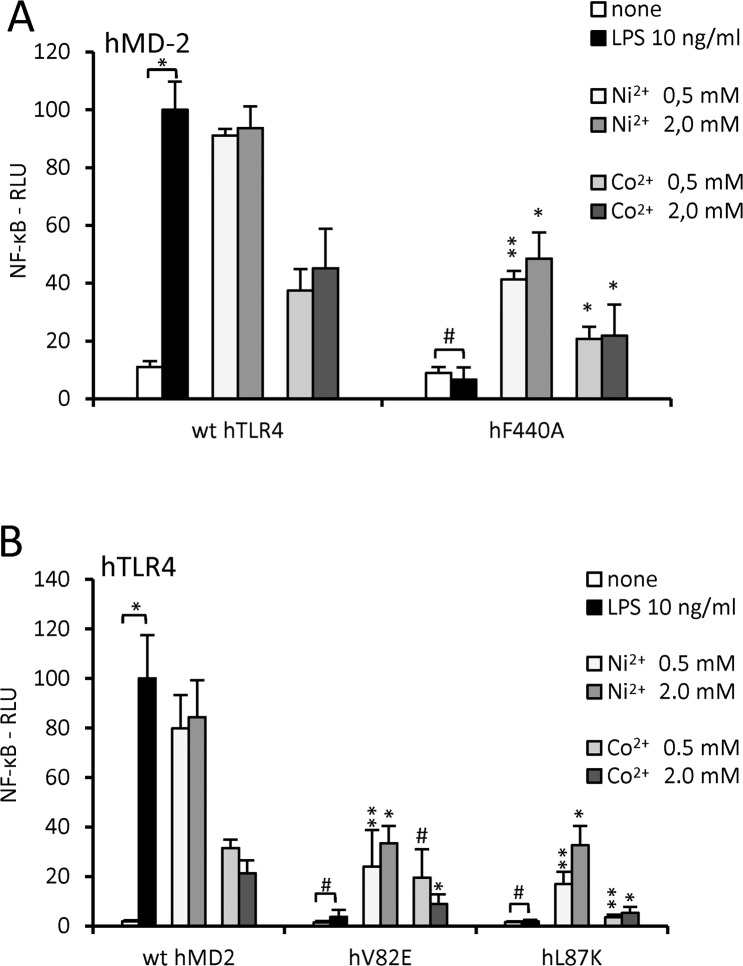
Fig 4. Activation of human TLR4 by metal ions requires different TLR4 and MD-2 residues than activation by endotoxin.
(A) hTLR4 amino acid residues that are essential for activation by LPS are not needed for activation by nickel or cobalt. HEK293 cells were transfected with luciferase reporter plasmids, plasmid encoding hMD-2 and plasmid encoding either wild type hTLR4 or the hTLR4 mutant hF440A. (B) hMD-2 amino acid residues that are essential for activation by LPS are not needed for activation by nickel or cobalt. HEK293/hTLR4 cells were transfected with luciferase reporter plasmids and with plasmid encoding either wild type or mutant hMD-2. #p≥0,01 (not significant); *p<0,01; **p<0,001; (t-test, compared to the unstimulated control (as indicated by brackets) or compared to the wt hTLR4 with the corresponding treatment).
Fig 5
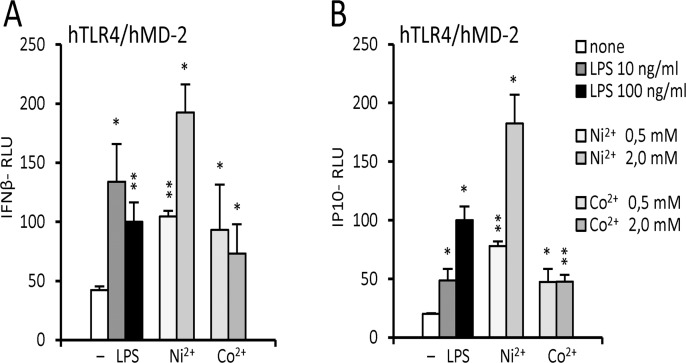
Fig 5. Nickel and cobalt activate MyD88-dependent and -independent pathways.
HEK293/hTLR4 cells were transfected with luciferase reporter plasmids (constitutive Renilla-luciferase reporter and inducible) (A) IFNβ-responsive or (B) IP-10-responsive firefly-luciferase reporter) and with plasmid encoding wild type hMD-2. *p<0,01; **p<0,001; (t-test, compared to the unstimulated control). The chart legend applies to both panels.
Fig 6
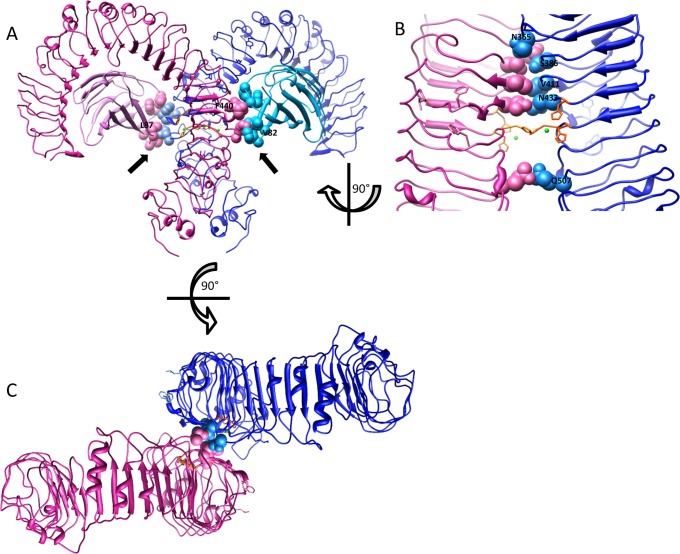
Fig 6. MD-2 provides crucial stabilization that supports the formation of TLR4/MD-2 heterodimer with nickel or cobalt ions.
(A) A ribbon representation of a TLR4/MD-2 heterodimer (pdb id 3fxi). Amino acid residues of both TLR4 and MD-2 that form hydrophobic interactions with each other are shown as spheres and indicated with arrows. (B) A ribbon representation of the intrinsic dimerization interface between both TLR4 ectodomains. Amino acid residues that engage in direct interactions with one another are shown as spheres. Histidines H431, H456 and H458 are represented as sticks and colored orange. Green spheres represent metal ions that are coordinated between the indicated histidines. (C) A ribbon representation of TLR4 dimer without MD-2 shown from a top view. Without MD-2 both TLR4 ectodomains lack proper stabilization and can wobble around one another, causing disruption of a proper conformation that would enable cytoplasmic TIR domain dimerization and consecutive triggering of the TLR4 receptor signaling pathway. Figures were prepared with the UCSF Chimera package [31].

References

    1. Vocanson M, Hennino A, Rozières A, Poyet G, Nicolas J-F. Effector and regulatory mechanisms in allergic contact dermatitis. Allergy. 2009;64: 1699–1714. 10.1111/j.1398-9995.2009.02082.x - DOI - PubMed
    1. Thyssen JP, Uter W, McFadden J, Menné T, Spiewak R, Vigan M, et al. The EU Nickel Directive revisited—future steps towards better protection against nickel allergy. Contact Dermatitis. 2011;64: 121–125. 10.1111/j.1600-0536.2010.01852.x - DOI - PubMed
    1. Barceloux DG. Cobalt. J Toxicol Clin Toxicol. 1999;37: 201–206. - PubMed
    1. Fitzgerald KA, Rowe DC, Golenbock DT. Endotoxin recognition and signal transduction by the TLR4/MD2-complex. Microbes Infect. 2004;6: 1361–1367. - PubMed
    1. Viriyakosol S, Tobias PS, Kitchens RL, Kirkland TN. MD-2 binds to bacterial lipopolysaccharide. J Biol Chem. 2001;276: 38044–38051. - PubMed

Publication types

MeSH terms

LinkOut - more resources