


Negative affect prior to and following overeating-only, loss of control eating-only, and binge eating episodes in obese adults
- PMID: 25808854
- PMCID: PMC4543439
- DOI: 10.1002/eat.22401
Negative affect prior to and following overeating-only, loss of control eating-only, and binge eating episodes in obese adults
Abstract
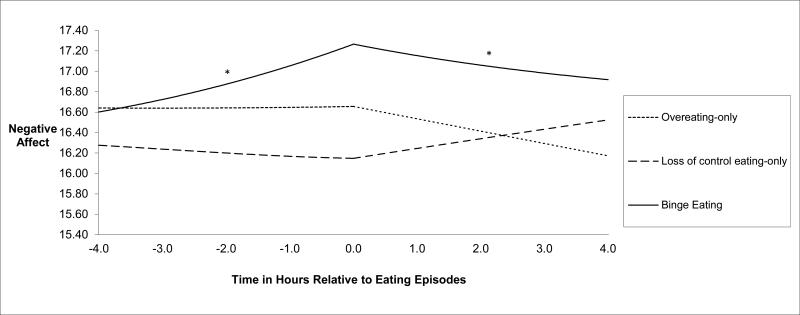
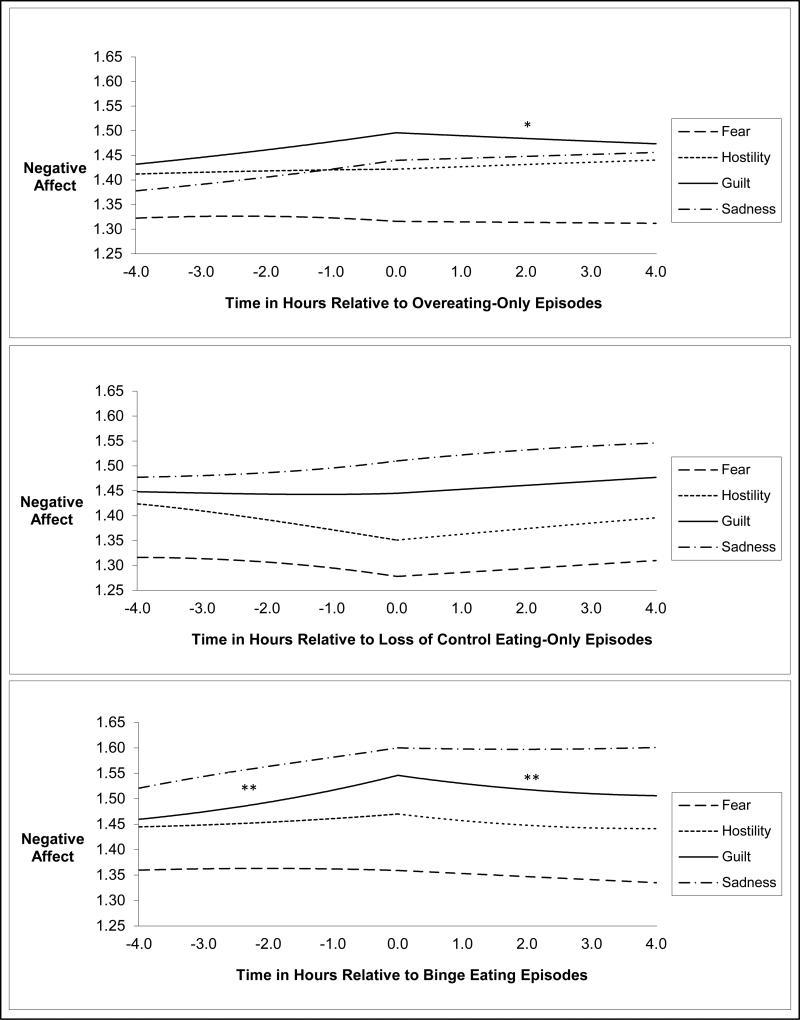
Objective: The objective was to examine the trajectory of five types of negative affect (global negative affect, fear, guilt, hostility, sadness) prior to and following three types of eating episodes (overeating in the absence of loss of control [OE-only], loss of control eating in the absence of overeating [LOC-only], and binge eating) among obese adults using ecological momentary assessment (EMA).
Method: Fifty obese adults (84% female) completed a two-week EMA protocol during which they were asked to record all eating episodes and rate each episode on continua of overeating and loss of control. Momentary measures of global negative affect, fear, guilt, hostility, and sadness were assessed using an abbreviated version of the Positive and Negative Affect Schedule (PANAS). Trajectories for each of the five types of negative affect were modeled prior to and following episodes of OE-only, LOC-only, and binge eating.
Results: Consistent with previous findings, global negative affect and Guilt increased prior to and decreased following binge eating episodes (all ps < .05). Guilt also decreased following OE-only episodes (p < .05).
Discussion: These results are consistent with the affect regulation model of binge eating and suggest that binge eating may function to regulate global negative affect, and more specifically, guilt among obese adults. These data suggest that the relationship between negative affect and binge eating may not be unique to individuals with clinical eating disorders and indicate that targeting negative affect may be an effective strategy for the treatment of binge eating in the context of obesity.
Keywords: affect regulation model; binge eating; ecological momentary assessment; negative affect; obesity.
© 2015 Wiley Periodicals, Inc.
Figures
References
-
- American Psychiatric Association . Diagnostic and statistical manual of mental disorders. American Psychiatric Association; Arlington, VA: 2013.
-
- Mannucci E, Tesi F, Ricca V, Pierazzuoli E, Barciulli E, Moretti S, et al. Eating behavior in obese patients with and without type 2 diabetes mellitus. Int J Obes. 2002;26:848–853. - PubMed
-
- Goodwin RD, Hoven CW, Spitzer RL. Diabetes and eating disorders in primary care. Int J Eat Disord. 2003;33:85–91. - PubMed
Publication types
MeSH terms
Grants and funding
LinkOut - more resources
Full Text Sources
Other Literature Sources
Medical
Research Materials
