


Neutrophil functions in morbidly obese subjects
- PMID: 25809538
- PMCID: PMC4469166
- DOI: 10.1111/cei.12631
Neutrophil functions in morbidly obese subjects
Abstract
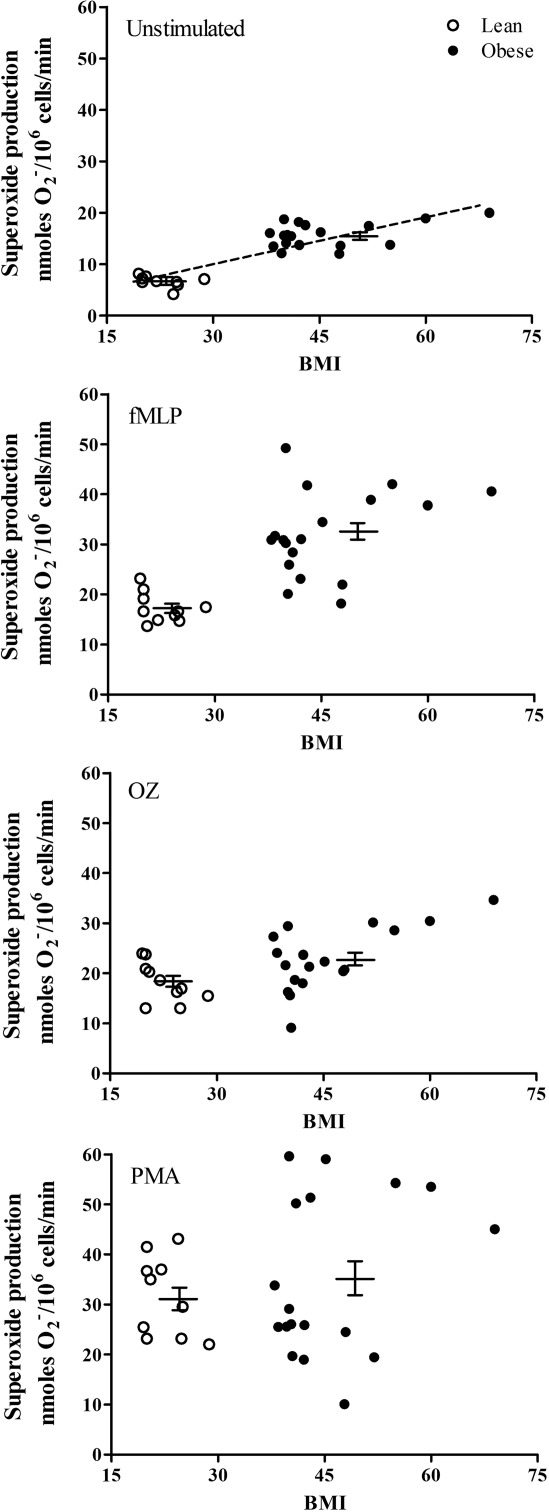
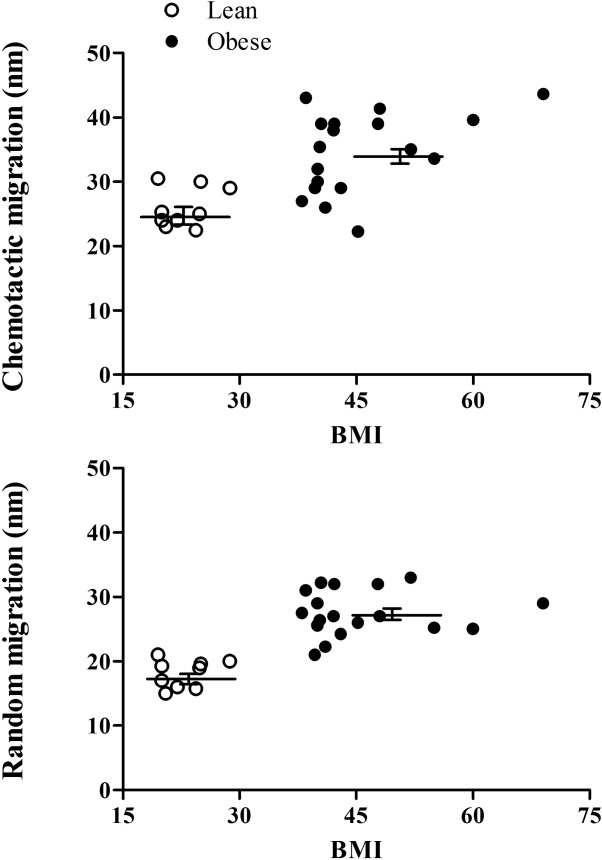
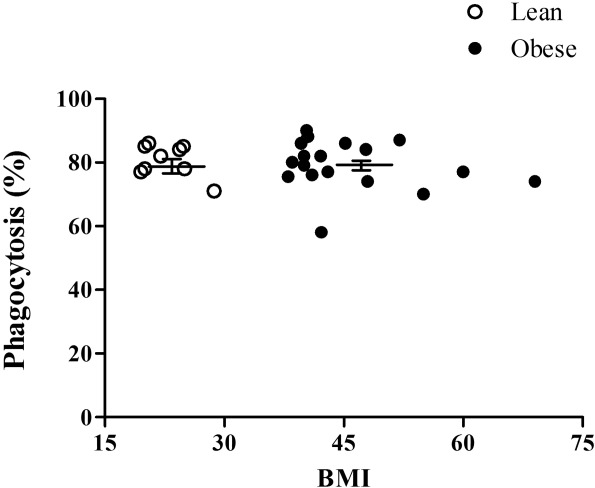
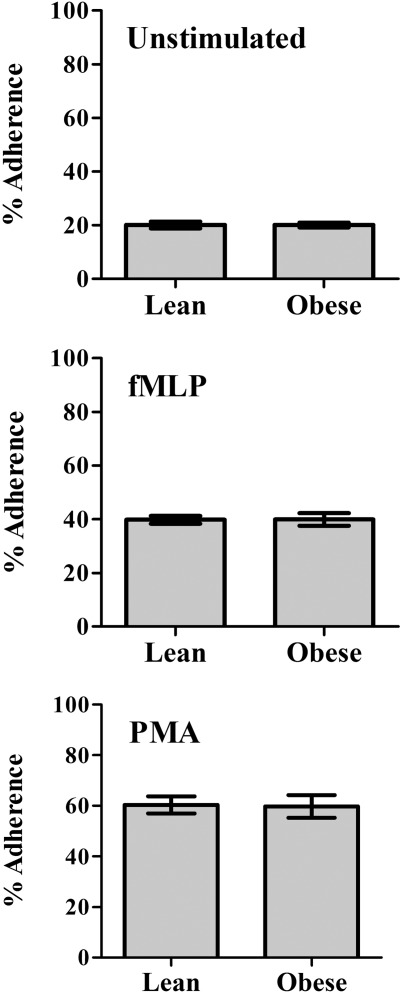
The present study aimed to determine different peripheral blood neutrophil functions in 18 morbidly obese subjects with body mass index (BMI) ranging between 35 and 69 kg/m(2) in parallel with age- and gender-matched lean controls. Peripheral blood neutrophil functions of obese subjects and matched lean controls were determined. Neutrophils of obese subjects showed significant elevation of the release of basal superoxides (P < 0.0001), formyl-methionyl-leucyl-phenylalanine (fMLP)-stimulated superoxides (P < 0.0001) and opsonized zymosan (OZ)-stimulated superoxides (P < 0.045) compared with lean controls. Interestingly, there were no differences in phorbol myristate acetate (PMA)-stimulated superoxide production by neutrophils of the obese subjects and controls. There was also a significant elevation of chemotactic (P < 0.0003) and random (P < 0.0001) migration of neutrophils from obese subjects compared with lean controls. Phagocytosis, CD11b surface expression and adherence of neutrophils from obese subjects were not significantly different from those of the lean controls. The elevated superoxide production and chemotactic activity, together with the normal phagocytosis and adherence, suggest that neutrophils from obese subjects are primed and have the capability to combat infections. However, neutrophils in the priming state may participate in the pathogenesis of obesity-related diseases.
Keywords: cell activation; chemotaxis; neutrophils; phagocytosis.
© 2015 British Society for Immunology.
Figures
References
-
- Shoelson S, Herrero L, Naaz A. Obesity, inflammation, and insulin resistance. Gastroenterology. 2007;132:2169–80. - PubMed
-
- Bruun J, Lihn A, Madan A, et al. Higher production of IL-8 in visceral vs. subcutaneous adipose tissue. Implication of nonadipose cells in adipose tissue. Am J Physiol Endocrinol Metab. 2004;286:E8–13. - PubMed
-
- Fasol R, Schindler M, Schumacher B, et al. The influence of obesity on perioperative morbidity: retrospective study of 502 aortocoronary bypass operations. Thorac Cardiovasc Surg. 1992;40:126–9. - PubMed
-
- Massie JB, Heller JG, Abitbol JJ, McPherson D, Garfin SR. Postoperative posterior spinal wound infections. Clin Orthop Relat Res. 1992;284:99–108. - PubMed
-
- Palmblad J, Hallberg D, Engstedt L. Polymorphonuclear (PMN) function after small intestinal shunt operation for morbid obesity. Br J Haematol. 1980;44:101–8. - PubMed
MeSH terms
Substances
LinkOut - more resources
Full Text Sources
Other Literature Sources
Research Materials
