


Hemoglobin βCys93 is essential for cardiovascular function and integrated response to hypoxia
- PMID: 25810253
- PMCID: PMC4443356
- DOI: 10.1073/pnas.1502285112
Hemoglobin βCys93 is essential for cardiovascular function and integrated response to hypoxia
Erratum in
-
Correction for Zhang et al., Hemoglobin βCys93 is essential for cardiovascular function and integrated response to hypoxia.Proc Natl Acad Sci U S A. 2015 May 26;112(21):E2846. doi: 10.1073/pnas.1506997112. Epub 2015 May 1. Proc Natl Acad Sci U S A. 2015. PMID: 25934916 Free PMC article. No abstract available.
Abstract
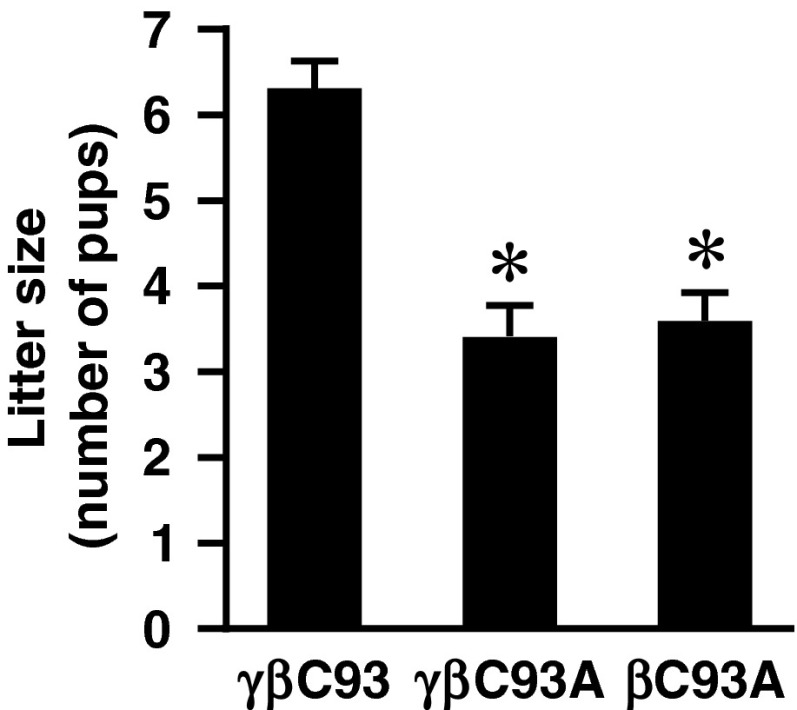
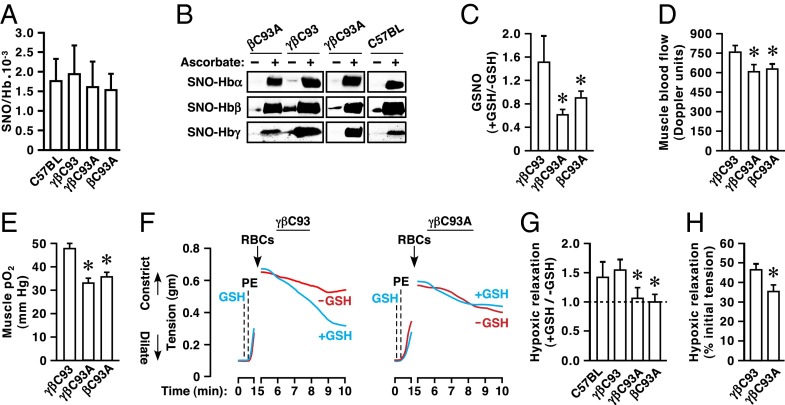
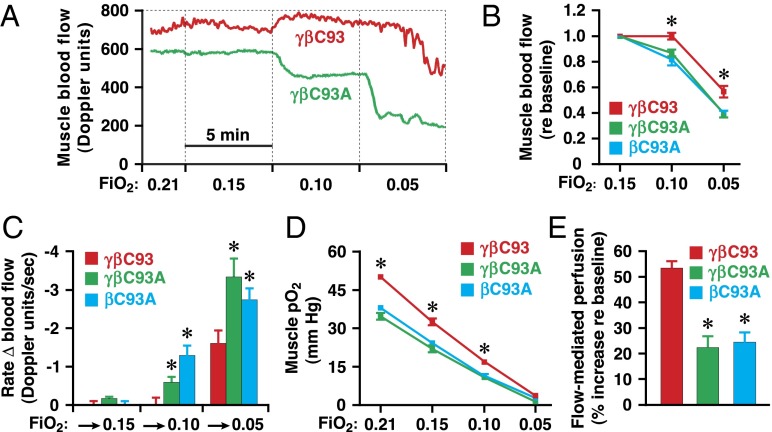
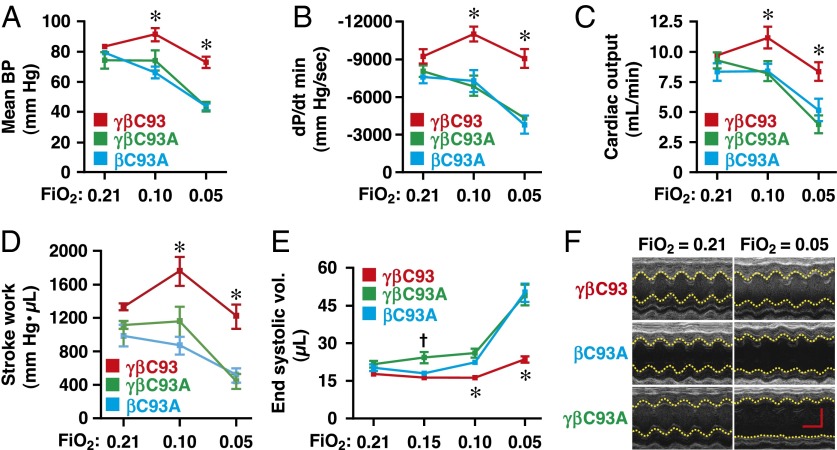
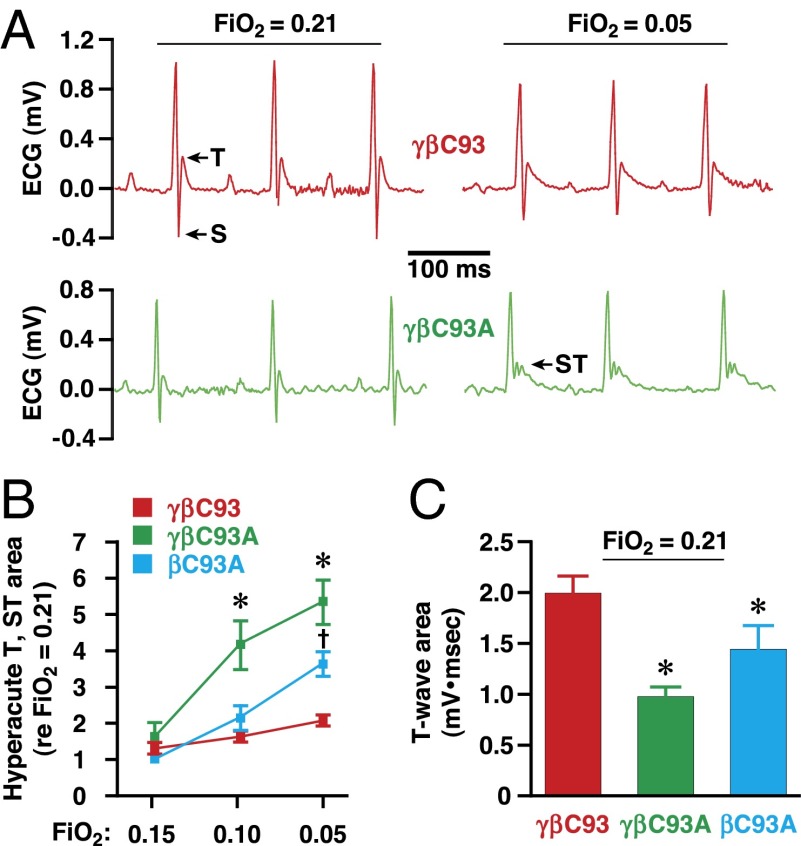
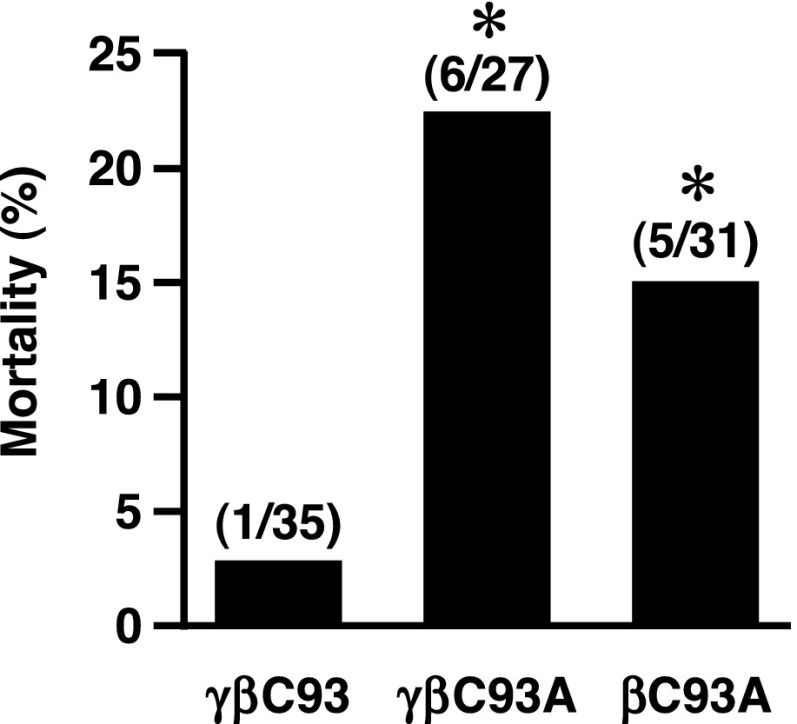
Oxygen delivery by Hb is essential for vertebrate life. Three amino acids in Hb are strictly conserved in all mammals and birds, but only two of those, a His and a Phe that stabilize the heme moiety, are needed to carry O2. The third conserved residue is a Cys within the β-chain (βCys93) that has been assigned a role in S-nitrosothiol (SNO)-based hypoxic vasodilation by RBCs. Under this model, the delivery of SNO-based NO bioactivity by Hb redefines the respiratory cycle as a triune system (NO/O2/CO2). However, the physiological ramifications of RBC-mediated vasodilation are unknown, and the apparently essential nature of βCys93 remains unclear. Here we report that mice with a βCys93Ala mutation are deficient in hypoxic vasodilation that governs blood flow autoregulation, the classic physiological mechanism that controls tissue oxygenation but whose molecular basis has been a longstanding mystery. Peripheral blood flow and tissue oxygenation are decreased at baseline in mutant animals and decline excessively during hypoxia. In addition, βCys93Ala mutation results in myocardial ischemia under basal normoxic conditions and in acute cardiac decompensation and enhanced mortality during transient hypoxia. Fetal viability is diminished also. Thus, βCys93-derived SNO bioactivity is essential for tissue oxygenation by RBCs within the respiratory cycle that is required for both normal cardiovascular function and circulatory adaptation to hypoxia.
Keywords: S-nitrosohemoglobin; S-nitrosylation; hypoxic vasodilation; nitric oxide.
Conflict of interest statement
The authors declare no conflict of interest.
Figures
Comment in
-
Regulation of oxygen delivery to the body via hypoxic vasodilation.Proc Natl Acad Sci U S A. 2015 May 19;112(20):6254-5. doi: 10.1073/pnas.1506523112. Epub 2015 May 5. Proc Natl Acad Sci U S A. 2015. PMID: 25944936 Free PMC article. No abstract available.
References
-
- Perutz MF. Blood. Taking the pressure off. Nature. 1996;380(6571):205–206. - PubMed
-
- Perutz MF. 2001. Molecular anatomy and physiology of hemoglobin. Disorders of Hemoglobin: Genetics, Pathophysiology, and Clinical Management, eds Steinberg MH, Forget BG, Higgs DR, Nagel RL (Cambridge Univ Press, Cambridge, UK), pp 174–196.
-
- Jia L, Bonaventura C, Bonaventura J, Stamler JS. S-nitrosohaemoglobin: A dynamic activity of blood involved in vascular control. Nature. 1996;380(6571):221–226. - PubMed
Publication types
MeSH terms
Substances
Grants and funding
LinkOut - more resources
Full Text Sources
Other Literature Sources
Molecular Biology Databases
