


A systematic review and meta-analysis of the epidemiology of pathogenic Escherichia coli of calves and the role of calves as reservoirs for human pathogenic E. coli
- PMID: 25815276
- PMCID: PMC4357325
- DOI: 10.3389/fcimb.2015.00023
A systematic review and meta-analysis of the epidemiology of pathogenic Escherichia coli of calves and the role of calves as reservoirs for human pathogenic E. coli
Abstract
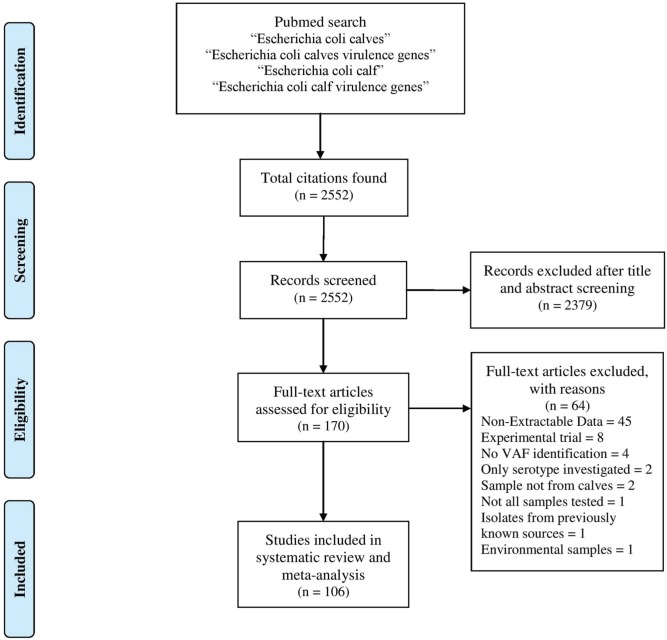
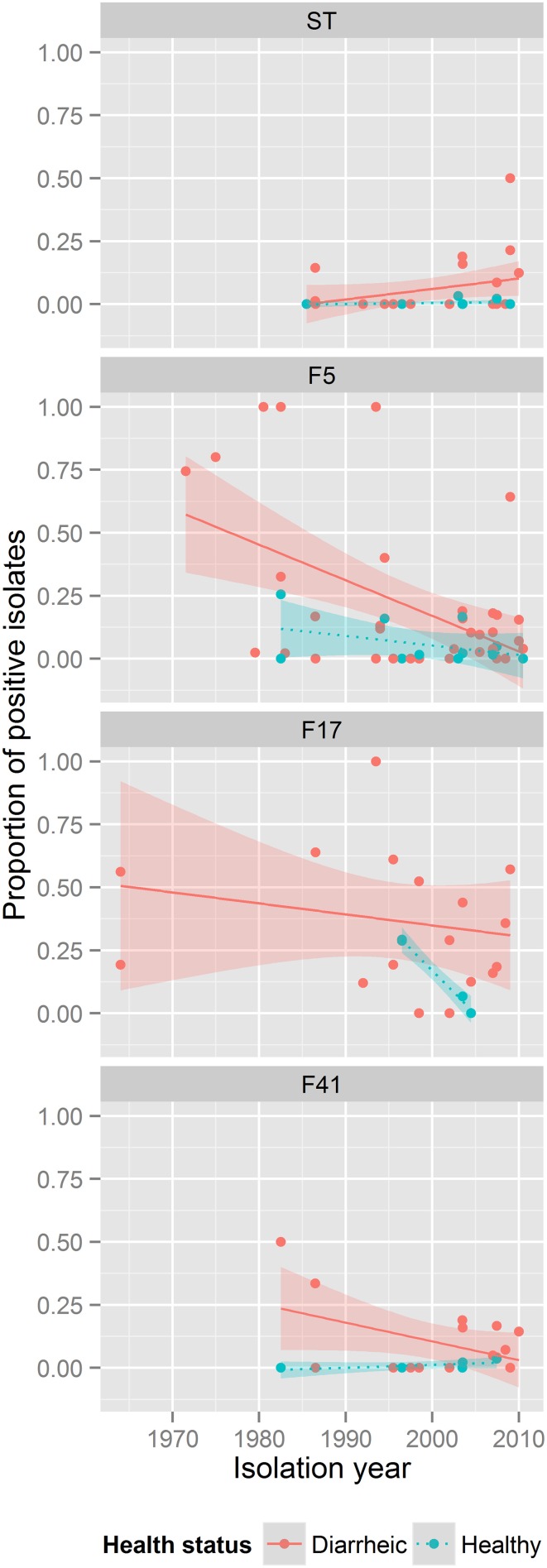
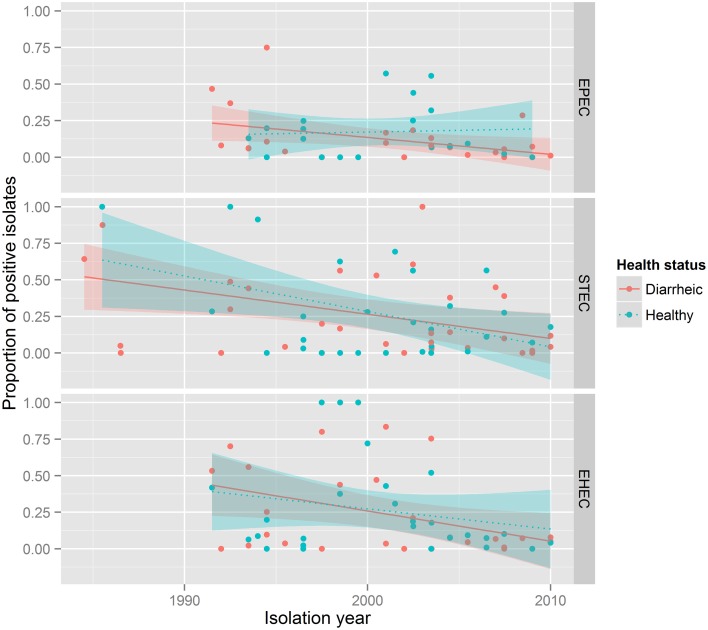
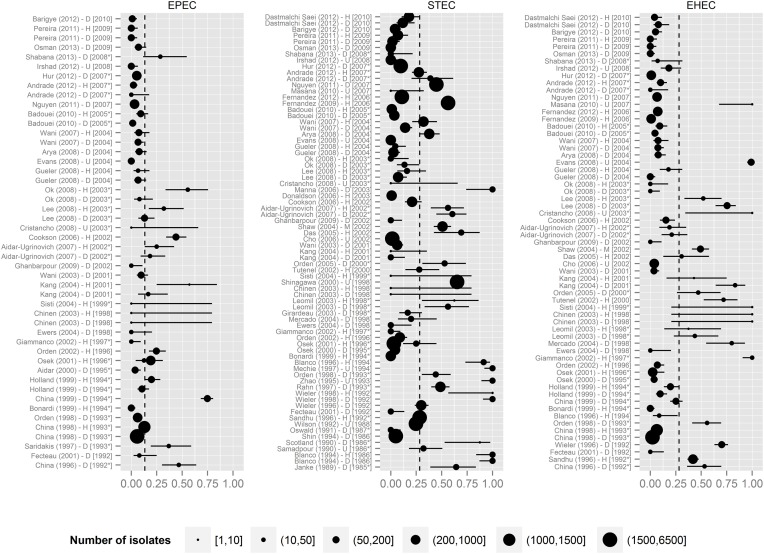
Escherichia coli bacteria are the most common causes of diarrhea and septicemia in calves. Moreover, calves form a major reservoir for transmission of pathogenic E. coli to humans. Systematic reviews and meta-analyses of publications on E. coli as calf pathogens and the role of calves as reservoir have not been done so far. We reviewed studies between 1951 and 2013 reporting the presence of virulence associated factors (VAFs) in calf E. coli and extracted the following information: year(s) and country of sampling, animal number, health status, isolate number, VAF prevalence, serotypes, diagnostic methods, and biological assays. The prevalence of VAFs or E. coli pathotypes was compared between healthy and diarrheic animals and was analyzed for time courses. Together, 106 papers with 25,982 E. coli isolates from 27 countries tested for VAFs were included. F5, F17, and F41 fimbriae and heat-stable enterotoxin (ST) - VAFs of enterotoxigenic E. coli (ETEC) were significantly associated with calf diarrhea. On the contrary, ETEC VAF F4 fimbriae and heat-labile enterotoxin as well as enteropathogenic (EPEC), Shiga toxin-producing (STEC), and enterohemorrhagic E. coli (EHEC) were not associated with diarrhea. The prevalence increased overtime for ST-positive isolates, but decreased for F5- and STEC-positive isolates. Our study provides useful information about the history of scientific investigations performed in this domain so far, and helps to define etiological agents of calf disease, and to evaluate calves as reservoir hosts for human pathogenic E. coli.
Keywords: EHEC; EPEC; ETEC; STEC; calves; diarrhea; meta-analysis; systematic review.
Figures
References
-
- Benjamini Y., Hochberg Y. (1995). Controlling the false discovery rate: a practical and powerful approach to multiple testing. J. R. Stat. Soc. B (Methodol.) 57, 289–300.
-
- Brown L. D., Cai T. T., DasGupta A. (2001). Interval estimation for a binomial proportion. Stat. Sci. 16, 101–133 10.1214/ss/1009213286 - DOI
-
- Burnette W. N. (1981). “Western Blotting”: electrophoretic transfer of proteins from sodium dodecyl sulfate-polyacrylamide gels to unmodified nitrocellulose and radiographic detection with antibody and radioiodinated protein A. Anal. Biochem. 112, 195–203. 10.1016/0003-2697(81)90281-5 - DOI - PubMed
Publication types
MeSH terms
Substances
LinkOut - more resources
Full Text Sources
Other Literature Sources
Medical
Miscellaneous
