


Culicidae community composition and temporal dynamics in Guapiaçu Ecological Reserve, Cachoeiras de Macacu, Rio de Janeiro, Brazil
- PMID: 25815724
- PMCID: PMC4376767
- DOI: 10.1371/journal.pone.0122268
Culicidae community composition and temporal dynamics in Guapiaçu Ecological Reserve, Cachoeiras de Macacu, Rio de Janeiro, Brazil
Abstract
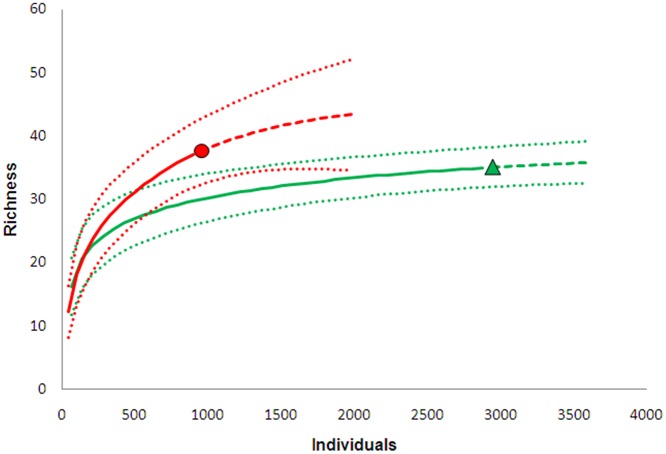
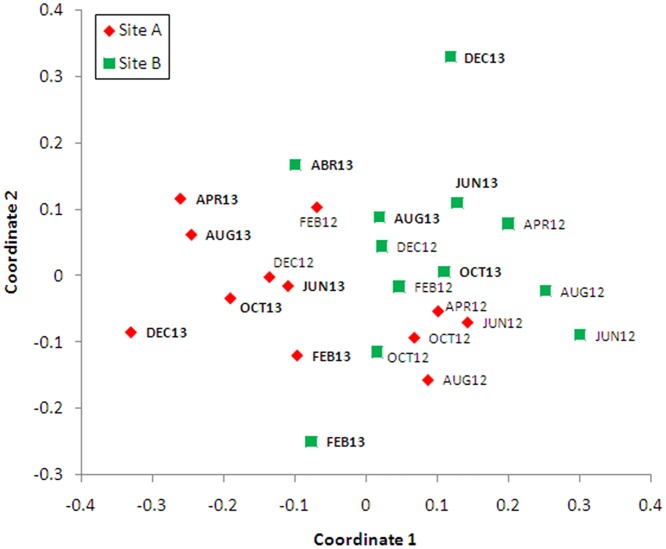
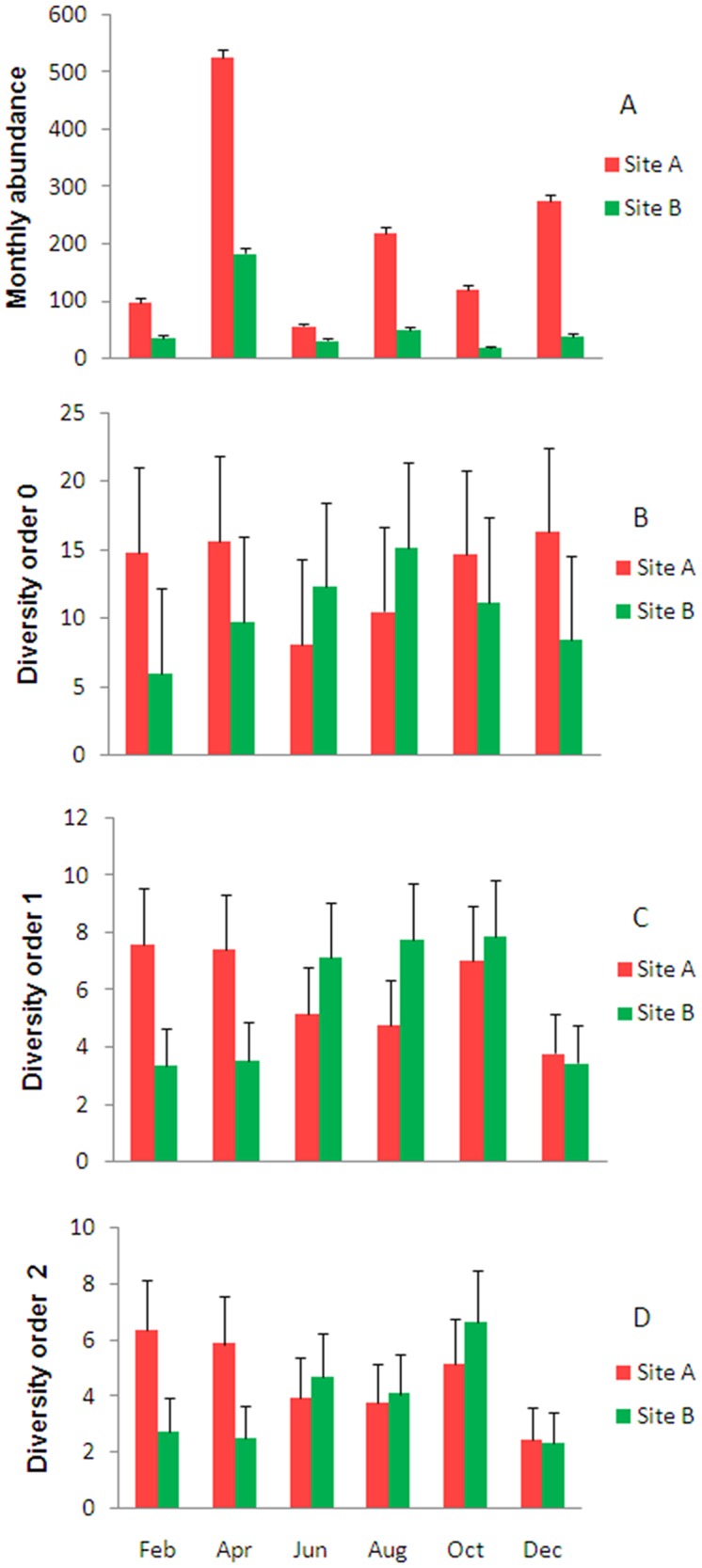
A temporal observational study was conducted of the Culicidae fauna in a remnant area of Atlantic Forest within a private reserve (Guapiaçu Ecological Reserve-REGUA) presenting typical vegetation cover of dense rain forest, with some patches recovering a floristic composition similar to that of the original community. Research was carried out to analyze the influence of climatic factors (mean monthly temperature, rainfall, and air relative humidity) on the temporal dynamics of the mosquito communities that occur in the reserve. The completeness of the mosquito inventory was assessed with individual-based rarefaction-extrapolation curves. Differences in species composition between sites and months were tested with PERMANOVA. True diversities of orders 0, 1, and 2 (effective numbers) were estimated and compared between sites, months, and years. Multiple stepwise regressions were used to assess relationships between climatic variables, measures of diversity, and abundances of the most common species. There were significant interactive effects between year and site on measures of diversity. However, diversity estimates showed little variation among months, and these were weakly correlated with climatic variables. Abundances of the most common species were significantly related to temperature or relative humidity, but not rainfall. The presence of mosquito species known to be vectors of human diseases combined with an intermittent flow of visitors to the study area suggests there is a risk of disease transmission that warrants further monitoring.
Conflict of interest statement
Figures
References
-
- Prochnow M, Schäffer WB (2002) A Mata Atlântica e você: Como preservar, recuperar e se beneficiar da mais ameaçada Floresta Brasileira. Brasilia: APREMAVI; 156 p.
-
- Tabarelli M, Aguiar AV, Ribeiro MC, Metzger JP, Peres CA (2010) Prospects for biodiversity conservation in the Atlantic Forest: Lessons from aging human-modified landscapes. Biol Conserv 143: 2328–2340. 10.1016/j.biocon.2010.02.005 - DOI
-
- Ribeiro AF, Urbinatti PR, Castro Duarte AMR, Paula MB de, Pereira DM, Mucci LF, et al. (2012) Mosquitoes in degraded and preserved areas of the Atlantic Forest and potential for vector-borne disease risk in the Municipality of São Paulo, Brazil. J Vector Ecol 37: 316–324. 10.1111/j.1948-7134.2012.00233.x - DOI - PubMed
Publication types
MeSH terms
LinkOut - more resources
Full Text Sources
Other Literature Sources
Medical
