


Methylxanthines Increase Expression of the Splicing Factor SRSF2 by Regulating Multiple Post-transcriptional Mechanisms
- PMID: 25818199
- PMCID: PMC4463444
- DOI: 10.1074/jbc.M114.624254
Methylxanthines Increase Expression of the Splicing Factor SRSF2 by Regulating Multiple Post-transcriptional Mechanisms
Abstract
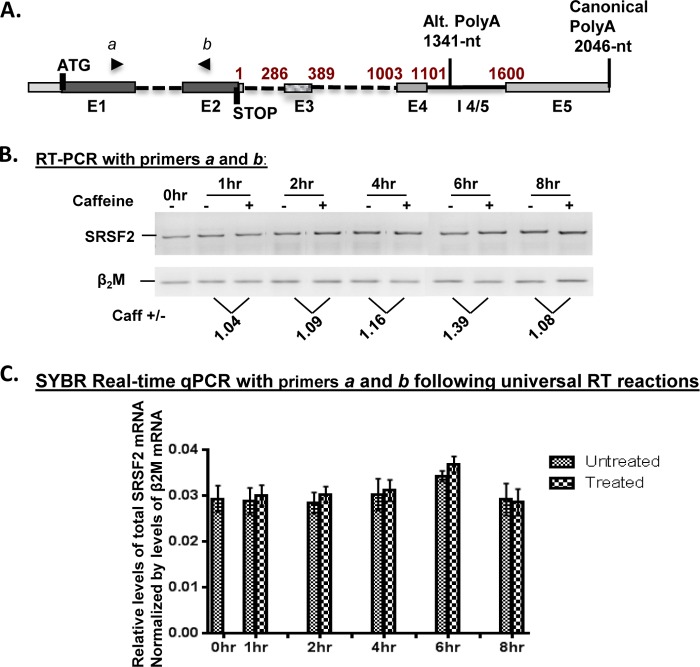
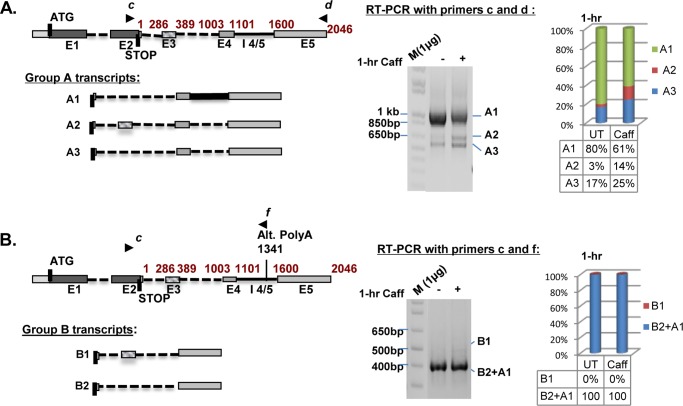
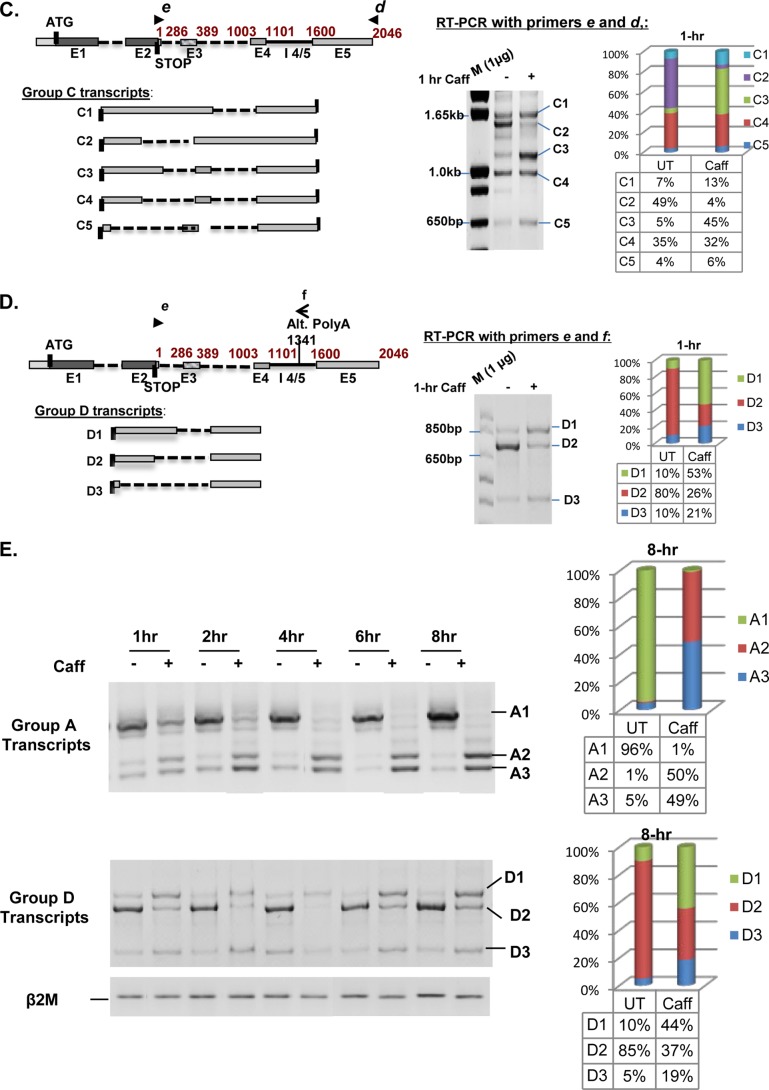
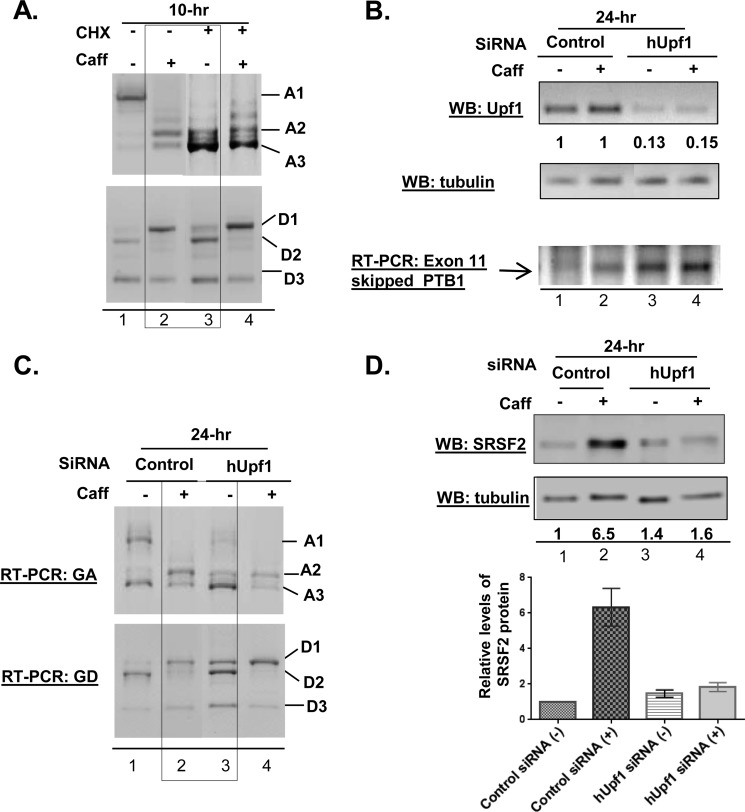
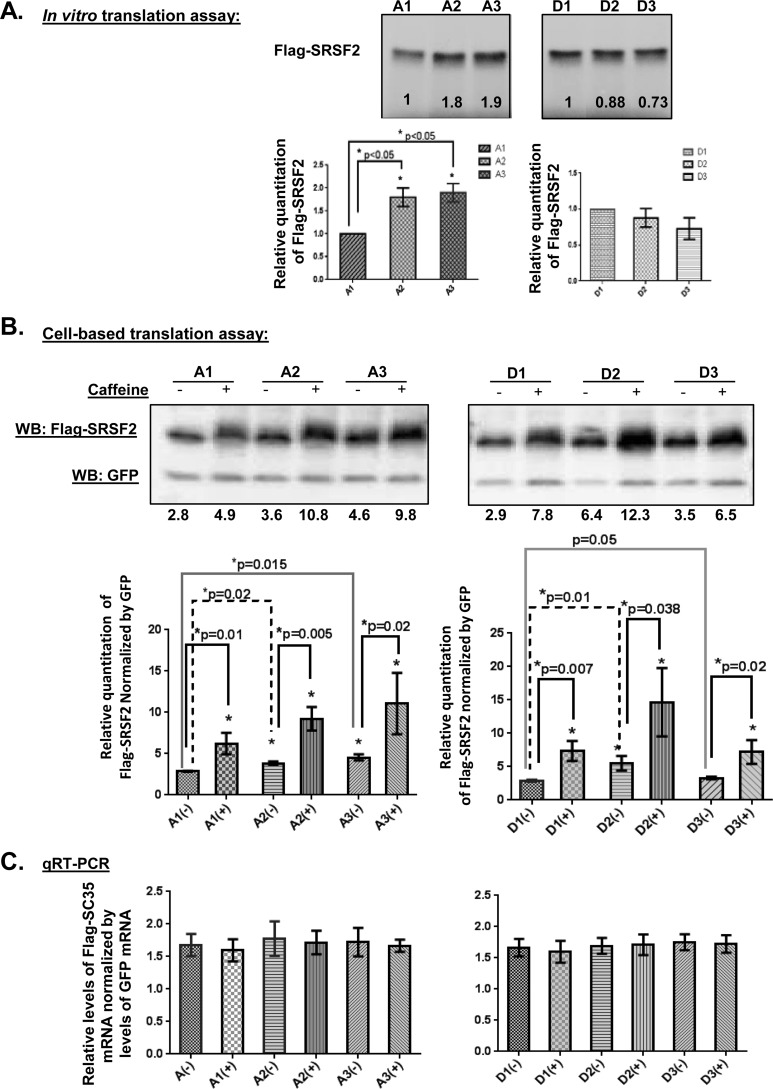
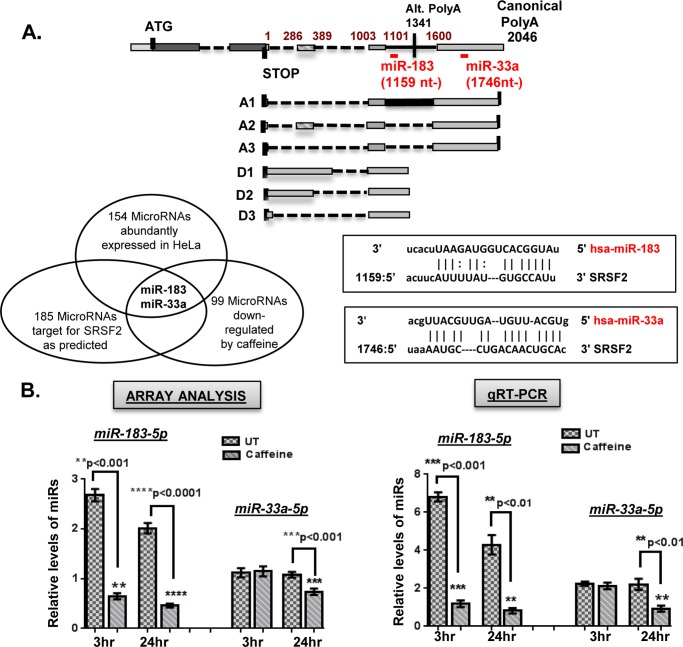
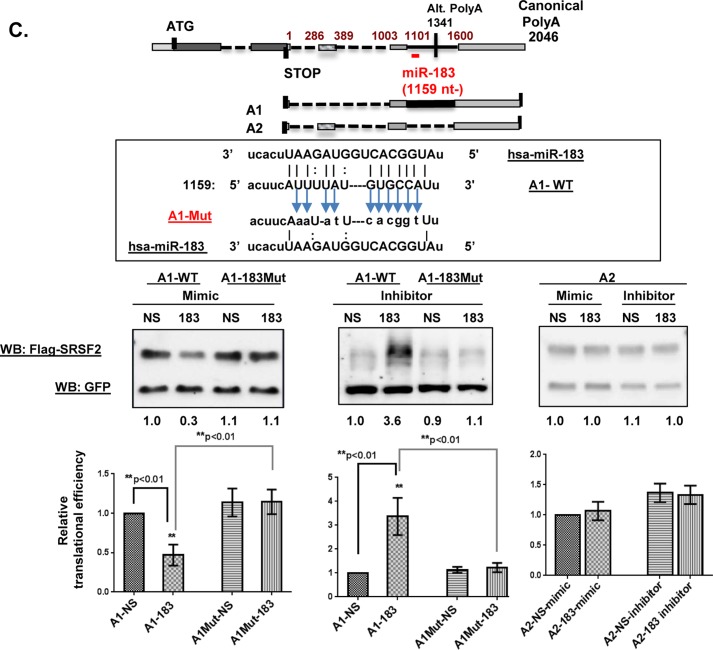
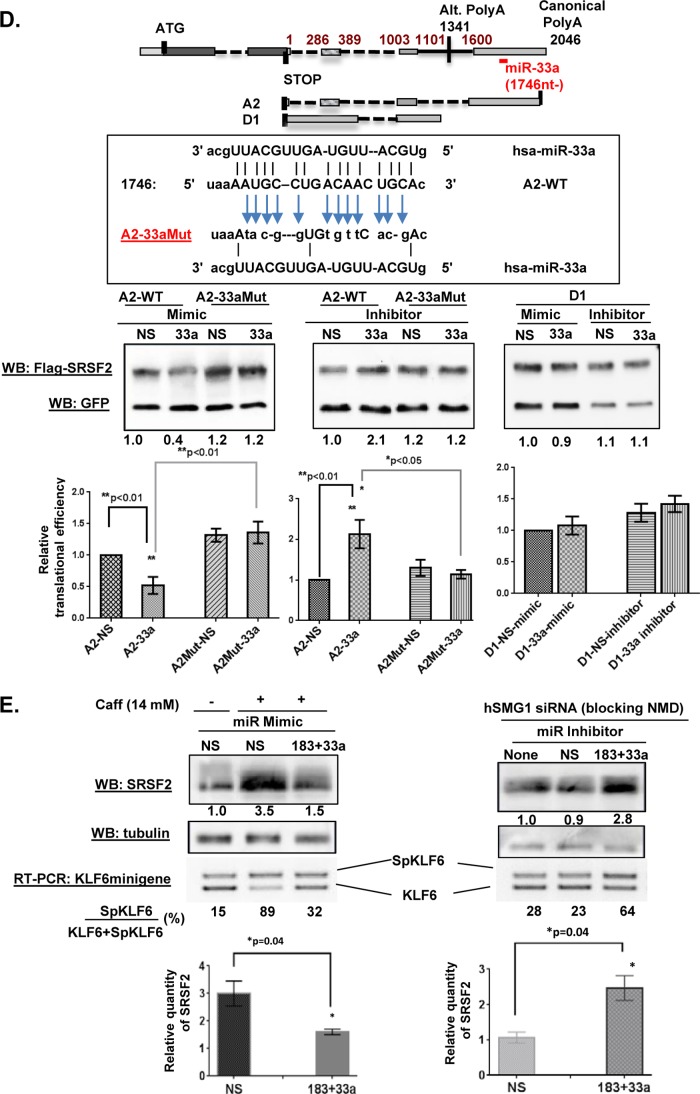
We have previously reported that the methylxanthine caffeine increases expression of the splicing factor SRSF2, the levels of which are normally controlled by a negative autoregulatory loop. In the present study we have investigated the mechanisms by which methylxanthines induce this aberrant overexpression. RT-PCR analyses suggested little impact of caffeine on SRSF2 total mRNA levels. Instead, caffeine induced changes in the levels of SRSF2 3' UTR splice variants. Although some of these variants were substrates for nonsense-medicated decay (NMD), and could potentially have been stabilized by caffeine-mediated inhibition of NMD, down-regulation of NMD by a genetic approach was not sufficient to reproduce the phenotype. Furthermore, cell-based assays demonstrated that some of the caffeine-induced variants were intrinsically more efficiently translated than others; the addition of caffeine increased the translational efficiency of most SRSF2 transcripts. MicroRNA array analyses revealed a significant caffeine-mediated decrease in the expression of two SRSF2-targeting miRs, both of which were shown to repress translation of specific SRSF2 splice variants. These data support a complex model whereby caffeine down-regulates SRSF2-targeting microRNAs, leading to an increase in SRSF2 translation, which in turn induces SRSF2 splicing. SRSF2 splice variants are then stabilized by caffeine-mediated NMD inhibition, breaking the normal negative feedback loop and allowing the aberrant increase in SRSF2 protein levels. These findings highlight the complexity of SRSF2 gene regulation, and suggest ways in which SRSF2 expression may be dysregulated in disease.
Keywords: alternative splicing; caffeine, SRSF2, nonsense-mediated decay; gene regulation; homeostasis; microRNA (miRNA); translation regulation.
© 2015 by The American Society for Biochemistry and Molecular Biology, Inc.
Figures


References
-
- McGlincy N. J., Smith C. W. (2008) Alternative splicing resulting in nonsense-mediated mRNA decay: what is the meaning of nonsense? Trends Biochem. Sci. 33, 385–393 - PubMed
Publication types
MeSH terms
Substances
Grants and funding
LinkOut - more resources
Full Text Sources
Other Literature Sources
Medical
Research Materials
