Anti-inflammatory and wound healing potential of cashew apple juice (Anacardium occidentale L.) in mice
- PMID: 25819683
- PMCID: PMC4935347
- DOI: 10.1177/1535370215576299
Anti-inflammatory and wound healing potential of cashew apple juice (Anacardium occidentale L.) in mice
Abstract
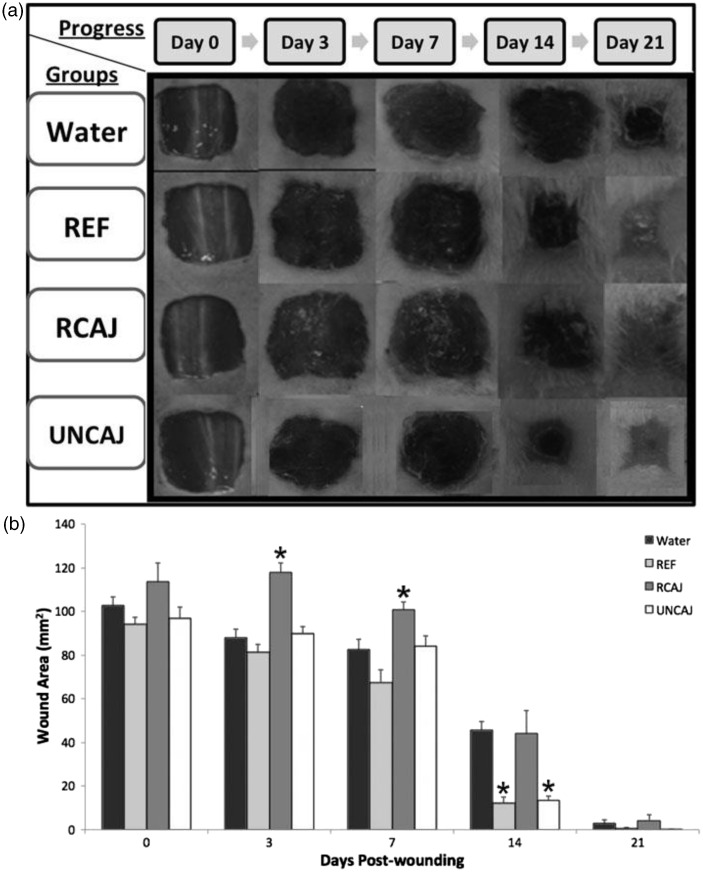
Cashew apple is a tropical pseudofruit consumed as juice due to its excellent nutritional and sensory properties. In spite of being well known for its important antioxidant properties, the cashew apple has not been thoroughly investigated for its therapeutic potential. Thereby, this study evaluated the antioxidant capacity, anti-inflammatory, and wound-healing activities of cashew apple juice. Juices from ripe and immature cashew apples were analyzed for antioxidant, anti-inflammatory, and wound-healing properties. Those were evaluated in murine models of xylene-induced ear edema and wound excision. Swiss mice were treated with cashew juice by gavage. Edema thickness was measured and skin lesions were analyzed by planimetry and histology. Both antioxidant content and total antioxidant activity were higher in ripe cashew apple juice (RCAJ) than in unripe cashew apple juice (UNCAJ). The UNCAJ presented the main anti-inflammatory activity by a significant inhibition of ear edema (66.5%) when compared to RCAJ (10%). Moreover, UNCAJ also showed the best result for wound contraction (86.31%) compared to RCAJ (67.54%). Despite of higher antioxidant capacity, RCAJ did not promote better anti-inflammatory, and healing responses, which may be explained by the fact that treatment increased antioxidants level leading to a redox "imbalance" turning down the inflammatory response modulation exerted by reactive oxygen species (ROS). The results suggest that UNCAJ presents a greater therapeutic activity due to a synergistic effect of its phytochemical components, which improve the immunological mechanisms as well as an optimal balance between ROS and antioxidants leading to a better wound healing process.
Keywords: Anacardium occidentale; antioxidants; inflammation; wound healing activity.
© 2015 by the Society for Experimental Biology and Medicine.
Figures

References
-
- Sivagurunathan P, Sivasankari S, Muthukkaruppan SM. Characterisation of cashew apple (Anacardium occidenale L.) fruits collected from Ariyalur District. J Biosci Res 2010; 1: 101–7.
-
- Santos RP, Santiago AAX, Gadelha CAA, Cajazeiras JB, Cavada BS, Martins JL, Oliveira TM, Bezerra GA, Santos RP, Freire VN. Production and characterization of the cashew (Anacardium occidentale L.) peduncle bagasse ashes. J Food Eng 2007; 79: 1432–7.
-
- Akinwale TO. Cashew apple juice. Its use in fortifying the nutritional quality of some tropical fruits. Eur Food Res Technol 2000; 211: 205–7.
-
- Kubo I, Masuoka N, Ha TJ, Tsujimoto K. Antioxidant activity of anacardic acids. Food Chem 2006; 99: 555–62.
-
- Chagas CMA, Honorato TL, Pinto GAS, Maia GA, Rodrigues S. Dextransucrase production using cashew apple juice as substrate: effect of phosphate and yeast extract addition. Bioprocess Biosyst Eng 2007; 30: 207–15. - PubMed
Publication types
MeSH terms
Substances
LinkOut - more resources
Full Text Sources
Other Literature Sources
Medical