


Multiple factors affect immunogenicity of DNA plasmid HIV vaccines in human clinical trials
- PMID: 25820067
- PMCID: PMC4433533
- DOI: 10.1016/j.vaccine.2015.03.036
Multiple factors affect immunogenicity of DNA plasmid HIV vaccines in human clinical trials
Abstract
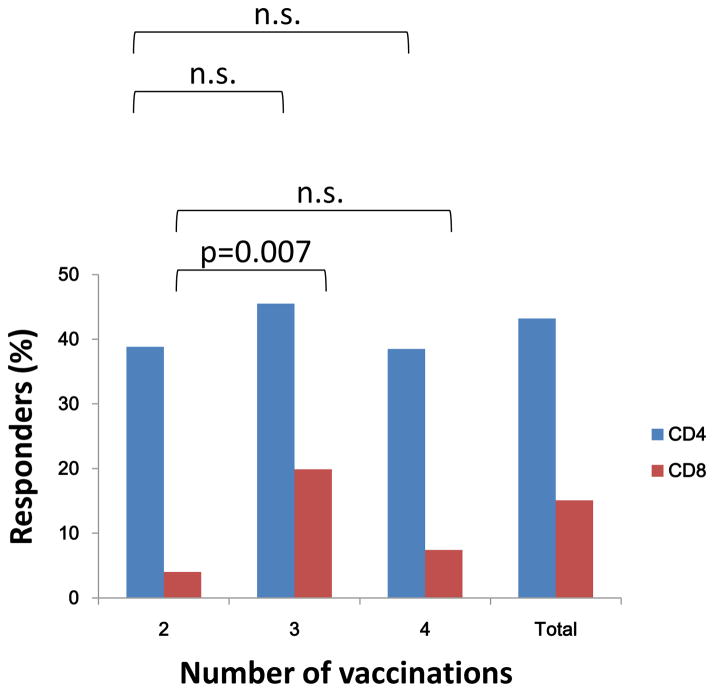
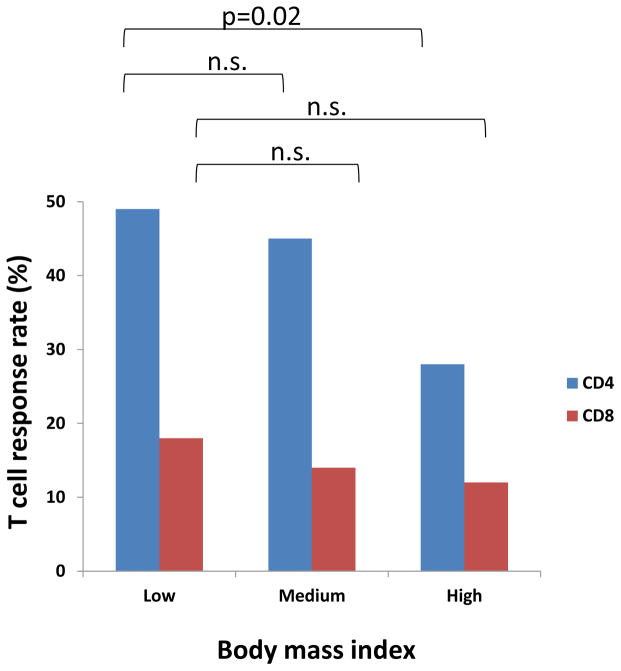
Plasmid DNA vaccines have been licensed for use in domesticated animals because of their excellent immunogenicity, but none have yet been licensed for use in humans. Here we report a retrospective analysis of 1218 healthy human volunteers enrolled in 10 phase I clinical trials in which DNA plasmids encoding HIV antigens were administered. Elicited T-cell immune responses were quantified by validated intracellular cytokine staining (ICS) stimulated with HIV peptide pools. HIV-specific binding and neutralizing antibody activities were also analyzed using validated assays. Results showed that, in the absence of adjuvants and boosting with alternative vaccines, DNA vaccines elicited CD8+ and CD4+ T-cell responses in an average of 13.3% (95% CI: 9.8-17.8%) and 37.7% (95% CI: 31.9-43.8%) of vaccine recipients, respectively. Three vaccinations (vs. 2) improved the proportion of subjects with antigen-specific CD8+ responses (p=0.02), as did increased DNA dosage (p=0.007). Furthermore, female gender and participants having a lower body mass index were independently associated with higher CD4+ T-cell response rate (p=0.001 and p=0.008, respectively). These vaccines elicited minimal neutralizing and binding antibody responses. These findings of the immunogenicity of HIV DNA vaccines in humans can provide guidance for future clinical trials.
Trial registration: ClinicalTrials.gov NCT00069030 NCT00071851 NCT00111605 NCT00115960 NCT00125970 NCT00141024 NCT00270218 NCT00384787 NCT00528489 NCT00991354.
Keywords: Clinical trial; DNA vaccine; HIV; Immune response.
Copyright © 2015 Elsevier Ltd. All rights reserved.
Conflict of interest statement
The authors do not have potential conflicts of interest with the work presented in this article.
Figures
References
-
- Liu MA. DNA vaccines: an historical perspective and view to the future. Immunol Rev. 2011;239(1):62–84. - PubMed
-
- Shibui A, Nakae S, Watanabe J, et al. Screening of novel malaria DNA vaccine candidates using full-length cDNA library. Exp Parasitol. 2013;135(3):546–50. - PubMed
-
- Ahmad G1, Zhang W, Torben W, et al. Preclinical prophylactic efficacy testing of Sm-p80-based vaccine in a nonhuman primate model of Schistosoma mansoni infection and immunoglobulin G and E responses to Sm-p80 in human serum samples from an area where schistosomiasis is endemic. J Infect Dis. 2011;204(9):1437–49. - PMC - PubMed
Publication types
MeSH terms
Substances
Associated data
Grants and funding
LinkOut - more resources
Full Text Sources
Other Literature Sources
Medical
Research Materials
