


Interventions for reducing wrong-site surgery and invasive clinical procedures
- PMID: 25821069
- PMCID: PMC7104666
- DOI: 10.1002/14651858.CD009404.pub3
Interventions for reducing wrong-site surgery and invasive clinical procedures
Abstract
Background: Specific clinical interventions are needed to reduce wrong-site surgery, which is a rare but potentially disastrous clinical error. Risk factors contributing to wrong-site surgery are variable and complex. The introduction of organisational and professional clinical strategies have a role in minimising wrong-site surgery.
Objectives: To evaluate the effectiveness of organisational and professional interventions for reducing wrong-site surgery (including wrong-side, wrong-procedure and wrong-patient surgery), including non-surgical invasive clinical procedures such as regional blocks, dermatological, obstetric and dental procedures and emergency surgical procedures not undertaken within the operating theatre.
Search methods: For this update, we searched the following electronic databases: the Cochrane Effective Practice and Organisation of Care (EPOC) Group Specialised Register (January 2014), the Cochrane Central Register of Controlled Trials (The Cochrane Library 2014), MEDLINE (June 2011 to January 2014), EMBASE (June 2011 to January 2014), CINAHL (June 2011 to January 2014), Dissertations and Theses (June 2011 to January 2014), African Index Medicus, Latin American and Caribbean Health Sciences database, Virtual Health Library, Pan American Health Organization Database and the World Health Organization Library Information System. Database searches were conducted in January 2014.
Selection criteria: We searched for randomised controlled trials (RCTs), non-randomised controlled trials, controlled before-after studies (CBAs) with at least two intervention and control sites, and interrupted-time-series (ITS) studies where the intervention time was clearly defined and there were at least three data points before and three after the intervention. We included two ITS studies that evaluated the effectiveness of organisational and professional interventions for reducing wrong-site surgery, including wrong-side and wrong-procedure surgery. Participants included all healthcare professionals providing care to surgical patients; studies where patients were involved to avoid the incorrect procedures or studies with interventions addressed to healthcare managers, administrators, stakeholders or health insurers.
Data collection and analysis: Two review authors independently assesses the quality and abstracted data of all eligible studies using a standardised data extraction form, modified from the Cochrane EPOC checklists. We contacted study authors for additional information.
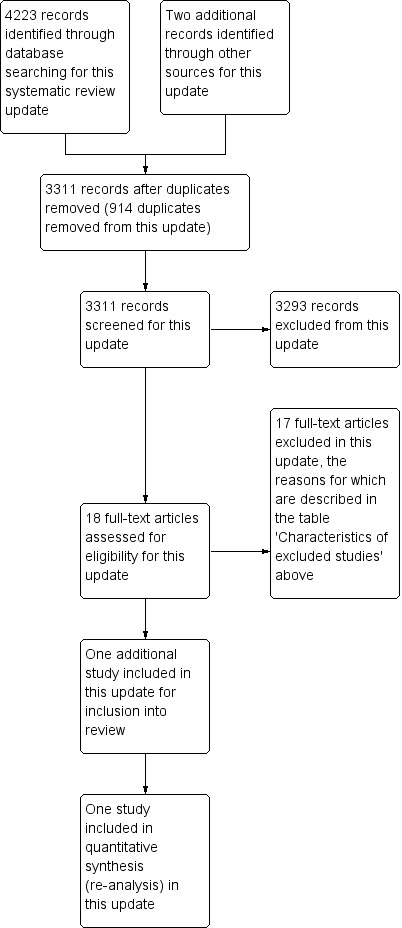
Main results: In the initial review, we included one ITS study that evaluated a targeted educational intervention aimed at reducing the incidence of wrong-site tooth extractions. The intervention included examination of previous cases of wrong-site tooth extractions, educational intervention including a presentation of cases of erroneous extractions, explanation of relevant clinical guidelines and feedback by an instructor. Data were reported from all patients on the surveillance system of a University Medical centre in Taiwan with a total of 24,406 tooth extractions before the intervention and 28,084 tooth extractions after the intervention. We re-analysed the data using the Prais-Winsten time series and the change in level for annual number of mishaps was statistically significant at -4.52 (95% confidence interval (CI) -6.83 to -2.217) (standard error (SE) 0.5380). The change in slope was statistically significant at -1.16 (95% CI -2.22 to -0.10) (SE 0.2472; P < 0.05).This update includes an additional study reporting on the incidence of neurological WSS at a university hospital both before and after the Universal Protocol's implementation. A total of 22,743 patients undergoing neurosurgical procedures at the University of Illionois College of Medicine at Peoria, Illinois, United States of America were reported. Of these, 7286 patients were reported before the intervention and 15,456 patients were reported after the intervention. The authors found a significant difference (P < 0.001) in the incidence of WSS between the before period, 1999 to 2004, and the after period, 2005 to 2011. Similarly, data were re-analysed using Prais-Winsten regression to correct for autocorrelation. As the incidences were reported by year only and the intervention occurred in July 2004, the intervention year 2004 was excluded from the analysis. The change in level at the point the intervention was introduced was not statistically significant at -0.078 percentage points (pp) (95% CI -0.176 pp to 0.02 pp; SE 0.042; P = 0.103). The change in slope was statistically significant at 0.031 (95% CI 0.004 to 0.058; SE 0.012; P < 0.05).
Authors' conclusions: The findings of this update added one additional ITS study to the previous review which contained one ITS study. The original review suggested that the use of a specific educational intervention in the context of a dental outpatient setting, which targets junior dental staff using a training session that included cases of wrong-site surgery, presentation of clinical guidelines and feedback by an instructor, was associated with a reduction in the incidence of wrong-site tooth extractions. The additional study in this update evaluated the annual incidence rates of wrong-site surgery in a neurosurgical population before and after the implementation of the Universal Protocol. The data suggested a strong downward trend in the incidence of wrong-site surgery prior to the intervention with the incidence rate approaching zero. The effect of the intervention in these studies however remains unclear, as data reflect only two small low-quality studies in very specific population groups.
Conflict of interest statement
None known.
Update of
-
Interventions for reducing wrong-site surgery and invasive procedures.Cochrane Database Syst Rev. 2012 Sep 12;(9):CD009404. doi: 10.1002/14651858.CD009404.pub2. Cochrane Database Syst Rev. 2012. Update in: Cochrane Database Syst Rev. 2015 Mar 30;(3):CD009404. doi: 10.1002/14651858.CD009404.pub3. PMID: 22972144 Updated.
References
References to studies included in this review
Chang 2004 {published data only}
-
- Chang HH, Lee JJ, Cheng SJ, Yang PJ, Hahn LJ, Kuo YS, et al. Effectiveness of an educational program in reducing the incidence of wrong‐site tooth extraction. Oral Surgery, Oral Medicine, Oral Pathology, Oral Radiology, and Endodontology 2004;98(3):288‐94. - PubMed
Vachhani 2013 {published data only}
-
- Vachhani JA, Klopfenstein JD. Incidence of neurosurgical wrong‐site surgery before and after implementation of the Universal Protocol. Neurosurgery 2013;72:590‐5. - PubMed
References to studies excluded from this review
Adelman 2013 {published data only}
Askarian 2011 {published data only}
-
- Askarian M, Kouchak F, Palenik CJ. Effect of surgical safety checklists on postoperative morbidity and mortality rates, Shiraz, Faghihy hospital, a 1‐year study. Quality Management in Health Care 2011;20(4):293‐7. - PubMed
Astrom 2013 {published data only}
-
- Astrom L. Adaptation of WHO safe surgery checklist to ophthalmic surgery. Insight (American Society of Ophthalmic Registered Nurses) 2013;382(2):8‐9. - PubMed
Avansino 2011 {published data only}
-
- Avansino JR, Javid P, Katz C, Drugas G, Goldin A. Implementation of a standardized procedural checklist in a children's hospital. American Journal of Surgery 2011;201(5):660‐5. - PubMed
Barusk 2011 {published data only}
-
- Barsuk JH, Brake H, Caprio T, Barnard C, Anderson DY, Williams MV. Process changes to increase compliance with the Universal Protocol for bedside procedures. Archives of Internal Medicine 2011;171(10):947‐9. - PubMed
Barzallo 2013 {published data only}
-
- Barzallo M, Bayya V, Minkoff H, Gillett B, Onortode H, Pletukhina N, et al. A randomized controlled trial of interventions to encourage trainees to speak up when witnessing surgical errors.. American Journal of Obstetrics & Gynecology 2013;208:S324 (abstract only).
Beckingsale 2011 {published data only}
-
- Beckingsale TB, Greiss ME. Getting off on the wrong foot‐ Doctor‐patient miscommunication: A risk for wrong site surgery . Foot and Ankle Surgery 2011;17(3):201‐2. - PubMed
Bergs 2013 {published data only}
-
- Bergs J, Zurel O, Cleemput I, Hellings J, Vandijck D. The implementation of a perioperative checklist increases patients’ perioperative safety and staff satisfaction. Letter. Acta Anaesthesiologica Scandinavica 2013;57(5):675. - PubMed
Bittle 2011 {published data only}
-
- Bittle M. Theatre team learns to use checklist to make surgery safer. Kai Tiaki Nursing New Zealand 2011;17(7):16‐7. - PubMed
Blanco 2009 {published data only}
-
- Blanco M, Clarke JR, Martindell D. Wrong site surgery near misses and actual occurrences. AORN Journal 2009;90(2):215‐8. - PubMed
Borchard 2012 {published data only}
-
- Borchard A, Schwappach DLB, Barbir A, Bezzola P. A systematic review of the effectiveness, compliance and critical factors for implementation of safety checklists in surgery. Annals of Surgery 2012;256:925‐33. - PubMed
Chassin 2011 {published data only}
-
- Chassin M. Want zero surgeries on the wrong site?. Same‐Day Surgery 2011;35(9):93.
Clarke 2007 {published data only}
Clarke 2013 {published data only}
-
- Clarke J. PA facilities implement wrong‐site best practices. Same‐Day Surgery 2013.
Cohen 2010 {published data only}
-
- Cohen FL, Mendelsohn D, Bernstein M. Wrong‐site craniotomy: analysis of 35 cases and systems for prevention. Journal of Neurosurgery 2010;113(3):461‐73. - PubMed
de Vries 2010 {published data only}
-
- Vries EN, Prins HA, Crolla RM, Outer AJ, Andel G, Helden SH, et al. SURPASS Collaborative Group. Effect of a comprehensive surgical safety system on patient outcomes. New England Journal of Medicine 2010;363(20):1928‐37. - PubMed
Garnerin 2008 {published data only}
-
- Garnerin P, Arès M, Huchet A, Clergue F. Verifying patient identity and site of surgery: improving compliance with protocol by audit and feedback. Quality & Safety in Health Care 2008;17(6):454‐8. - PubMed
Gerriste 2008 {published data only}
-
- Gerriste BA, Draaisma JMT, Schalkwijk A, Grunsven PM, Scheffer GJ. Should EMS‐paramedics perform paediatric tracheal intubation in the field?. Resuscitation 2008;79:225‐9. - PubMed
Giles 2006 {published data only}
Haugan 2013 {published data only}
Haynes 2009 {published data only}
-
- Haynes AB, Weiser TG, Berry WR, Lipsitz SR, Breizat AH, Dellinger EP, et al. Safe Surgery Saves Lives Study Group. A surgical safety checklist to reduce morbidity and mortality in a global population. New England Journal of Medicine 2009;360(5):491‐9. - PubMed
Knight 2010 {published data only}
-
- Knight N, Aucar J. Use of an anatomic marking form as an alternative to the Universal Protocol for Preventing Wrong Site, Wrong Procedure and Wrong Person Surgery. American Journal of Surgery 2010;200(6):803‐7. - PubMed
Knusden 2013 {published data only}
-
- Knusden L. Time out remains key weapon in fight against wrong‐site surgeries. AORN Connections 2013;97(6):C5‐C6. - PubMed
Ko 2011 {published data only}
Kwaan 2006 {published data only}
-
- Kwaan MR, Studdert DM, Zinner MJ, Gawande AA. Incidence, patterns and prevention of wrong‐site surgery. Archives in Surgery 2006;141:353‐8. - PubMed
Liou 2014 {published data only}
-
- Liou TN, Nussenbaum B. Wrong site surgery in otolaryngology‐ Head and neck surgery. Layngoscope 2014;124:104‐9. - PubMed
Longo 2012 {published data only}
-
- Longo UG, Loppini M, Romco G, Maffulli N, Denaro V. Errors of level in spinal surgery: an evidence‐based systematic review. Journal of Bone and Joint Surgery 2012;94(B11):1546‐50. - PubMed
Masud 2010 {published data only}
-
- Masud D, Moore A, Massouh F. Current practice on preoperative correct site surgical marking. Journal of Perioperative Practice 2010;20(6):210‐4. - PubMed
Otake 2012 {published data only}
Panesar 2011 {published data only}
-
- Panesar SS, Noble DJ, Mirza SB, Patel B, Mann B, Emerton M, et al. Can the surgical checklist reduce the risk of wrong site surgery in orthopaedics? ‐ Can the checklist help? Supporting evidence from analysis of a national patient incident reporting system. Journal of Orthopaedic Surgery and Research 2011;18(6):18. - PMC - PubMed
Rhodes 2008 {published data only}
-
- Rhodes P, Giles SJ, Cook GA, Grange A, Hayton R, Maxwell MJ, et al. Assessment of the implementation of a national patient safety alert to reduce wrong site surgery. Quality & Safety in Health Care 2008;17(6):409‐15. - PubMed
See 2011 {published data only}
-
- See LC, Chang YH, Chuang KL, Lai HR, Peng PI, Jean WC, et al. Animation program used to encourage patients or family members to take an active role for eliminating wrong‐site, wrong‐person, wrong‐procedure surgeries: preliminary evaluation. International Journal of Surgery 2011;9(3):241‐7. - PubMed
Seiden 2006 {published data only}
-
- Seiden SC, Barach P. Wrong‐side/wrong‐site, wrong‐procedure, and wrong‐patient adverse events: are they preventable?. Archives in Surgery 2006;141(9):931‐9. - PubMed
Stahel 2010 {published data only}
-
- Stahel PF, Sabel AL, Victoroff MS, Varnell J, Lembitz A, Boyle DJ, et al. Wrong‐site and wrong‐patient procedures in the Universal Protocol era: analysis of a prospective database of physician self‐reported occurrences. Archives in Surgery 2010;145(10):978‐84. - PubMed
Thakkar 2012 {published data only}
-
- Thakkar SC, Mears SC. Visibility of surgical site marking: A prospective randomized trial of two skin preparation solutions. Journal of Bone and Joint Surgery 2012;94(2):97‐102. - PubMed
Treadwell 2014 {published data only}
van Klei 2012 {published data only}
-
- Klei WA, Hoff RG, Aarnhem EE, Simmermacher RK, Regli LP, Kappen TH, et al. Effects of the Introduction of the WHO "Surgical Safety Checklist" on In‐hospital mortality: a cohort study. Annals of Surgery 2012;255(1):44‐9. - PubMed
Yang 2007 {published data only}
-
- Yang CT, Chen HH, Hou SM. Patient safety in Taiwan: a survey on orthopedic surgeons. Journal of the Formosan Medical Association 2007;106(3):212‐6. - PubMed
Additional references
Ammerman 2006
-
- Ammerman JM, Ammerman MD, Dambrosia J, Ammerman BJ. A prospective evaluation of the role for intraoperative x‐ray in lumbar discectomy. Predictors of incorrect level exposure. Surgical Neurology 2006;664:470‐3. - PubMed
Canale 2005
-
- Canale ST. Wrong‐site surgery: a preventable complication. Clinical Orthopaedics and Related Research 2005;433:26‐9. - PubMed
DeVine 2010
-
- DeVine J, Chutkan N, Norvell DC, Dettori JR. Avoiding wrong site surgery: a systematic review. Spine 2010;35(9):S28‐36. - PubMed
deVries 2010
-
- Vries EN, Prins HA, Crolla RM, Outer AJ, Andel G, Helden SH, et al. SURPASS Collaborative Group. Effect of a comprehensive surgical safety system on patient outcomes. New England Journal of Medicine 2010;363(20):1928‐37. - PubMed
EPOC 2002
-
- Cochrane Effective Practice and Organisation of Care Review Group. The Data Collection Checklist 2002, epoc.cochrane.org/sites/epoc.cochrane.org/files/uploads/datacollectionch.... (accessed 8 August 2012).
Gibbs 2005
-
- Gibbs VC. Patient safety practices in the operating room: correct‐site surgery and nothing left behind. The Surgical Clinics of North America 2005;85:1307‐19. - PubMed
Higgins 2011
-
- Higgins JPT, Green S (editors). Cochrane Handbook for Systematic Reviews of Interventions Version 5.1.0 [updated March 2011]. The Cochrane Collaboration, 2011. Available from www.cochrane‐handbook.org.
JHACO 2003
-
- The Joint Commission. Universal Protocol for preventing wrong site, wrong procedure, wrong person surgery, 2003. www.jointcommission.org/standards_information/up.aspx. (accessed 8 August 2012).
JHACO 2012
-
- Joint Commission. Facts about Universal Protocol. Available at: http://www.jointcommission.org/facts_about_the_universal_protocol/ Accessed May 5, 2012.
Lefebvre 2011
-
- Lefebvre C, Manheimer E, Glanville J. Chapter 6: Searching for studies. In: Higgins JPT, Green S (editors). Cochrane Handbook for Systematic Reviews of Interventions Version 5.1.0 [updated March 2011]. The Cochrane Collaboration, 2011. Available from www.cochrane‐handbook.org.
Merry 2010
-
- Merry AF, Barraclough BH. The WHO Surgical Safety Checklist. Medical Journal of Australia 2010;192(11):631‐2. - PubMed
Ramsey 2003
-
- Ramsay CR, Matowe L, Grilli R, Grimshaw JM, Thomas RE. Interrupted time series designs in health technology assessment: lessons from two systematic reviews of behavior change strategies. International Journal of Technology Assessment in Health Care 2003;19(4):613‐23. - PubMed
RevMan 2011 [Computer program]
-
- The Nordic Cochrane Centre, The Cochrane Collaboration. Review Manager (RevMan) [Computer program]. Version 5.1. Copenhagen: The Nordic Cochrane Centre, The Cochrane Collaboration, 2011.
Ukoumunne 1999
-
- Ukoumunne OC, Gulliford MC, Chinn S, Sterne JAC, Burney PGJ. Methods for evaluating area‐wide and organisation based interventions in health and health care: a systematic review. Health Technology Assessment 1999;3(5):101‐8. - PubMed
WHO 2008
-
- World Health Organization. New checklist to help make surgery safer, 2008. www.who.int/mediacentre/news/releases/2008/pr20/en/. (accessed 8 August 2012).
WHO 2009
-
- World Health Organization. Surgical Safety Checklist, 2009. whqlibdoc.who.int/publications/2009/9789241598590_eng_Checklist.pdf. (accessed 8 August 2012).
Publication types
MeSH terms
LinkOut - more resources
Full Text Sources
Research Materials
Miscellaneous
