


Multisensory intervention for preterm infants improves sucking organization
- PMID: 25822519
- PMCID: PMC4392385
- DOI: 10.1097/ANC.0000000000000166
Multisensory intervention for preterm infants improves sucking organization
Abstract
Background: Premature infants are at risk for difficulties in feeding, social interaction, and growth. Many premature infants exhibit a lower capacity for self-regulation, resulting in less behavioral alertness and hypersensitivity to stimulation. Feeding is critically important because it is a primary factor for infant growth and a major concern for both parents and clinicians.
Purpose: The aim of this randomized controlled trial was to evaluate sucking organization in premature infants following a preterm infant multisensory intervention, the Auditory, Tactile, Visual, and Vestibular (ATVV) intervention.
Methods: A convenience sample of 183 healthy premature infants born 29-34 weeks postmenstrual age (PMA) enrolled. Sucking organization was measured at baseline, then weekly, during the infant's hospital stay.
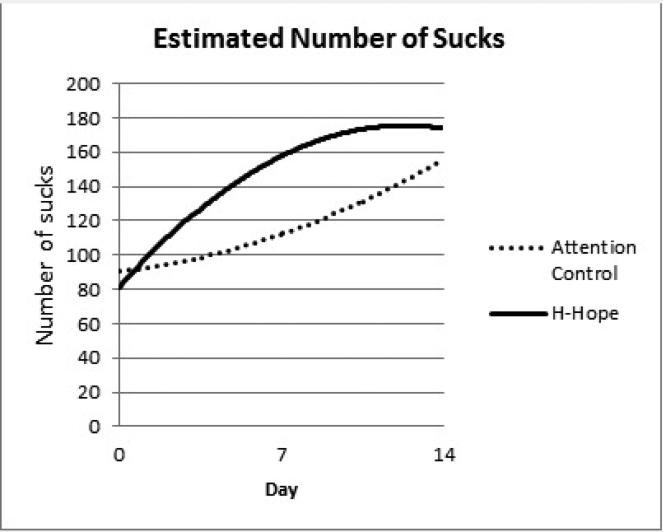
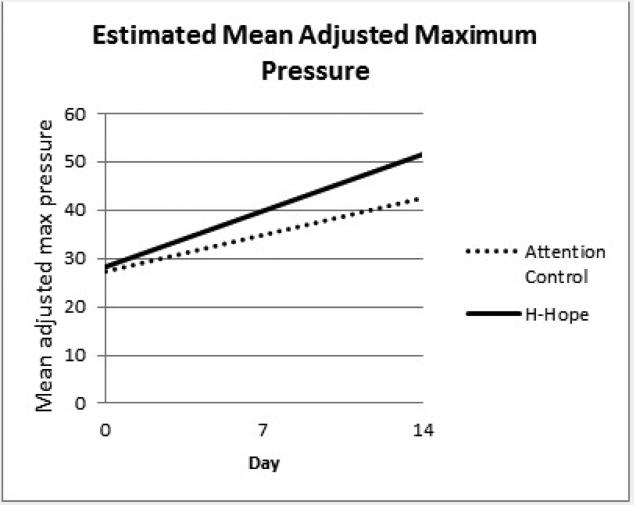
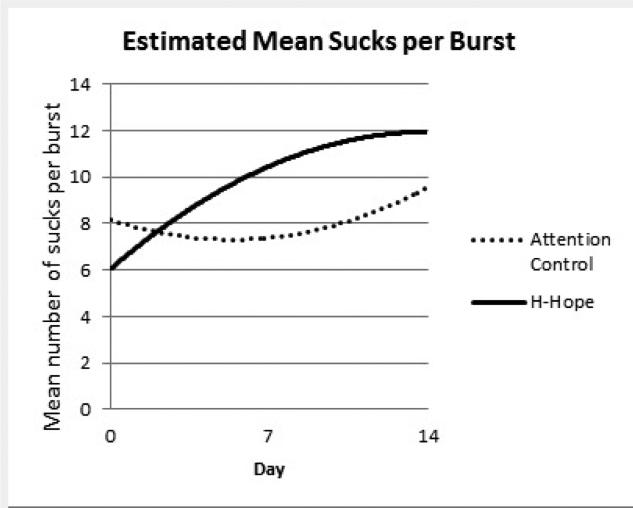
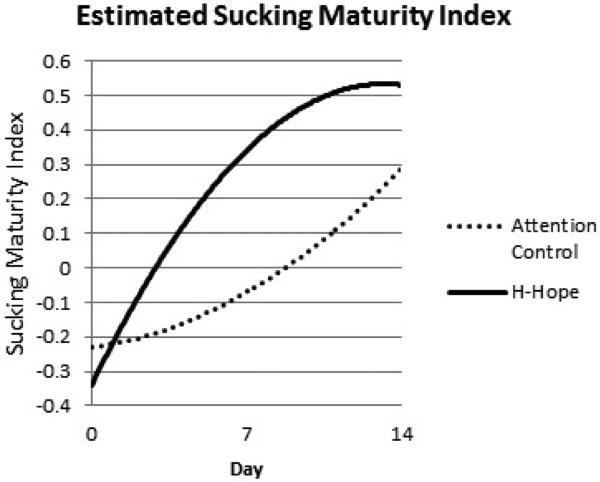
Results: A quadratic trend was observed for number of sucks, sucks per burst, and maturity index with the intervention group increasing significantly faster by day 7 (model estimates for group × day: β= 13.69, P < .01; β = 1.16, P < .01; and β= 0.12, P < .05, respectively). Sucking pressure increased linearly over time, with significant between-group differences at day 14 (β= 45.66, P < .01).
Implications for practice: The ATVV infants exhibited improved sucking organization during hospitalization, suggesting that the ATVV intervention improves maturation of oral feeding.
Implications for research: Further research that includes 2 or more tests, delivered the same day and/or over consecutive days, will provide researchers and clinicians a more sensitive indicator of maturational changes in feeding behaviors.
Figures
References
-
- Feldman R, Eidelman AI. Neonatal state organization, neuromaturation, mother-infant interaction, and cognitive development in small-for-gestational-age premature infants. Pediatrics. 2006;118:e869–e78. - PubMed
-
- Barnard KE, Kelly JF. Assessment of parent-child interaction. In: Meisels SJ, Shonkoff JP, editors. Handbook of early childhood intervention. Cambridge University Press; New York: 1990. pp. 278–302.
Publication types
MeSH terms
Grants and funding
LinkOut - more resources
Full Text Sources
Other Literature Sources
