


Initial Results of Image-Guided Percutaneous Ablation as Second-Line Treatment for Symptomatic Vascular Anomalies
- PMID: 25823573
- PMCID: PMC4567898
- DOI: 10.1007/s00270-015-1079-2
Initial Results of Image-Guided Percutaneous Ablation as Second-Line Treatment for Symptomatic Vascular Anomalies
Abstract
Purpose: The purpose of this study was to determine the feasibility, safety, and early effectiveness of percutaneous image-guided ablation as second-line treatment for symptomatic soft-tissue vascular anomalies (VA).
Materials and methods: An IRB-approved retrospective review was undertaken of all patients who underwent percutaneous image-guided ablation as second-line therapy for treatment of symptomatic soft-tissue VA during the period from 1/1/2008 to 5/20/2014. US/CT- or MRI-guided and monitored cryoablation or MRI-guided and monitored laser ablation was performed. Clinical follow-up began at one-month post-ablation.
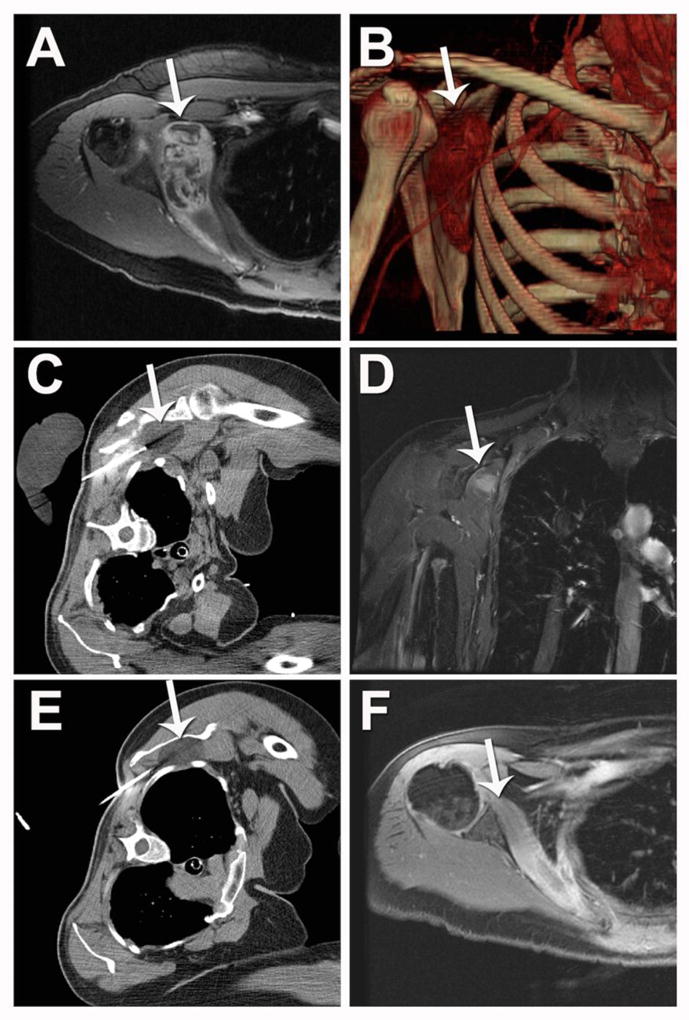
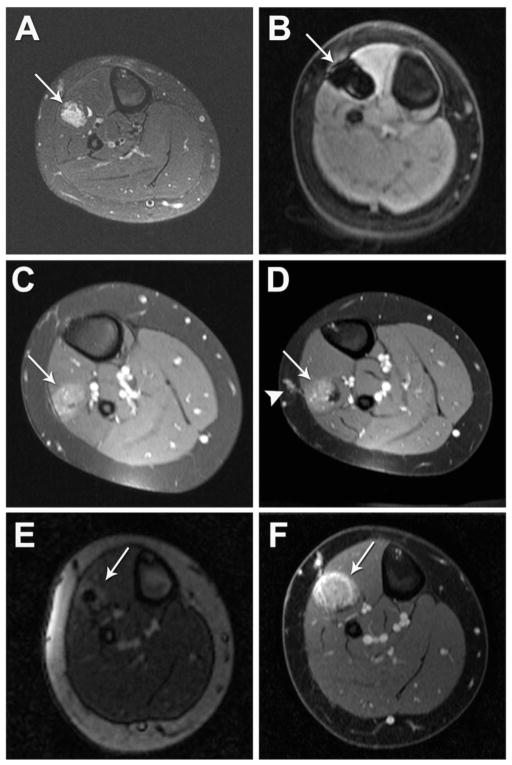
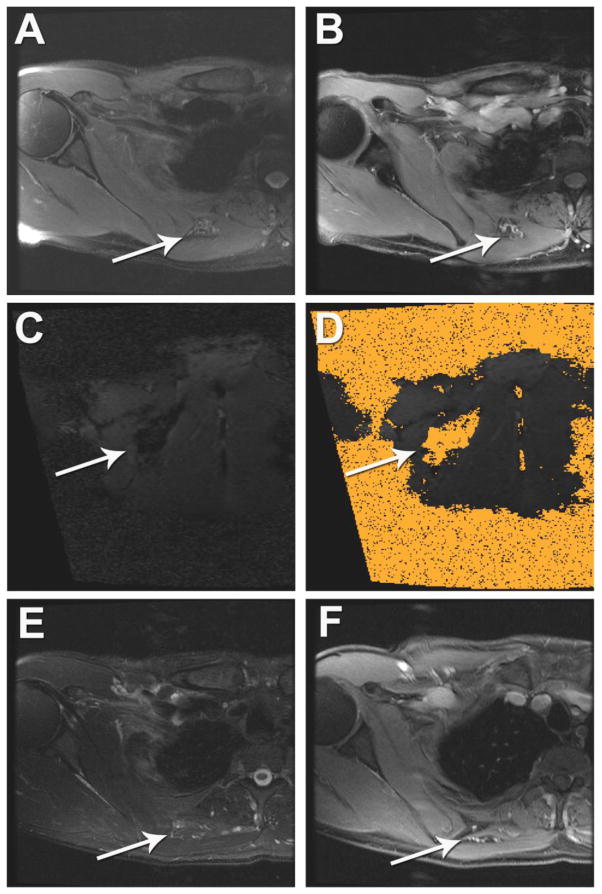
Results: Eight patients with nine torso or lower extremity VA were treated with US/CT (N = 4) or MRI-guided (N = 2) cryoablation or MRI-guided laser ablation (N = 5) for moderate to severe pain (N = 7) or diffuse bleeding secondary to hemangioma-thrombocytopenia syndrome (N = 1). The median maximal diameter was 9.0 cm (6.5-11.1 cm) and 2.5 cm (2.3-5.3 cm) for VA undergoing cryoablation and laser ablation, respectively. Seven VA were ablated in one session, one VA initially treated with MRI-guided cryoablation for severe pain was re-treated with MRI-guided laser ablation due to persistent moderate pain, and one VA was treated in a planned two-stage session due to large VA size. At an average follow-up of 19.8 months (range 2-62 months), 7 of 7 patients with painful VA reported symptomatic pain relief. There was no recurrence of bleeding at five-year post-ablation in the patient with hemangioma-thrombocytopenia syndrome. There were two minor complications and no major complications.
Conclusion: Image-guided percutaneous ablation is a feasible, safe, and effective second-line treatment option for symptomatic VA.
Keywords: CT; Cryoablation; Laser ablation; MRI; Vascular anomaly; Vascular malformation; Vasoproliferative neoplasm.
Conflict of interest statement
Matthew R. Callstrom has received research grants from Thermedical Inc., General Electric Company, Siemens AG and Galil Medical Ltd. Scott Thompson, Michael A. McKusick and David A. Woodrum report no conflicts of interest related to the subject of this manuscript.
Figures
References
-
- Lowe LH, Marchant TC, Rivard DC, Scherbel AJ. Vascular malformations: classification and terminology the radiologist needs to know. Semin Roentgenol. 2012;47(2):106–117. - PubMed
-
- Kelly M. Kasabach-Merritt phenomenon. Pediatr Clin North Am. 2010;57(5):1085–1089. - PubMed
-
- van der Vleuten CJ, Kater A, Wijnen MH, Schultze Kool LJ, Rovers MM. Effectiveness of sclerotherapy, surgery, and laser therapy in patients with venous malformations: a systematic review. Cardiovasc Intervent Radiol. 2014;37(4):977–989. - PubMed
-
- Kim AH, Ko HK, Won JY, Lee do Y. Percutaneous radiofrequency ablation: a novel treatment of facial venous malformation. J Vasc Surg. 2009;50(2):424–427. - PubMed
-
- Childs DD, Emory CL. Successful treatment of intramuscular venous malformation with image-guided radiofrequency ablation. J Vasc Interv Radiol. 2012;23(10):1391–1393. - PubMed
Publication types
MeSH terms
Grants and funding
LinkOut - more resources
Full Text Sources
Other Literature Sources
