Hypomethylation and up-regulation of PD-1 in T cells by azacytidine in MDS/AML patients: A rationale for combined targeting of PD-1 and DNA methylation
- PMID: 25823822
- PMCID: PMC4496243
- DOI: 10.18632/oncotarget.3324
Hypomethylation and up-regulation of PD-1 in T cells by azacytidine in MDS/AML patients: A rationale for combined targeting of PD-1 and DNA methylation
Abstract
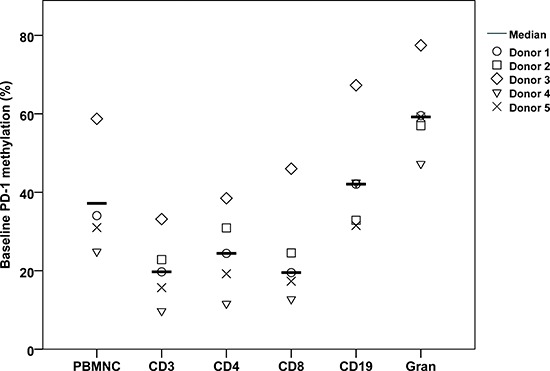
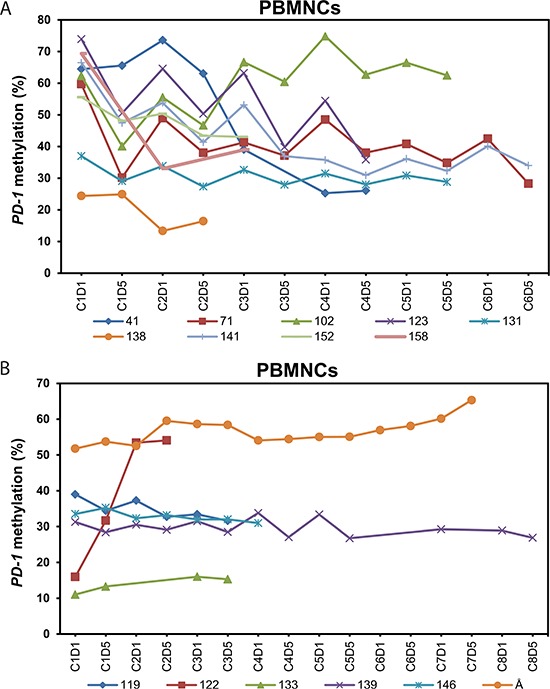
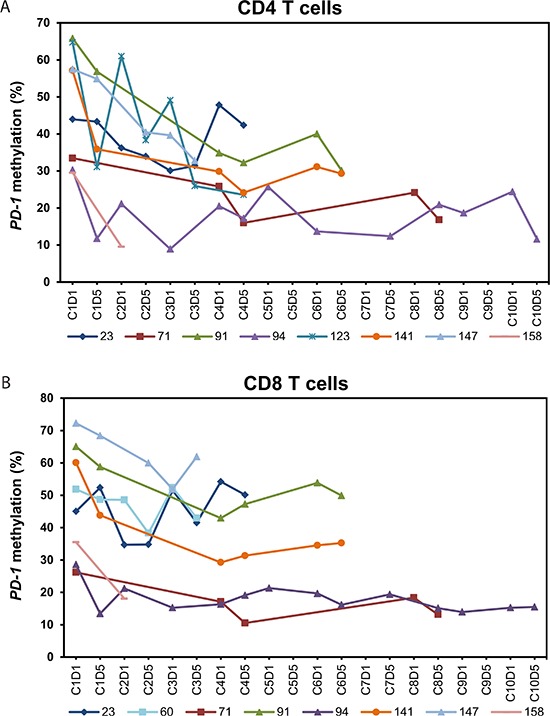
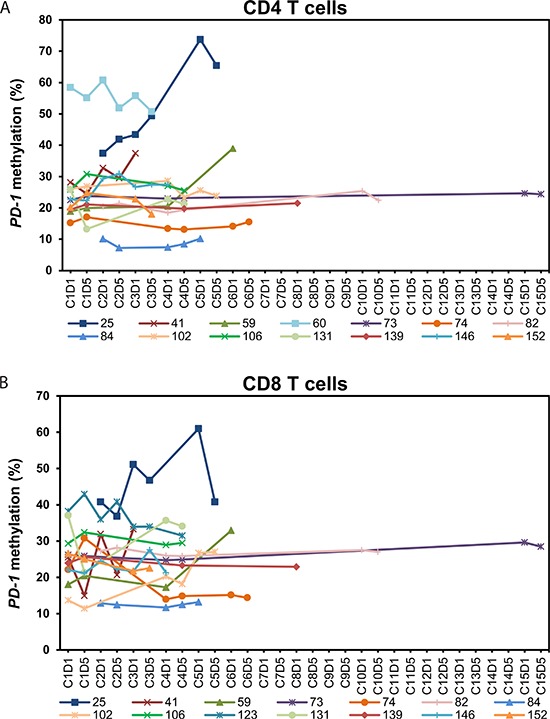
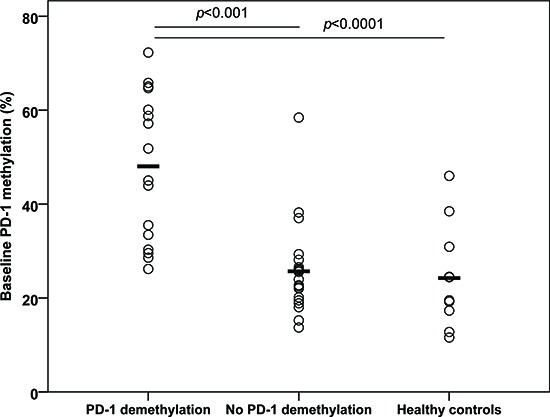
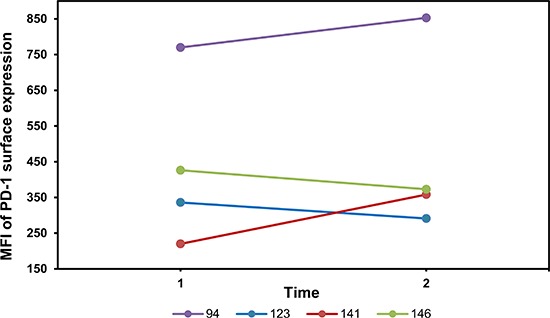
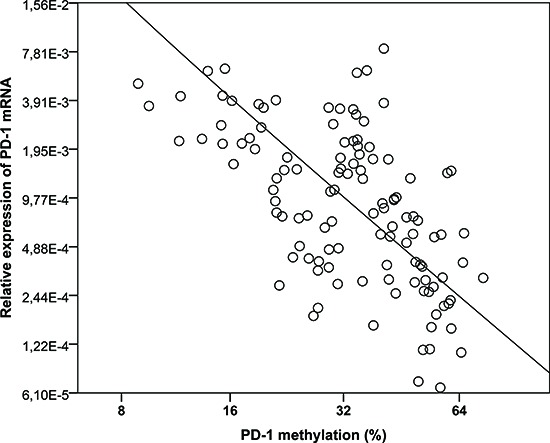
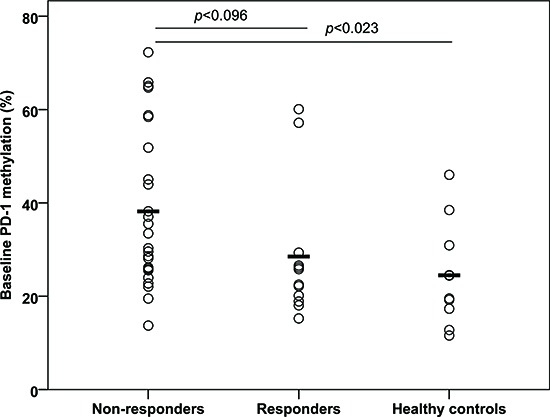
The hypomethylating agents (HMAs) are standard therapy for patients with higher-risk myelodysplastic syndrome (MDS); however, the majority of the patients will lose their response to HMAs over time due to unknown mechanisms. It has recently been shown that T cell expression of the immunoinhibitory receptor PD-1 is regulated by DNA methylation. In 12 of 27 patients (44%) PD-1 promoter demethylation was observed in sorted peripheral blood T cells isolated over consecutive cycles of treatment with 5-azacytidine (5-aza). The PD-1 promoter demethylation correlated with an increase in PD-1 expression. Moreover, demethylation of the PD-1 promoter correlated with a significantly worse overall response rate (8% vs. 60%, p = 0.014), and a trend towards a shorter overall survival (p = 0.11) was observed. A significantly higher baseline methylation level of the PD-1 promoter was observed in T cells of non-responding patients compared to healthy controls (p = 0.023). Accordingly, in addition to their beneficial function, HMAs induce PD-1 expression on T cells in the MDS microenvironment, thereby likely hampering the immune response against the MDS blasts. Thus, we suggest that activation of the PD-1 checkpoint during HMA treatment can be a possible resistance mechanism, which may be overcome by combination therapy with a PD-1 pathway inhibitor.
Keywords: DNA methylation; T cells; hypomethylating agents; myelodysplastic syndromes; programmed death-1.
Conflict of interest statement
The authors declare no competing financial interests.
Figures
References
-
- Tefferi A, Vardiman JW. Myelodysplastic syndromes. N. Engl. J. Med. 2009;361:1872–85. - PubMed
-
- Fenaux P, Mufti GJ, Hellstrom-Lindberg E, Santini V, Finelli C, Giagounidis A, Schoch R, Gattermann N, Sanz G, List A, Gore SD, Seymour JF, Bennett JM, et al. Efficacy of azacitidine compared with that of conventional care regimens in the treatment of higher-risk myelodysplastic syndromes: a randomised, open-label, phase III study. Lancet Oncol. 2009;10:223–32. - PMC - PubMed
-
- Kantarjian H, Issa J-PJ, Rosenfeld CS, Bennett JM, Albitar M, DiPersio J, Klimek V, Slack J, de Castro C, Ravandi F, Helmer R, Shen L, Nimer SD, et al. Decitabine improves patient outcomes in myelodysplastic syndromes: results of a phase III randomized study. Cancer. 2006;106:1794–803. - PubMed
-
- Lübbert M, Suciu S, Baila L, Rüter BH, Platzbecker U, Giagounidis A, Selleslag D, Labar B, Germing U, Salih HR, Beeldens F, Muus P, Pflüger K-H, et al. Low-dose decitabine versus best supportive care in elderly patients with intermediate- or high-risk myelodysplastic syndrome (MDS) ineligible for intensive chemotherapy: final results of the randomized phase III study of the European Organisation for Rese. J. Clin. Oncol. 2011;29:1987–96. - PubMed
-
- Fenaux P, Mufti GJ, Hellström-Lindberg E, Santini V, Gattermann N, Germing U, Sanz G, List AF, Gore S, Seymour JF, Dombret H, Backstrom J, Zimmerman L, et al. Azacitidine prolongs overall survival compared with conventional care regimens in elderly patients with low bone marrow blast count acute myeloid leukemia. J. Clin. Oncol. 2010;28:562–9. - PubMed
Publication types
MeSH terms
Substances
LinkOut - more resources
Full Text Sources
Other Literature Sources
Medical
Research Materials
Miscellaneous