. 2015 Mar 31:6:6741.
doi: 10.1038/ncomms7741.

Global analysis of fungal morphology exposes mechanisms of host cell escape

Affiliations

Global analysis of fungal morphology exposes mechanisms of host cell escape

Teresa R O'Meara et al. Nat Commun. .

Abstract

Developmental transitions between single-cell yeast and multicellular filaments underpin virulence of diverse fungal pathogens. For the leading human fungal pathogen Candida albicans, filamentation is thought to be required for immune cell escape via induction of an inflammatory programmed cell death. Here we perform a genome-scale analysis of C. albicans morphogenesis and identify 102 negative morphogenetic regulators and 872 positive regulators, highlighting key roles for ergosterol biosynthesis and N-linked glycosylation. We demonstrate that C. albicans filamentation is not required for escape from host immune cells; instead, macrophage pyroptosis is driven by fungal cell-wall remodelling and exposure of glycosylated proteins in response to the macrophage phagosome. The capacity of killed, previously phagocytized cells to drive macrophage lysis is also observed with the distantly related fungal pathogen Cryptococcus neoformans. This study provides a global view of morphogenetic circuitry governing a key virulence trait, and illuminates a new mechanism by which fungi trigger host cell death.


Figures
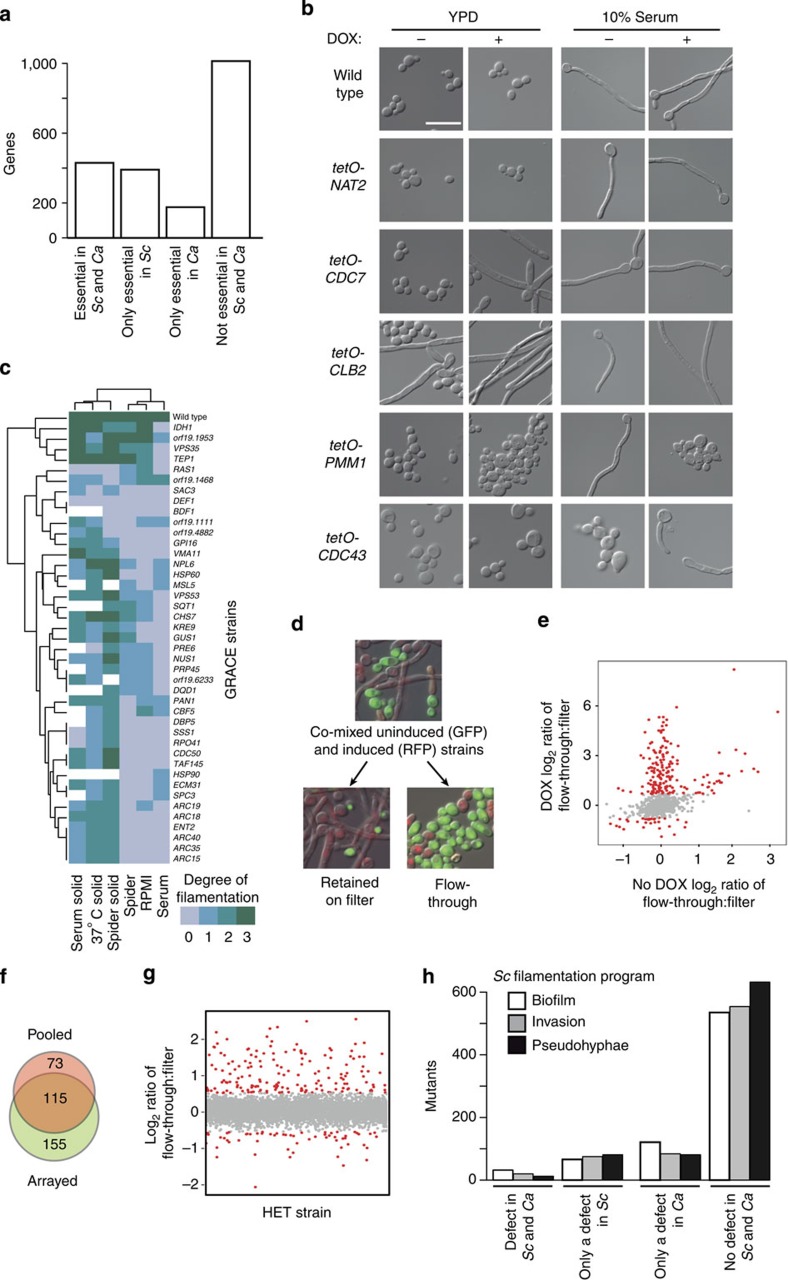
Figure 1
Figure 1. Functional genomics analysis of C. albicans morphogenesis.
(a) Comparison of essentiality between S. cerevisiae (Sc) and C. albicans (Ca) genes. Each count represents a gene with direct homology between the two species. (b) Representative images of phenotypes identified in the arrayed screen. Scale bar, 20 μm. (c) Clustering analysis of GRACE strains and phenotypes observed in distinct filament-inducing conditions with 0.05 μg ml−1 DOX. White boxes indicate a lack of growth in that condition. Clustering was performed using the Heatmap function in R. (d) Yeast expressing green fluorescent protein (GFP) and filaments expressing red fluorescent protein (RFP) can be separated by filtration using a 10 μm filter. (e) Scatterplot of normalized barcode read log2 fold difference between flow-through and filter-retained GRACE strains in pooled filtration assays. Red dots represent GRACE strains with ≥4 MADs in log2 fold change flow-through:filter retained in the DOX population (significant change in filamentation). (f) Venn diagram depicting overlap in barcoded GRACE hits in the arrayed and pooled morphology screens (non-barcoded hits in arrayed screen omitted). (g) Scatterplot of barcode reads for the serum-exposed HET filtration screen. Red dots represent ≥4 MAD log2 fold difference between flow-through and filter-retained normalized reads. (h) Comparison of filamentation programmes between S. cerevisiae (Sc) and C. albicans (Ca). Each count represents a gene with direct homology between the two species. Filamentation data for S. cerevisiae are from the study by Ryan et al..
Figure 2
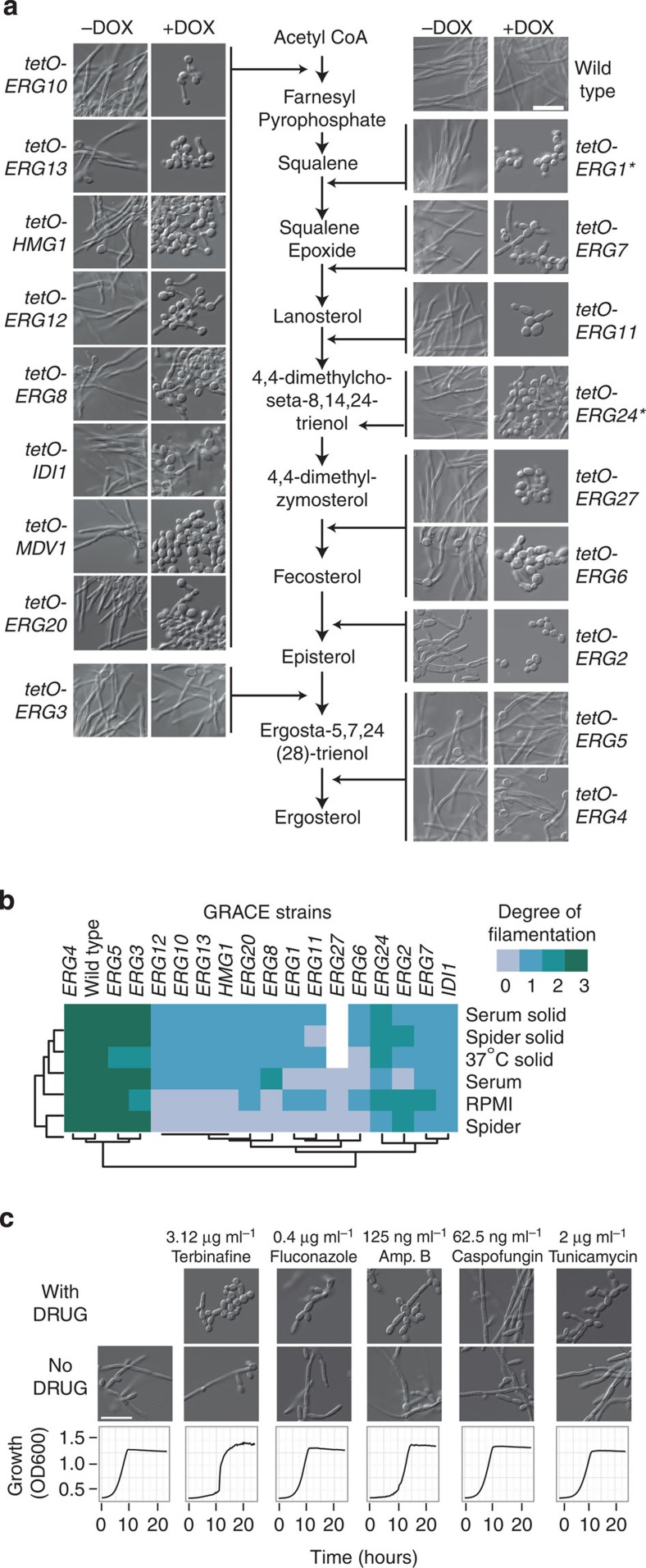
Figure 2. Ergosterol biosynthesis is important for filamentation.
(a) Transcriptional repression of most ergosterol biosynthesis genes with 0.05 μg ml−1 DOX blocks filamentation induced by serum. An asterisk indicates strains where 1 μg ml−1 DOX was used to repress target gene transcription. For all images: Scale bar, 20 μm. Ergosterol biosynthetic pathway adapted from S. cerevisiae. (b) Clustering analysis of GRACE strains for ergosterol biosynthesis genes and phenotypes observed in distinct filament-inducing conditions with 0.05 μg ml−1 DOX. White boxes indicate a lack of growth in that condition. Clustering was performed using the Heatmap function in R. (c) Treatment with sub-lethal concentrations of specific antifungal drugs reversibly blocks filamentation induced by serum. Top panels: morphology in the presence of drug. Middle panels: morphology after removal of drug. Bottom panels: growth kinetics analysis demonstrates that the drugs do not significantly inhibit growth at the concentrations used.
Figure 3
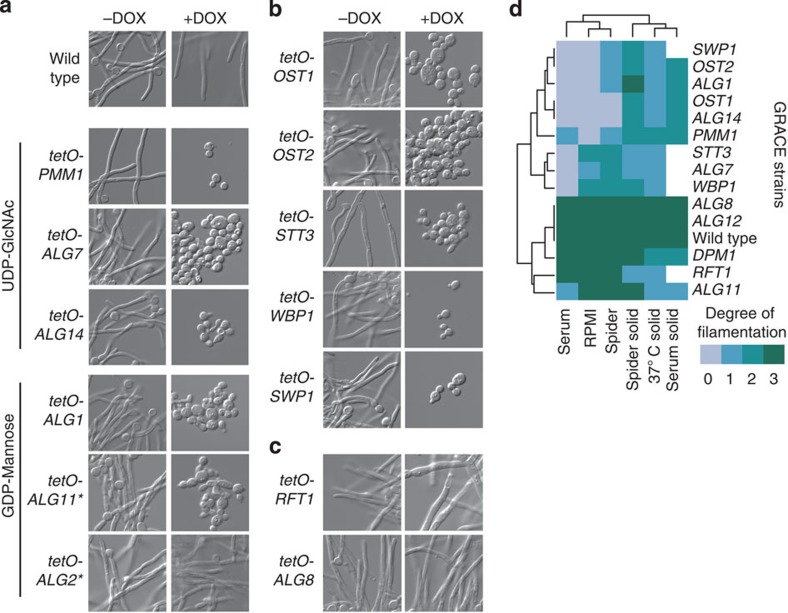
Figure 3. Glycosylation genes influence filamentation.
(a) Depletion of cytosol-oriented glycosyltransferases with 0.05 μg ml−1 DOX blocks filamentation induced by serum. An asterisk indicates strains where 1 μg ml−1 DOX was used to repress target gene transcription. For all images: scale bar, 20 μm. (b) Depletion of the oligosaccharyltransferase complex blocks filamentation induced by serum. (c) Depletion of lumen-oriented glycosyltransferases does not affect filamentation. (d) Clustering analysis of GRACE strains for N-linked glycosylation genes and phenotypes observed in distinct filament-inducing conditions with 0.05 μg ml−1 DOX. White boxes indicate a lack of growth in that condition.
Figure 4
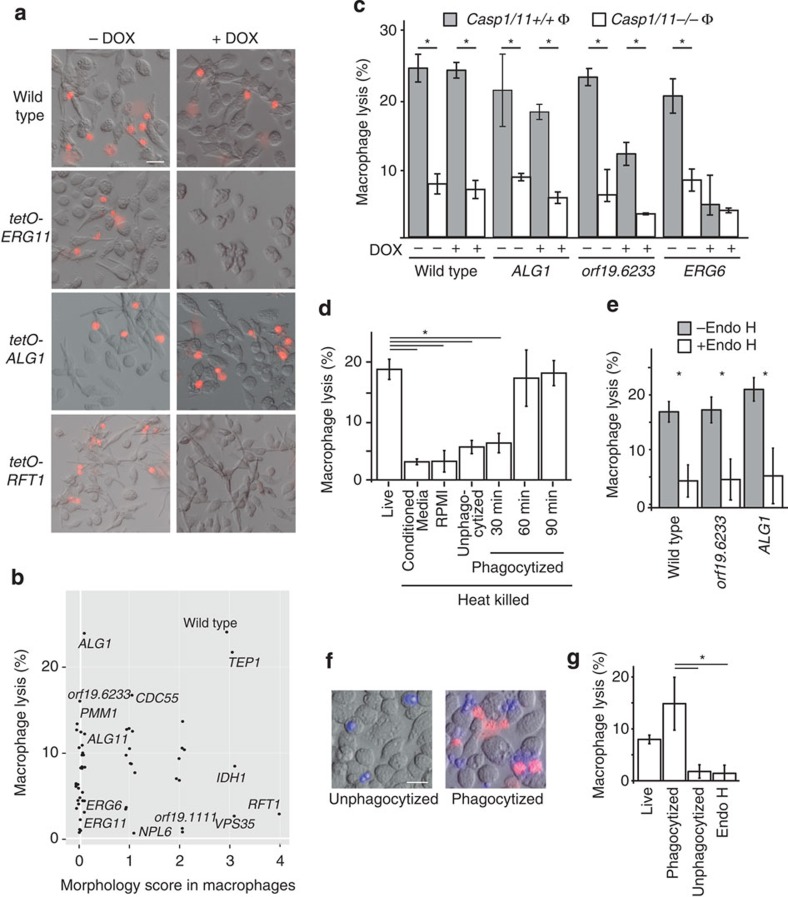
Figure 4. Elucidating the relationship between C. albicans morphology and macrophage lysis.
(a) Representative images of infected macrophages stained with propidium iodide to identify dead cells (in red). Images were taken 4 h post inoculation. (b) C. albicans morphogenesis is uncoupled from macrophage lysis. Macrophages were inoculated with GRACE strains in the presence of 0.05 μg ml−1 DOX; lysis events and C. albicans morphogenesis were imaged 4 h post infection. (c) Lysis is due to caspase-1-dependent pyroptosis. Wild-type or casp1−/− casp11−/− macrophages were infected with the indicated GRACE strains in the presence or absence of 0.05 μg ml−1 DOX. Lysis events were imaged 4 h post inoculation. (d) Wild-type C. albicans cells heat killed following prior internalization by macrophages can drive macrophage lysis. Wild-type C. albicans cells were treated with the indicated conditions before being heat killed and used for infection of J774A.1 macrophages. Lysis events were imaged 4 h post inoculation. (e) Specific GRACE strains can drive macrophage lysis following heat killing after prior macrophage phagocytosis, and this process is dependent on mannosylated proteins. The indicated DOX-grown strains were used to infect macrophages, collected after 90 min, washed and heat killed. The cells were treated with Endo H overnight, washed and used for inoculation of J774A.1 macrophages. (f) Heat-killed acapsular C. neoformans cells can induce macrophage lysis after pre-exposure to the host. cap59Δ mutant cells were incubated within macrophages for 4 h, collected, washed and heat killed. The cells were then used for inoculation of J774A.1 macrophages. Infected macrophages were stained with propidium iodide to identify dead cells (in red) and with calcofluor white to identify fungal cells (in blue). Lysis events were imaged 4 h post infection. (g) The ability of C. neoformans to induce pyroptosis is dependent on mannosylated proteins. cap59Δ cells were treated with the indicated conditions before being used for infection of J774A.1 macrophages. For all graphs, data are represented as mean±s.d. for triplicate samples, n=200 infection events, asterisk indicates P<0.01, unpaired t-test. For all images, scale bar, 20 μm.

References

    1. Klein B. S. & Tebbets B. Dimorphism and virulence in fungi. Curr. Opin. Microbiol. 10, 314–319 (2007) . - PMC - PubMed
    1. Saville S. P., Lazzell A. L., Monteagudo C. & Lopez-Ribot J. L. Engineered control of cell morphology in vivo reveals distinct roles for yeast and filamentous forms of Candida albicans during infection. Eukaryot. Cell 2, 1053–1060 (2003) . - PMC - PubMed
    1. Lo H. J. et al. Nonfilamentous C. albicans mutants are avirulent. Cell 90, 939–949 (1997) . - PubMed
    1. Noble S. M., French S., Kohn L. A., Chen V. & Johnson A. D. Systematic screens of a Candida albicans homozygous deletion library decouple morphogenetic switching and pathogenicity. Nat. Genet. 42, 590–598 (2010) . - PMC - PubMed
    1. Xu D. et al. Genome-wide fitness test and mechanism-of-action studies of inhibitory compounds in Candida albicans. PLoS Pathogens 3, e92 (2007) . - PMC - PubMed

Publication types

MeSH terms

LinkOut - more resources