


Is acetylation a metabolic rheostat that regulates skeletal muscle insulin action?
- PMID: 25824547
- PMCID: PMC4400303
- DOI: 10.14348/molcells.2015.0020
Is acetylation a metabolic rheostat that regulates skeletal muscle insulin action?
Abstract
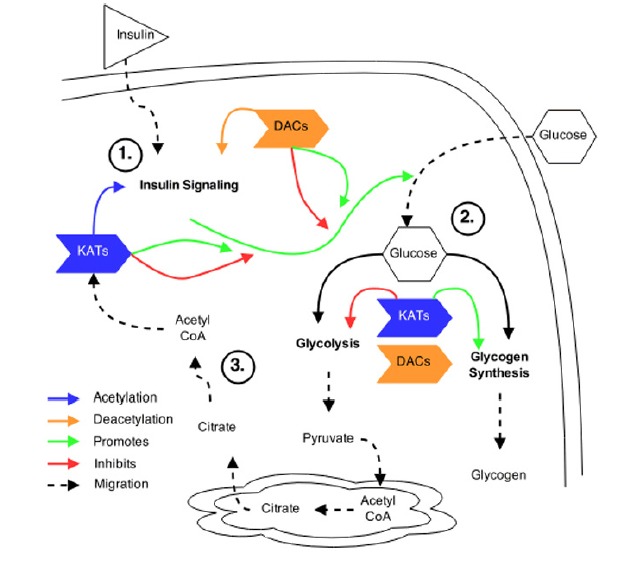
Skeletal muscle insulin resistance, which increases the risk for developing various metabolic diseases, including type 2 diabetes, is a common metabolic disorder in obesity and aging. If potential treatments are to be developed to treat insulin resistance, then it is important to fully understand insulin signaling and glucose metabolism. While recent large-scale "omics" studies have revealed the acetylome to be comparable in size to the phosphorylome, the acetylation of insulin signaling proteins and its functional relevance to insulin-stimulated glucose transport and glucose metabolism is not fully understood. In this Mini Review we discuss the acetylation status of proteins involved in the insulin signaling pathway and review their potential effect on, and relevance to, insulin action in skeletal muscle.
Keywords: SIRT1/HDAC; acetyltransferase; deacetylase; insulin signaling; p300/CBP.
Figures
References
-
- Arora A., Dey C.S. SIRT2 negatively regulates insulin resistance in C2C12 skeletal muscle cells. Biochim. Biophys. Acta. 2014;1842:1372–1378. - PubMed
-
- Assali A.R., Ganor A., Beigel Y., Shafer Z., Hershcovici T., Fainaru M. Insulin resistance in obesity: body-weight or energy balance? J. Endocrinol. 2001;171:293–298. - PubMed
-
- Berwick D.C., Hers I., Heesom K.J., Moule S.K., Tavare J.M. The identification of ATP-citrate lyase as a protein kinase B (Akt) substrate in primary adipocytes. J. Biol. Chem. 2002;277:33895–33900. - PubMed
Publication types
MeSH terms
Substances
Grants and funding
LinkOut - more resources
Full Text Sources
Other Literature Sources
Medical
Miscellaneous
