Effects of long-term exercise on spatial learning, memory ability, and cortical capillaries in aged rats
- PMID: 25828032
- PMCID: PMC4395020
- DOI: 10.12659/MSM.893935
Effects of long-term exercise on spatial learning, memory ability, and cortical capillaries in aged rats
Abstract
Background: This study aimed to determine the effects of long-term running exercise on spatial learning, spatial memory, and cortical capillaries in aged rats.
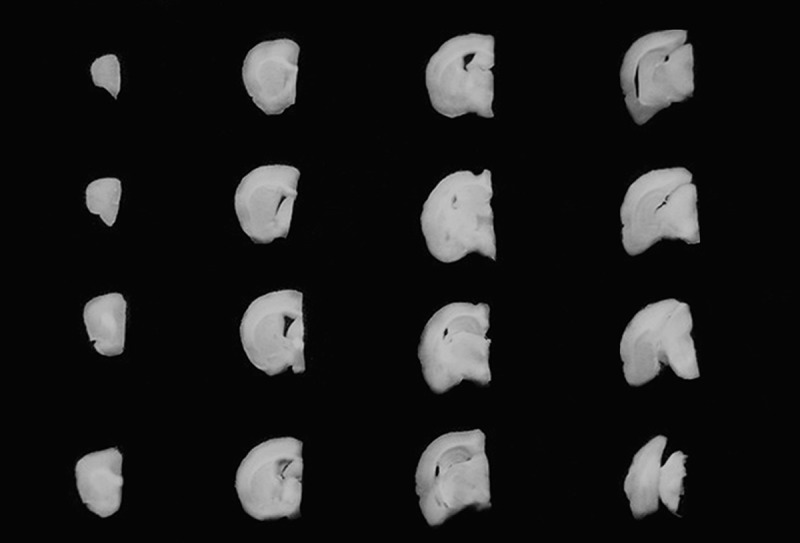
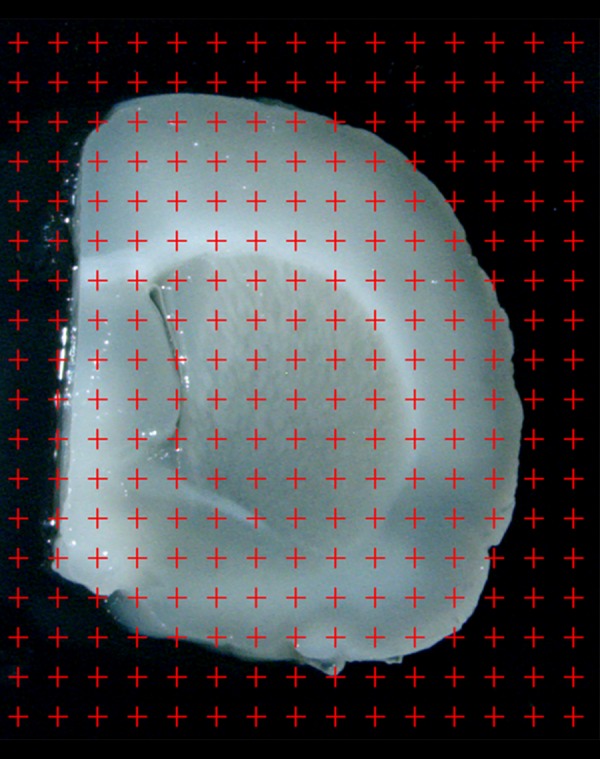
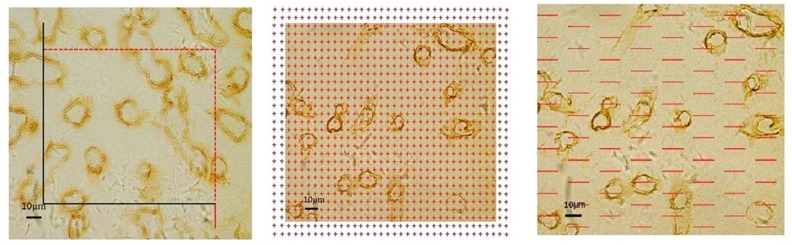
Material and methods: Fourteen-month-old female and male Sprague-Dawley rats were randomly divided into an exercised group (EG) and a non-exercised group (NG). The EG rats were trained on treadmill running for 4 or 14 months. The NG rats were housed under identical conditions without running. Spatial learning and memory were assessed with the Morris water maze. The cortical capillary parameters were quantitatively investigated using immunohistochemical and stereological methods.
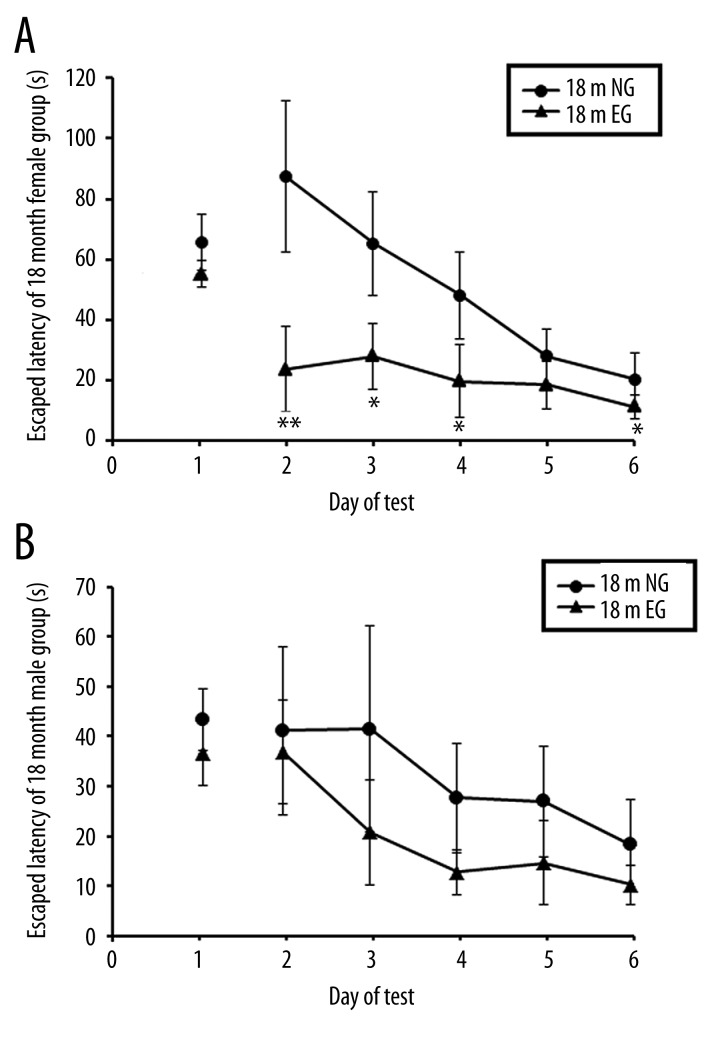
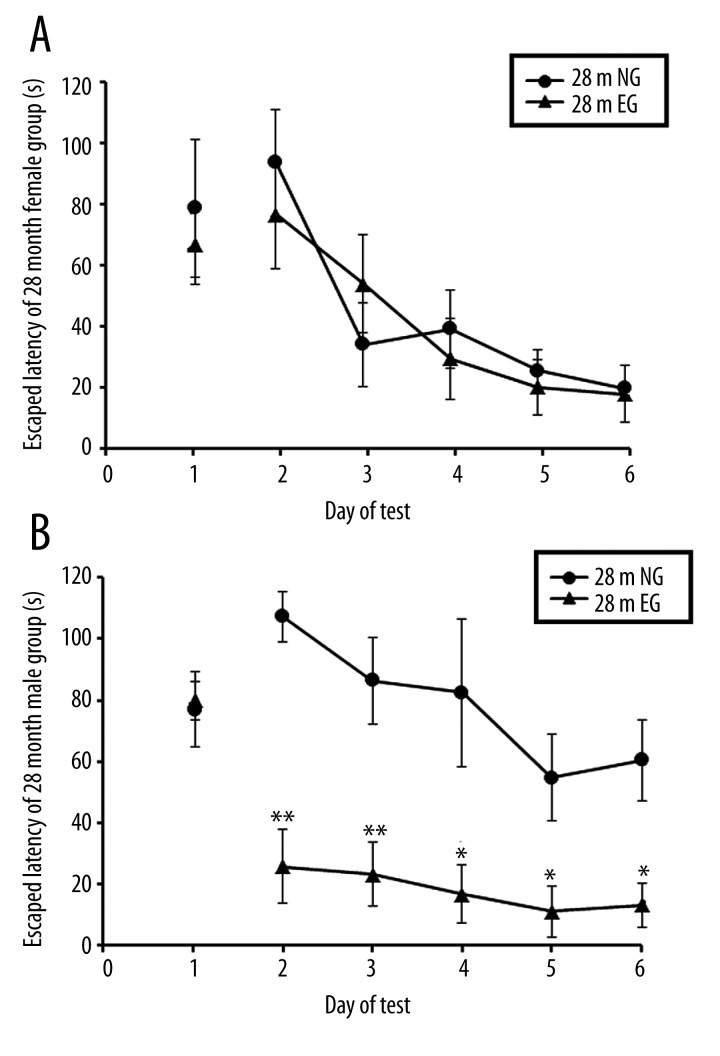
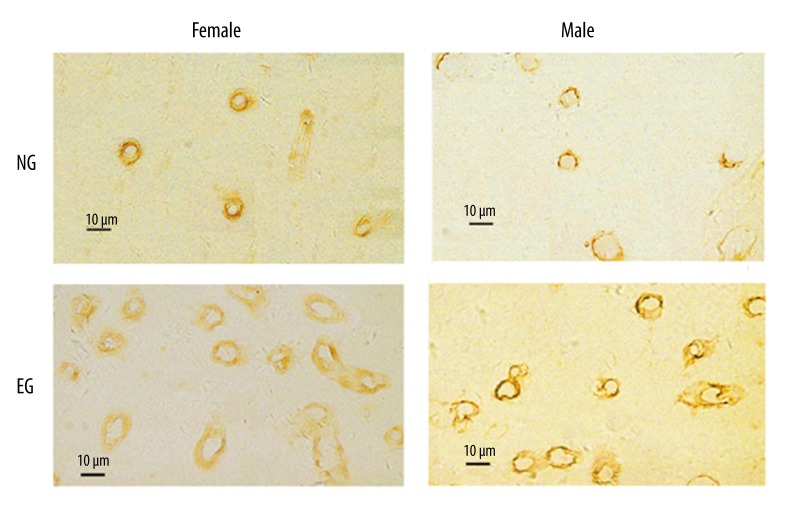
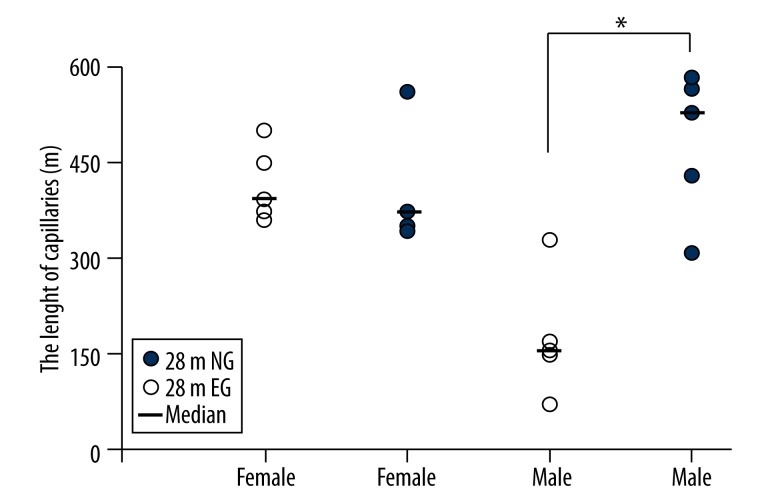
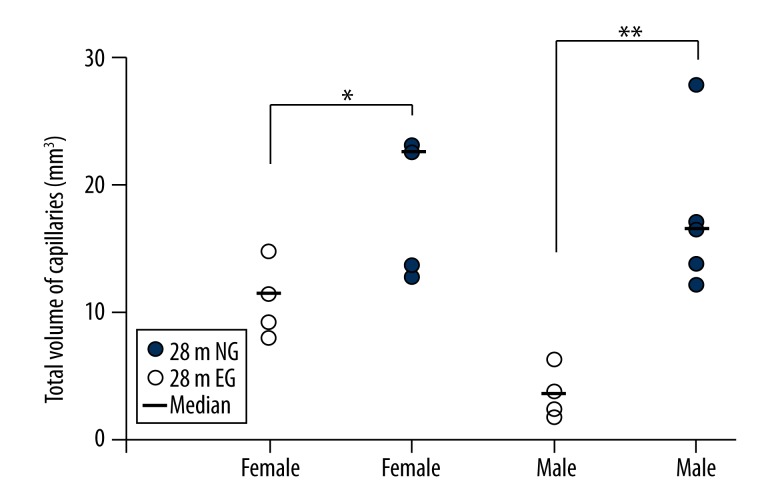
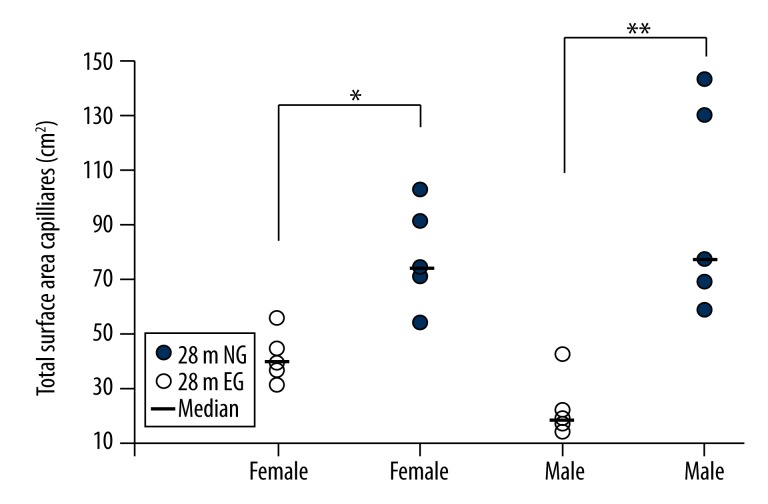
Results: The escaped latencies of the EG were significantly different from those of the NG in 18-month-old females and 28-month-old males (p<0.05). However, 28-month-old females and 18-month-old males showed no differences in escape latency between the EG and NG (p>0.05). In 28-month-old female rats, stereological techniques showed significant differences between the EG and NG in the cortical capillary volume (median, 22.55 vs. 11.42, p<0.05) and the cortical capillary surface area (median, 7474.13 vs. 3935.90, p<0.05). In 28-month-old male rats, the EG had a significantly longer total cortical capillary length (median, 530.35 vs. 156.27, p<0.05), significantly larger cortical capillary volume (median, 16.47 vs. 3.65, p<0.01), and a significantly larger cortical capillary total surface area (median, 7885.79 vs. 1957.16, p<0.01) compared with the NG group.
Conclusions: These data demonstrate that exercise improved spatial learning, memory capacity and cortical capillaries in aged rats.
Figures
References
-
- Colcombe SJ, Erickson KI, Scalf PE, et al. Aerobic exercise training increases brain volume in aging humans. J Gerontol A Biol Sci Med Sci. 2006;61(11):1166–70. - PubMed
-
- Cotman CW, Berchtold NC. Exercise: a behavioral intervention to enhance brain health and plasticity. Trends Neurosci. 2002;25:295–301. - PubMed
-
- Trejo JL, Llorens-Martin MV, Torres-Aleman I. The effects of exercise on spatial learning and anxiety-like behavior are mediated by an IGF-I-dependent mechanism related to hippocampal neurogenesis. Mol Cell Neurosci. 2008;37:402–11. - PubMed
Publication types
MeSH terms
LinkOut - more resources
Full Text Sources
Medical