


Risk factors for Plasmodium falciparum gametocyte positivity in a longitudinal cohort
- PMID: 25830351
- PMCID: PMC4382284
- DOI: 10.1371/journal.pone.0123102
Risk factors for Plasmodium falciparum gametocyte positivity in a longitudinal cohort
Abstract
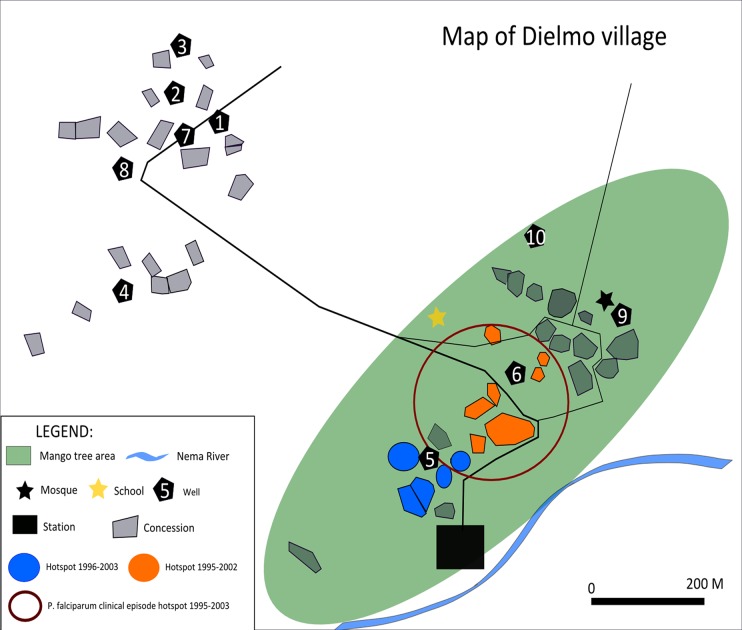
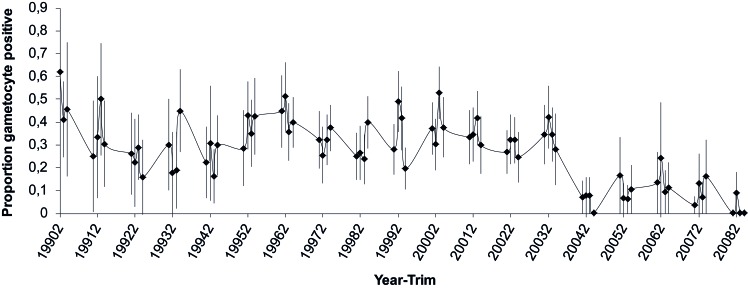
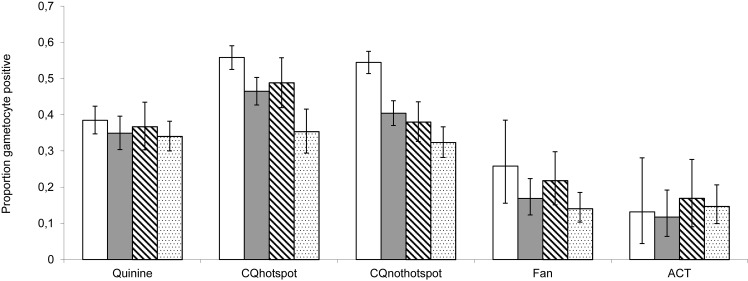
Malaria transmission intensity is highly heterogeneous even at a very small scale. Implementing targeted intervention in malaria transmission hotspots offers the potential to reduce the burden of disease both locally and in adjacent areas. Transmission of malaria parasites from man to mosquito requires the production of gametocyte stage parasites. Cluster analysis of a 19-year long cohort study for gametocyte carriage revealed spatially defined gametocyte hotspots that occurred during the time when chloroquine was the drug used for clinical case treatment. In addition to known risk factors for gametocyte carriage, notably young age (<15 years old) and associated with a clinical episode, blood groups B and O increased risk compared to groups A and AB. A hotspot of clinical P. falciparum clinical episodes that overlapped the gametocyte hotspots was also identified. Gametocyte positivity was found to be increased in individuals who had been treated with chloroquine, as opposed to other drug treatment regimens, for a clinical P. falciparum episode up to 30 days previously. It seems likely the hotspots were generated by a vicious circle of ineffective treatment of clinical cases and concomitant gametocyte production in a sub-population characterized by an increased prevalence of all the identified risk factors. While rapid access to treatment with an effective anti-malarial can reduce the duration of gametocyte carriage and onward parasite transmission, localised hotspots represent a challenge to malaria control and eventual eradication.
Conflict of interest statement
Figures
References
-
- World Health Organization. World malaria report 2013 http://www.who.int/malaria/publications/world_malaria_report_2013/report/en.
-
- Bousema T, Okell L, Shekalaghe S, Griffin JT, Omar S, Sawa P, et al. Revisiting the circulation time of Plasmodium falciparum gametocytes: molecular detection methods to estimate the duration of gametocyte carriage and the effect of gametocytocidal drugs. Malaria Journal. 2010;9:136 10.1186/1475-2875-9-136 - DOI - PMC - PubMed
-
- Cattani JA, Moir JS, Gibson FD, Ginny M, Paino J, Davidson W, et al. Small-area variations in the epidemiology of malaria in Madang Province. P N G Med J. 1986;29(1): 11–17. - PubMed
MeSH terms
LinkOut - more resources
Full Text Sources
Other Literature Sources
