


A comparison of ultrasound and magnetic resonance imaging shows that kidney length predicts chronic kidney disease in autosomal dominant polycystic kidney disease
- PMID: 25830764
- PMCID: PMC4490113
- DOI: 10.1038/ki.2015.71
A comparison of ultrasound and magnetic resonance imaging shows that kidney length predicts chronic kidney disease in autosomal dominant polycystic kidney disease
Abstract
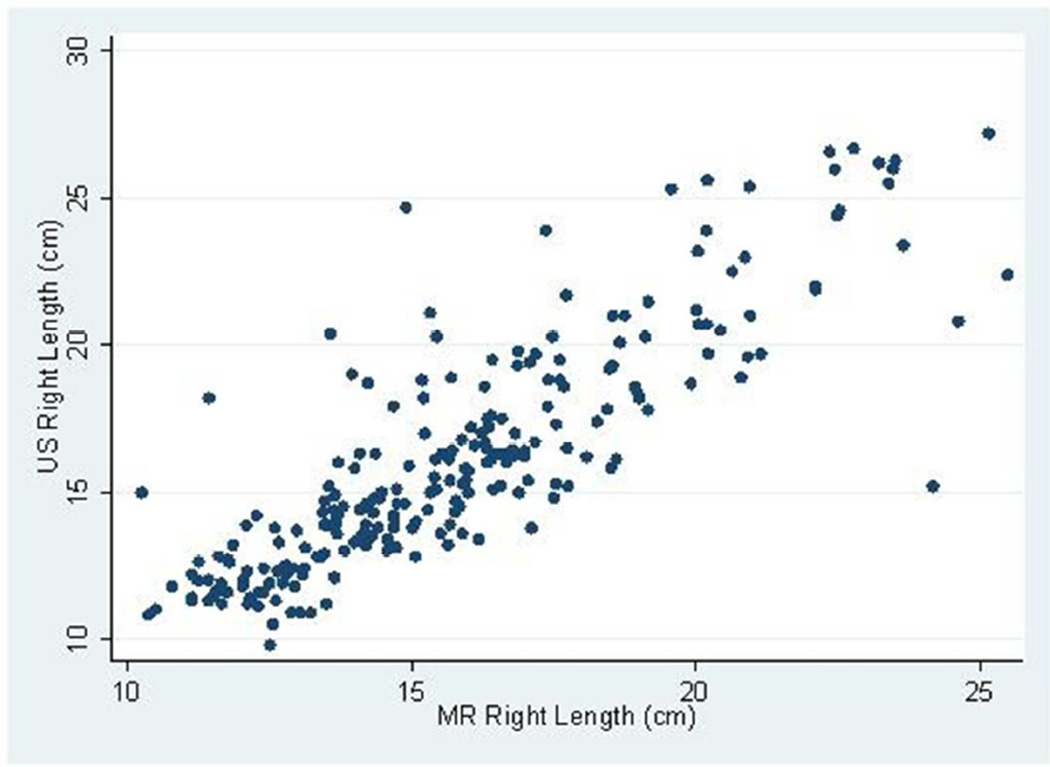
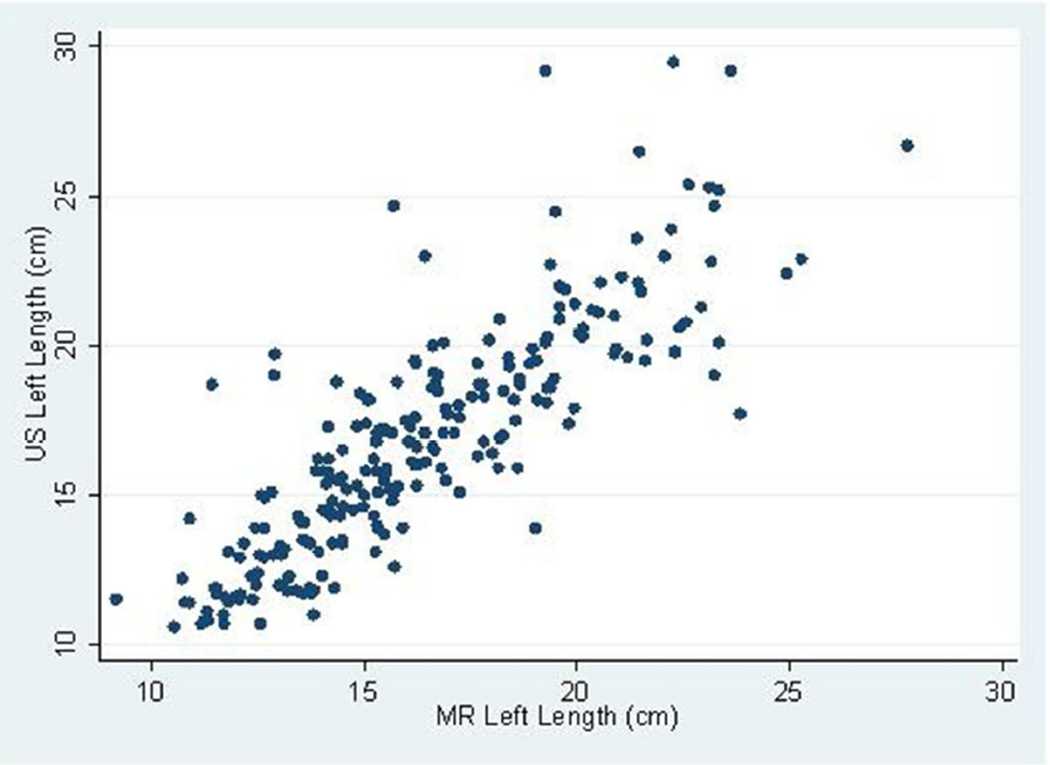
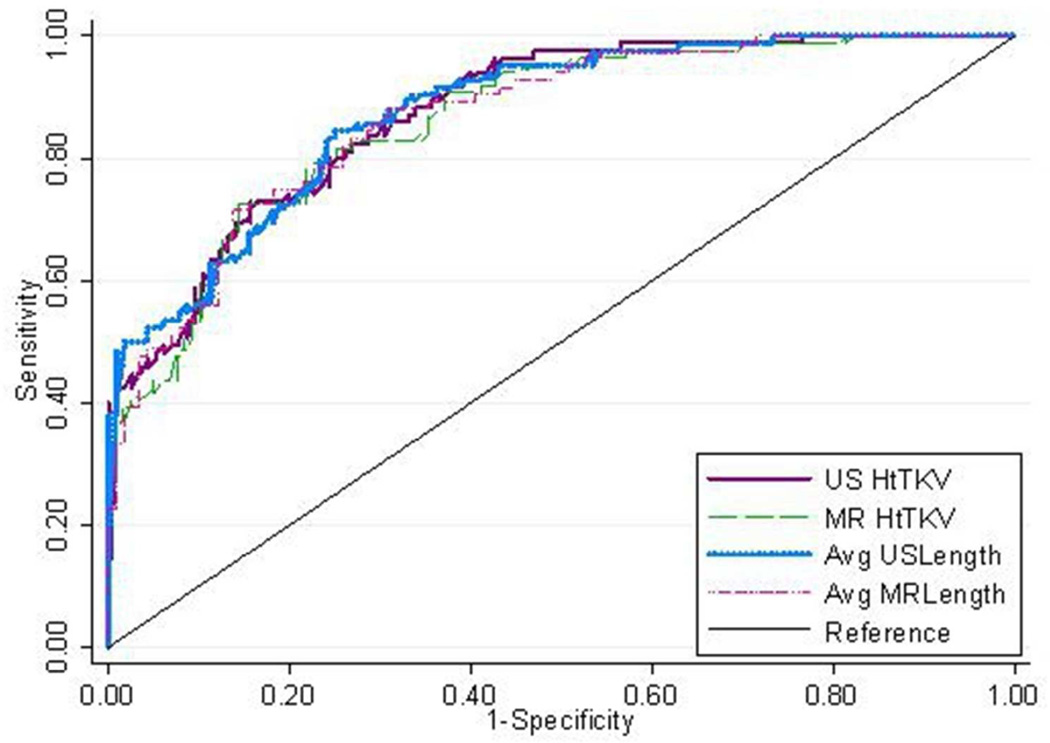
Autosomal dominant polycystic kidney disease (ADPKD) is marked by gradual renal cyst and kidney enlargement and ultimately renal failure. Magnetic resonance-based, height-adjusted total kidney volume (htTKV) over 600 cc/m predicts the development of CKD stage 3 within 8 years in the Consortium for Radiologic Imaging in Polycystic Kidney Disease cohort. Here we compared simultaneous ultrasound and magnetic resonance imaging to determine whether ultrasound and kidney length (KL) predict future CKD stage 3 over longer periods of follow-up. A total of 241 ADPKD patients, 15-46 years, with creatinine clearance of 70 ml/min and above had iothalamate clearance, magnetic resonance, and ultrasound evaluations. Participants underwent an average of five repeat clearance measurements over a mean follow-up of 9.3 years. Ultrasound and magnetic resonance-based TKV and KL were compared using Bland-Altman plots and intraclass correlations. Each measure was tested to predict future CKD stage 3. Relatively strong intraclass correlations between ultrasound and magnetic resonance were found for both htTKV and KL (0.81 and 0.85, respectively). Ultrasound and magnetic resonance-based htTKV and KL predicted future CKD stage 3 similarly (AUC of 0.87, 0.88, 0.87, and 0.88, respectively). An ultrasound kidney length over 16.5 cm and htTKV over 650 ml/min had the best cut point for predicting the development of CKD stage 3. Thus, kidney length alone is sufficient to stratify the risk of progression to renal insufficiency early in ADPKD using either ultrasound or magnetic resonance imaging.
Figures
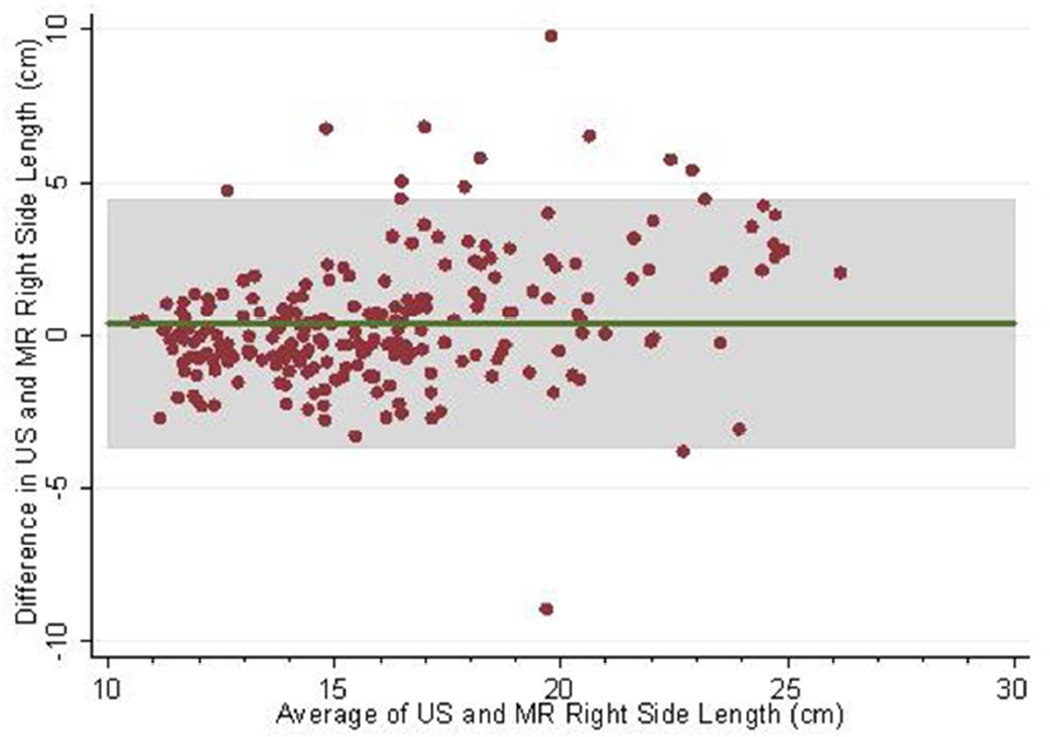
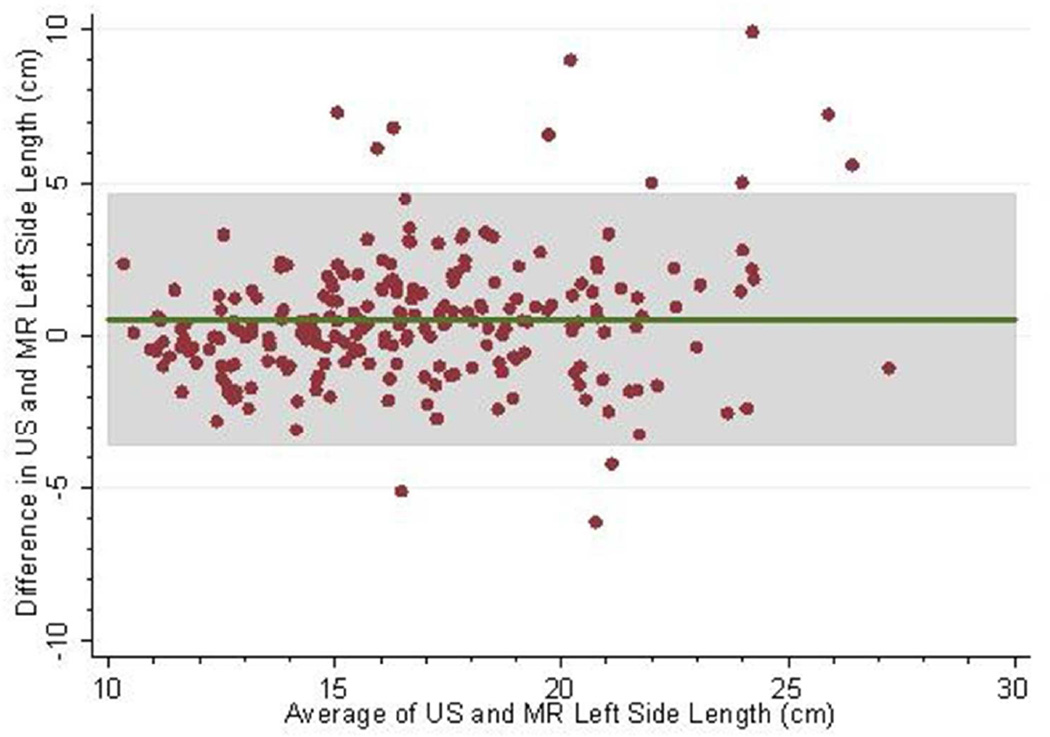
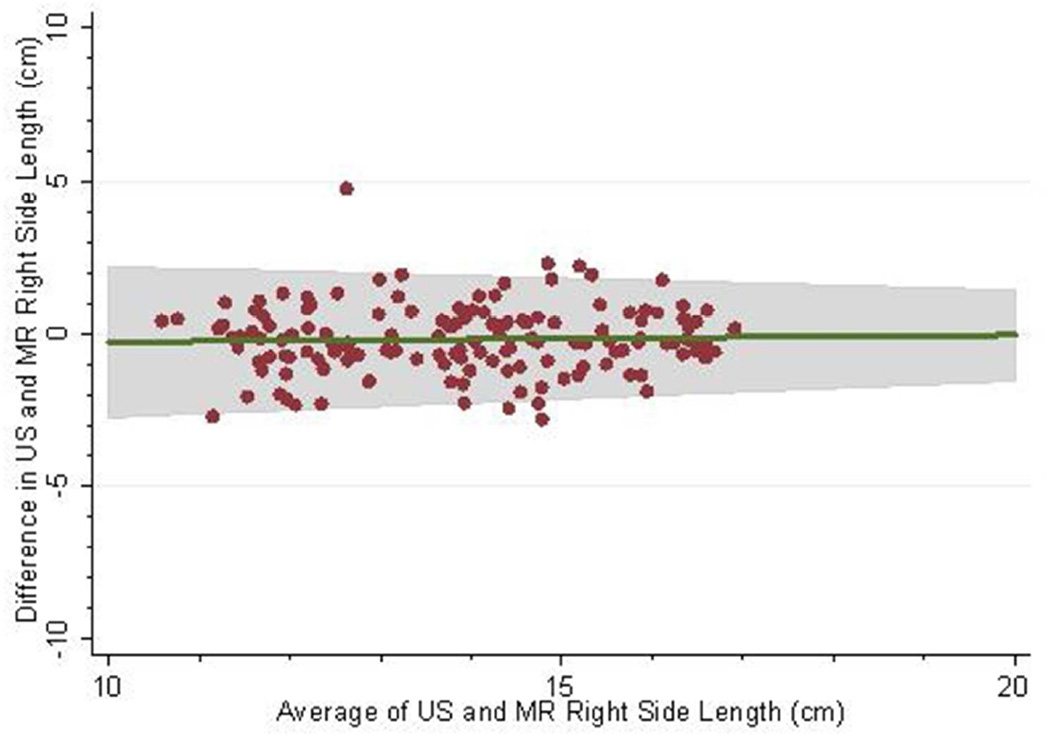
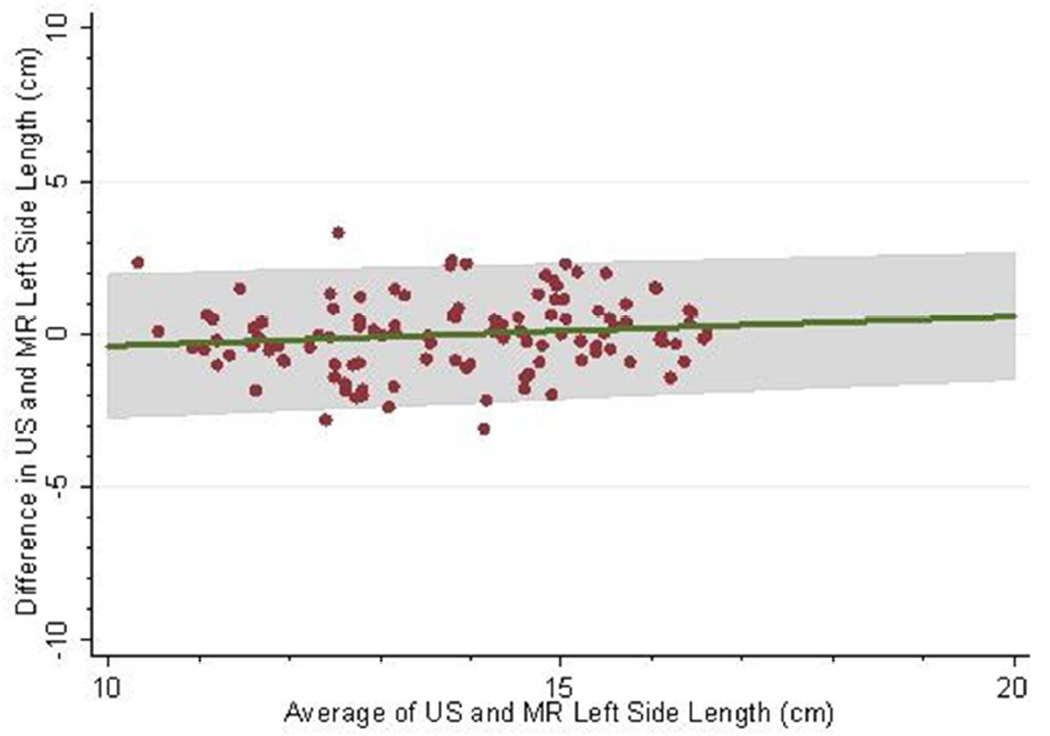
Comment in
-
Will introduction of tolvaptan change clinical practice in autosomal dominant polycystic kidney disease?Kidney Int. 2015 Jul;88(1):14-6. doi: 10.1038/ki.2015.143. Kidney Int. 2015. PMID: 26126090
References
-
- Driscoll JA, Bhalla S, Liapis H, et al. Autosomal dominant polycystic kidney disease is associated with an increased prevalence of radiographic bronchiectasis. Chest. 2008;133:1181–1188. - PubMed
-
- Franz KA, Reubi C. Rate of Functional Deterioration in Polycystic Kidney Disease. Kidney International. 1983;24:276–276. - PubMed
-
- Perrone RD, Marier JF, Mouksassi MS, et al. Qualification of Total Kidney Volume as a Prognostic Biomarker for Use in Clinical Trials Evaluating Patients with Autosomal Dominant Polycystic Kidney Disease. Am J Kidney Dis. 2014;63:A119.
Publication types
MeSH terms
Substances
Grants and funding
LinkOut - more resources
Full Text Sources
Other Literature Sources
Medical
