


Racial and ethnic disparities in breastfeeding
- PMID: 25831234
- PMCID: PMC4410446
- DOI: 10.1089/bfm.2014.0152
Racial and ethnic disparities in breastfeeding
Abstract
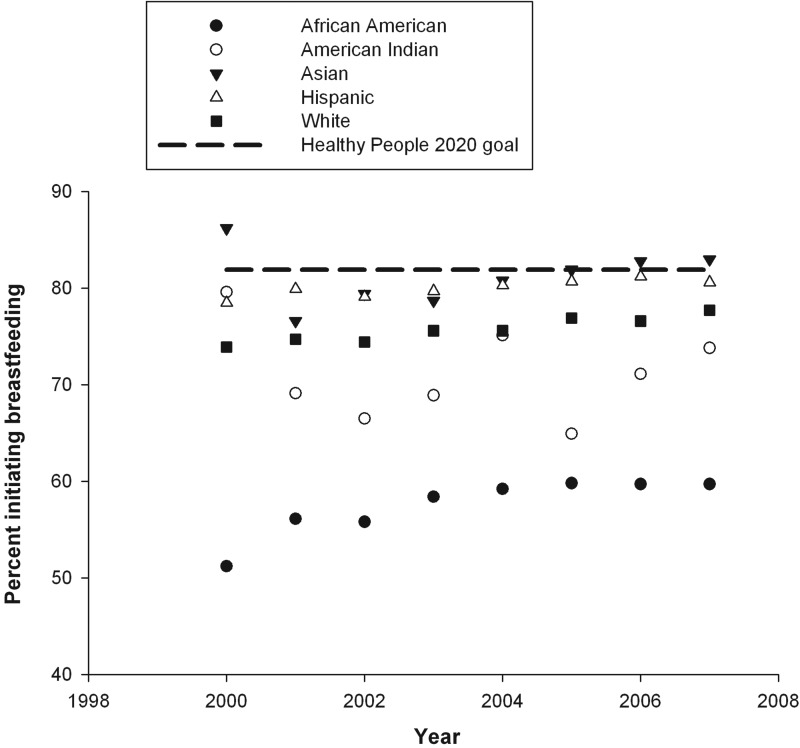
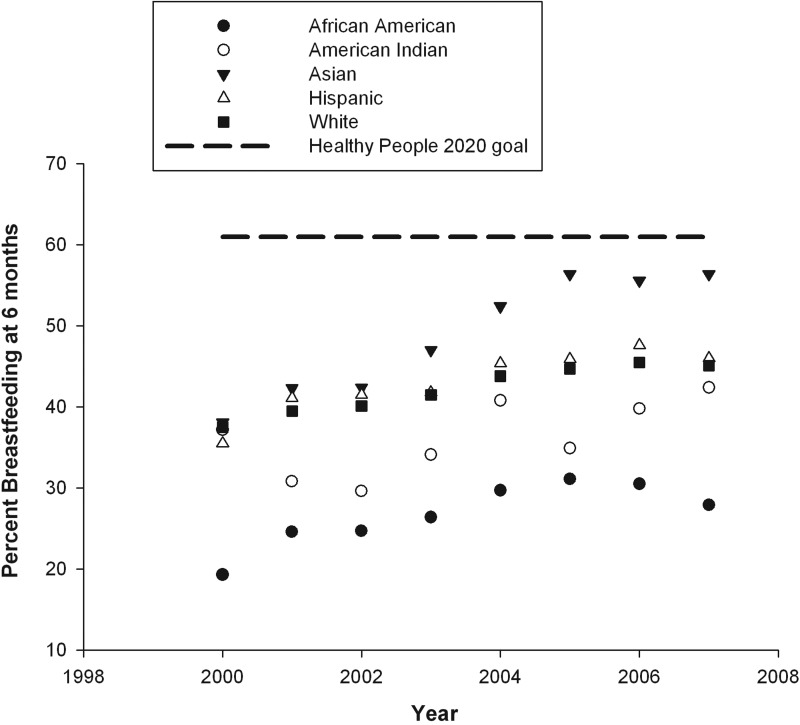
This article's aim is to review the literature on racial and ethnic disparities in breastfeeding rates and practices, address barriers to breastfeeding among minority women, conduct a systematic review of breastfeeding interventions, and provide obstetrician-gynecologists with recommendations on how they can help increase rates among minority women. In order to do so, the literature of racial and ethnic disparities in breastfeeding rates and barriers among minority women was reviewed, and a systematic review of breastfeeding interventions among minority women on PubMed and MEDLINE was conducted. Racial and ethnic minority women continue to have lower breastfeeding rates than white women and are not close to meeting the Healthy People 2020 goals. Minority women report many barriers to breastfeeding. Major efforts are still needed to improve breastfeeding initiation and duration rates among minority women in the United States. Obstetrician-gynecologists have a unique opportunity to promote and support breastfeeding through their clinical practices and public policy, and their efforts can have a meaningful impact on the future health of the mother and child.
Figures
Comment in
-
Racial disparities in breastfeeding--a continuing shame of our healthcare system.Breastfeed Med. 2015 May;10(4):185. doi: 10.1089/bfm.2015.9990. Breastfeed Med. 2015. PMID: 25915715 No abstract available.
-
Response to Roig-Romero.Breastfeed Med. 2015 Jul-Aug;10(6):348. doi: 10.1089/bfm.2015.0079. Epub 2015 Jun 26. Breastfeed Med. 2015. PMID: 26114212 No abstract available.
-
Exclusive Breastfeeding Rates in Latin America.Breastfeed Med. 2015 Jul-Aug;10(6):346-7. doi: 10.1089/bfm.2015.0068. Epub 2015 Jun 26. Breastfeed Med. 2015. PMID: 26115384 No abstract available.
References
-
- American Academy of Pediatrics Section on Breastfeeding. Breastfeeding and the use of human milk. Pediatrics 2005;115:496–506 - PubMed
-
- Centers for Disease Control and Prevention. Racial and ethnic differences in breastfeeding initiation and duration, by state—National Immunization Survey, United States, 2004–2008. Morb Mortal Wkly Rep 2010;59:327–334 - PubMed
-
- Centers for Disease Control and Prevention. Provisional breastfeeding rates by socio-demographic factors, among children born in 2007. Available at www.cdc.gov/breastfeeding/data/NIS_data/2007/socio-demographic_any.htm (accessed August31, 2013)
-
- Ahluwalia IB, Morrow B, Hsia J. Why do women stop breastfeeding? Findings from the Pregnancy Risk Assessment and Monitoring System. Pediatrics 2005;116:1407–1412 - PubMed
-
- Forste R, Weiss J, Lippincott E. The decision to breastfeed in the United States: Does race matter? Pediatrics 2001;108:291–296 - PubMed
Publication types
MeSH terms
Grants and funding
LinkOut - more resources
Full Text Sources
Other Literature Sources
Medical
