. 2015 Apr 3;348(6230):1258699.
doi: 10.1126/science.1258699. Epub 2014 Nov 20.

Epigenetics. Epigenetic inheritance uncoupled from sequence-specific recruitment

Affiliations

Epigenetics. Epigenetic inheritance uncoupled from sequence-specific recruitment

Kaushik Ragunathan et al. Science. .

Abstract

Changes in histone posttranslational modifications are associated with epigenetic states that define distinct patterns of gene expression. It remains unclear whether epigenetic information can be transmitted through histone modifications independently of specific DNA sequence, DNA methylation, or RNA interference. Here we show that, in the fission yeast Schizosaccharomyces pombe, ectopically induced domains of histone H3 lysine 9 methylation (H3K9me), a conserved marker of heterochromatin, are inherited through several mitotic and meiotic cell divisions after removal of the sequence-specific initiator. The putative JmjC domain H3K9 demethylase, Epe1, and the chromodomain of the H3K9 methyltransferase, Clr4/Suv39h, play opposing roles in maintaining silent H3K9me domains. These results demonstrate how a direct "read-write" mechanism involving Clr4 propagates histone modifications and allows histones to act as carriers of epigenetic information.


Figures

Fig. 1
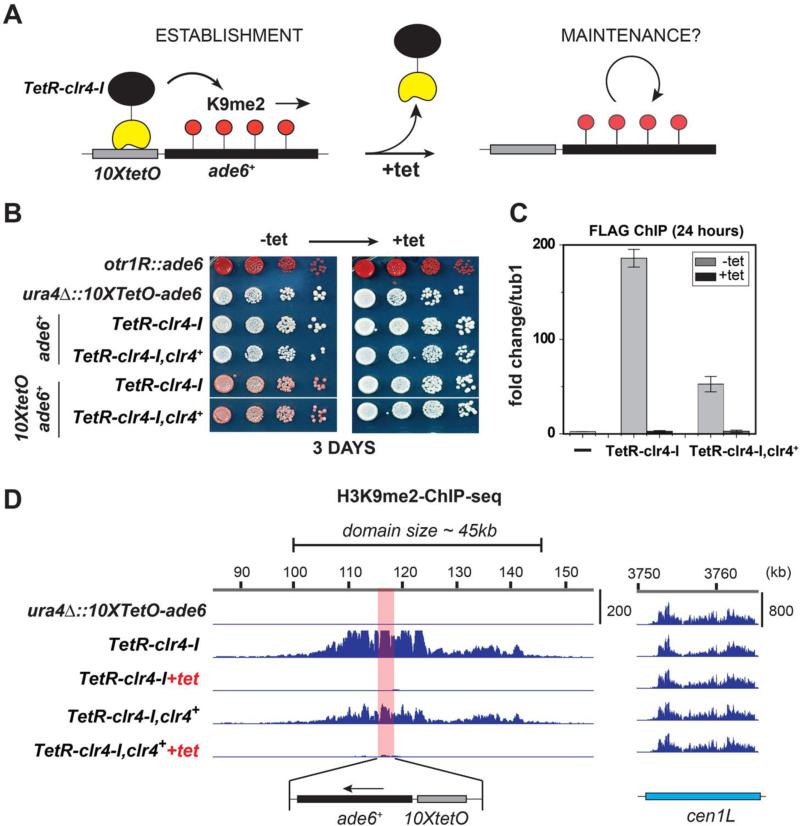
Fig. 1. Ectopic heterochromatin is lost after sequence-specific establishment upon tetracycline addition
(A) Diagram of experimental scheme for TetR-Clr4-lnitiator (TetR-Clr4-l)-mediated H3K9 methylation at the ura4Δ::10XtetO-ade6+ locus. Tetracycline (tet) promotes the release of TetR-Clr4-l from tetO sites so that initiator-independent maintenance could be tested. (B) Test of ade6+ silencing on low-adenine medium in the absence (-tet) and presence (+tet) of tetracycline. Silencing of ade6+ results in formation of red colonies. Centromeric ade6+ (otrlR::ade6), the target locus alone (ura4Δ::10XtetO-ade6+), and ura4Δ::ade6+ cells were used as positive and negative controls, respectively. (C) Chromatin immunoprecipitation (ChlP)-qPCR experiments assess the association of FLAG-tagged TetR-Clr4-l with the 10XtetO-ade6+ locus in the presence and absence of tetracycline. (−) indicates background ChIP signal from cells that did not express TetR-Clr4-l. In the presence of tetracycline, TetR-Clr4-l occupancy is close to background levels. (D) ChlP-seq experiments show that TetR-Clr4-l induces a de novo H3K9me2 domain that surrounds the tetO-ade6+ locus (highlighted in red) for ~20 kb on either side, in cells with or without c/r4+, which is lost 24 hours after tetracycline addition. H3K9me2 ChlP-qPCR data and H3K9me3 for samples in (D) are presented in fig. SI. Chromosome 3 (site of insertion of 10XtetO-ade6+) and chromosome 1 (centromere 1 left, cen1L) coordinates are shown above the tracks and read numbers (per million) are indicated on the right. H3K9me2 at DNA repeats of cen1L serves as an internal control for the ChlP-seq data.
Fig. 2
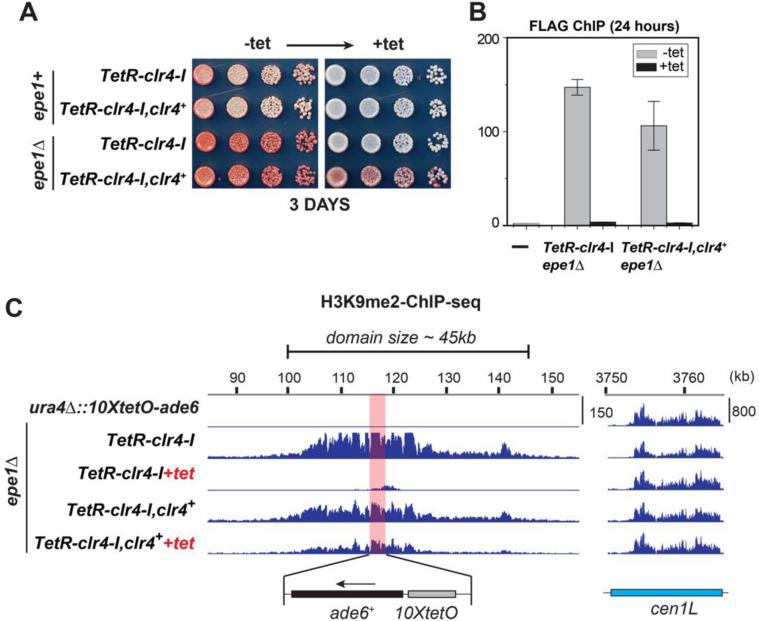
Fig. 2. Deletion of epel+ allows maintenance of heterochromatin after release of TetR-Clr4-l
(A) Color silencing assays showing that in TetR-clr4-l, clr4+, epelΔ cells silencing is maintained on +tet medium. (B) ChIP experiments showing that TetR-Clr4-l is released from tetO sites in +tet medium. (C) ChlP-seq experiments showing that in epelΔ cells H3K9me2 is maintained 24 hours after tetracycline addition in a clr4+-dependent manner. H3K9me2 ChlP-qPCR and H3K9me3 ChlP-seq data for samples in (C) and (D) are presented in fig. S2. Error bars represent standard deviations. Chromosome 3 (site of insertion of 10XtetO-ade6+) and chromosome 1 (centromere 1 left, cen1L) coordinates are shown above the tracks and read numbers (per million) are indicated on the right. H3K9me2 at DNA repeats of cen1L serves as an internal control for the ChlP-seq data.
Fig. 3
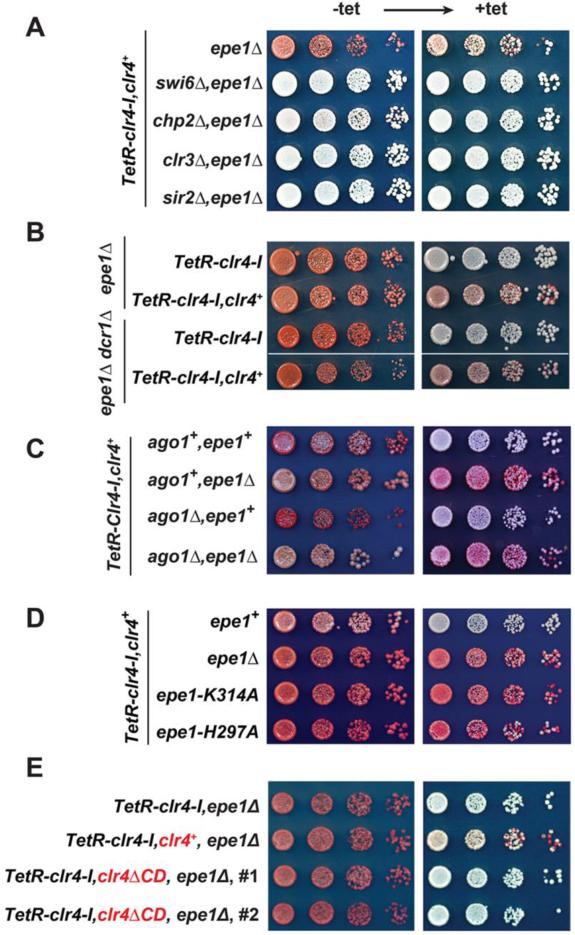
Fig. 3. Requirements for maintenance of the initiator-independent silent state
(A) Establishment and maintenance require HP1 proteins (Swi6 and Chp2) and HDACs (Clr3 and Sir2). (B) Maintenance of ectopic silencing in epelΔ cells does not require Dicer (Deri) as indicated by the growth of red, dcrlΔ cells on +tet medium. (C) Maintenance of ectopic silencing in epelΔ cells does not require Argonaute (Agol) as indicated by the growth of red, agolΔ cells on +tet medium. (D) Either deleting epel (epelΔ) or mutations in its active site (epel-K314A or epel-H297A) allow maintenance of the off state after release of the TetR-Clr4-I initiator. (E) Replacement of clr4+ with clr4ΔCD, encoding Clr4 lacking the chromodomain, abolishes initiator-independent silencing.
Fig. 4
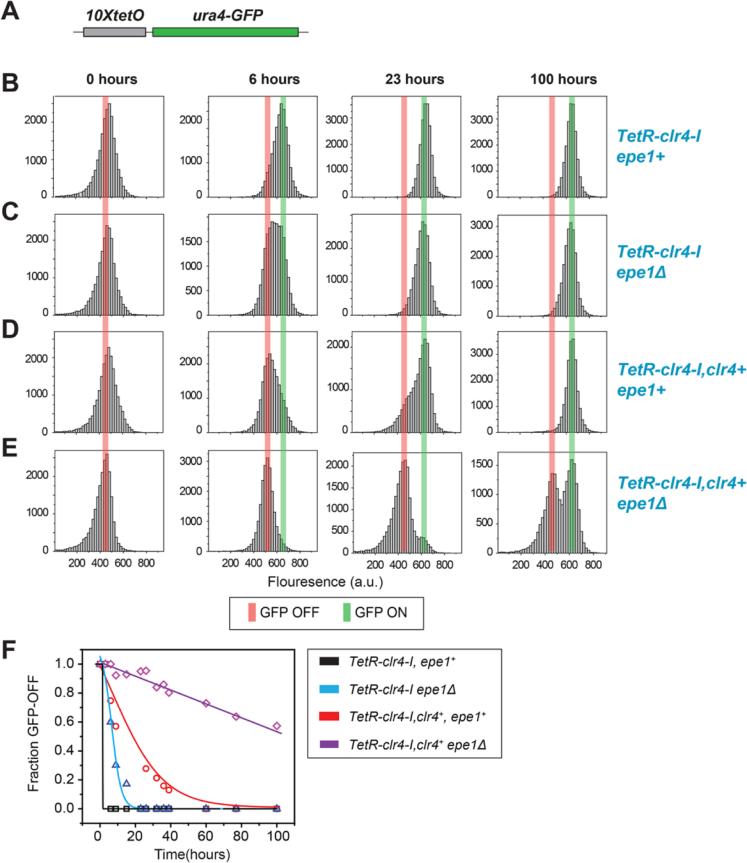
Fig. 4. Kinetics of decay of the silent state after release of TetR-Clr4-l using a GFP reporter gene reveals epigenetic maintenance in epel+ cells
(A) Schematic diagram of the 10XtetO-ura4-GFP locus. (B to E) FACS analysis of GFP expression in the indicated strains at 0, 6, 23, and 100 hours after tetracycline addition shows the time evolution of the distribution of GFP-OFF cells. (F) Data for time points between 0 and 100 hours after addition of tetracycline were plotted to display the fraction of GFP-OFF cells as a function of time. Dose response curve fitting was used as a guide.
Fig. 5
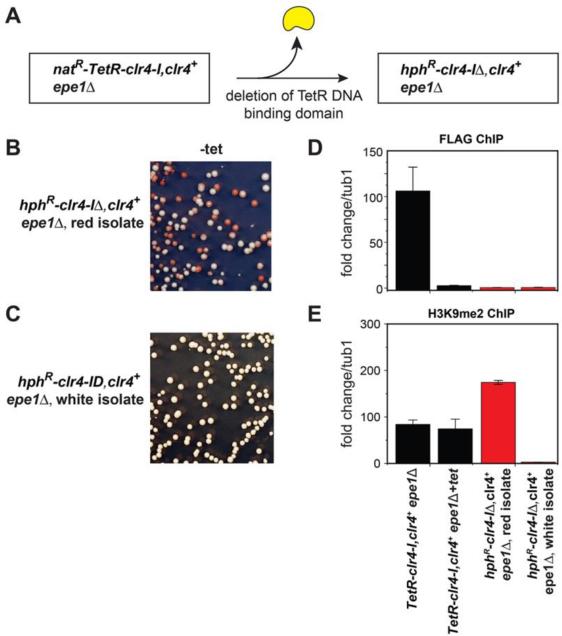
Fig. 5. Silencing and H3K9 methylation are maintained after deletion of the TetR DNA binding domain
(A) Diagram showing the experimental scheme for conversion of TetR-clr4-l to clr4-IΔ, which lacks recruitment activity because it can no longer bind to tetO sites. The isolation of sectored and red clr4-IΔ cells demonstrates maintenance in the complete absence of the TetR DNA binding domain (B), while white clr4-IΔ colonies indicate irreversible loss of silencing (C). (D) ChlP-qPCR experiments show that FLAG-tagged TetR-Clr4 signal could be detected at tetO sites in clr4-IΔ cells. (E) ChlP-qPCR experiments show elevated levels of H3K9 methylation in silent clr4-IΔ cells (red isolates) but background levels of methylation in ade6+ expressing (white) clr4-IΔ cells. Error bars represent standard deviations.
Fig. 6
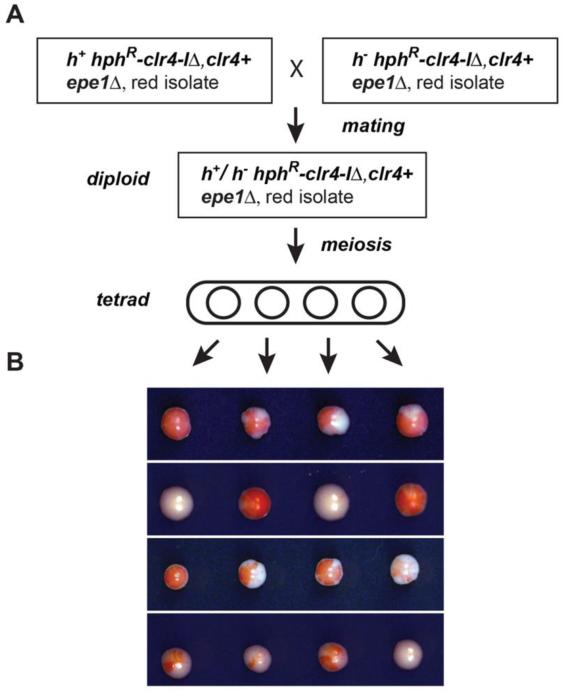
Fig. 6. Inheritance of initiator-independent silencing through meiotic cell divisions
(A) Scheme for mating of silent (red) ade6+ haploid cells of the indicated genotypes in which the TetR-Clr4l was deleted. After sporulation of the resulting diploid cells, tetrads were dissected and the haploid meiotic progeny were plated on low adenine-medium (B). Results of four tetrad dissections are presented and show inheritance and variegation of the silent state.
Fig. 7
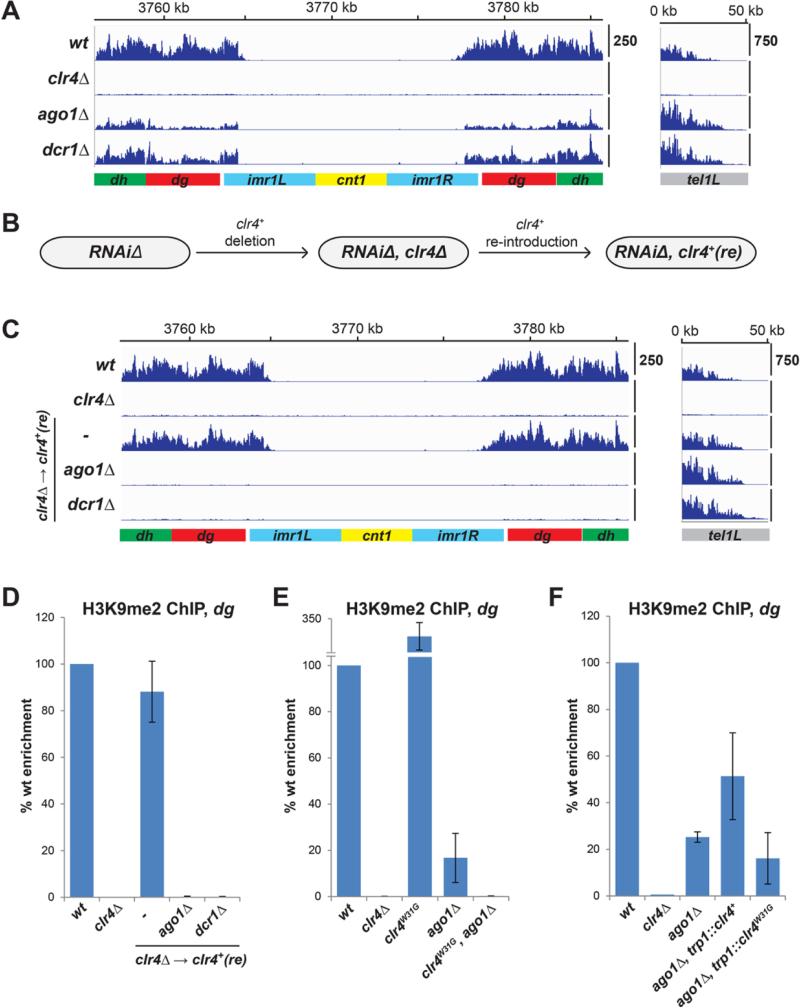
Fig. 7. RNAi-independent H3K9 methylation at pericentromeric repeats is epigenetically inherited
(A) ChlP-seq experiments showing the persistence of residual histone H3K9me2 at the pericentromeric dg and dh repeats of chromosome 1 in agolΔ and dcrlΔ cells. Libraries were sequenced on the lllumina HiSeq2500 platform and normalized to read per million (y axis). Chromosome coordinates are indicated above the plots. (B) Scheme for the reintroduction of clr4+ into RNAiΔ, clr4Δ cells to test the requirement for RNAi in H3K9me establishment. clr4+ was reintroduced to the native locus to avoid overexpression. (C) ChlP-seq experiments showing that the re-introduction of clr4+ into clr4Δ cells, but not clr4Δ agolA or clr4Δ dcrlΔ cells, restores H3K9me2 at the pericentromeric repeats of chromosome 1 (left). Reads for H3K9me2 at the telomeres of chromosome 1 (telLl) on the right side show that, unlike the centromeres, establishment of telomeric H3K9me does not require RNAi. (D) ChlP-qPCR experiments verify that RNAi is required for the reestablishment of H3K9me2 at the pericentromeric dg repeats. (E) ChlP-qPCR experiments show that a mutation in the chromodomain of Clr4 (clr4W31G) abolishes the maintenance of H3K9me2 at dg repeats. (F) ChlP-qPCR experiments show that an additional copy of wild type clr4+, but not clr4W31G, boosts residual H3K9me2 levels at dg. Error bars represent standard deviations.

References

    1. Ringrose L, Paro R. Epigenetic regulation of cellular memory by the Polycomb and Trlthorax group proteins. Annu. Rev. Genet. 2004;38:413–443. Medline doi:10.1146/annurev.genet.38.072902.091907. - PubMed
    1. Moazed D. Mechanisms for the Inheritance of chromatin states. Cell. 2011;146:510–518. Medline doi:10.1016/j.cfill.?011.07.013. - PMC - PubMed
    1. Luger K, Mader AW, Richmond RK, Sargent DF, Richmond TJ. Crystal structure of the nucleosome core particle at 2.8 A resolution. Nature. 1997;389:251260. Medline doi:10.1038/38444. - PubMed
    1. Jenuwein T, Allls CD. Translating the histone code. Science. 2001;293:1074–1080. Medline doi:10.1126/science.1063127. - PubMed
    1. Li B, Carey M, Workman JL. The role of chromatin during transcription. Cell. 2007;128:707–719. Medline doi:10.1016/j.cell.2007.01.015. - PubMed

Publication types

MeSH terms