


Impairments and comorbidities of polyneuropathy revealed by population-based analyses
- PMID: 25832668
- PMCID: PMC4409579
- DOI: 10.1212/WNL.0000000000001492
Impairments and comorbidities of polyneuropathy revealed by population-based analyses
Abstract
Objective: To quantify polyneuropathy impairments and comorbidities utilizing the Rochester Epidemiology Project (2010 census = 148,201).
Methods: ICD-9-CM coding identified polyneuropathy cases (2006-2010) and their 5:1 age- and sex-matched controls. Mortality and impairments were evaluated while identifying and adjusting for Charlson Index comorbidities.
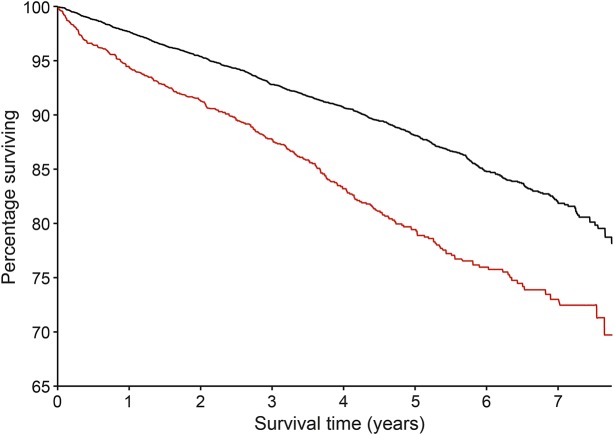
Results: Overall prevalence of polyneuropathy was 1.66%, and markedly rose to 6.6% in persons older than 60 years. Cases (n = 2,892) had more comorbidities than controls (n = 14,435) with higher median Charlson Index (6 vs 3, p < 0.001). Diabetes with end-organ disease represented the largest increased comorbidity in cases compared with controls (46.8% vs 6.5%). Diabetic polyneuropathy was the most common specific subtype (38.2%). Miscoded idiopathic cases and false-negative controls also commonly had diabetic polyneuropathy. Median modified Rankin Scale score was considerably higher for cases than controls (4 vs 1, p < 0.001). Multiple comorbidities were found associated with polyneuropathy after adjusting for diabetes co-occurrence, including pulmonary disease, dementia, and others. Polyneuropathy was an independent contributor to multiple functional impairments including difficulty walking (odds ratio [OR] = 1.9), climbing stairs (OR = 2.0), using an assistive device (OR = 2.0), fall tendency (OR = 2.4), work disability (OR = 4.2), lower limb amputations (OR = 3.9), and opioid use (OR = 2.7). Prevalent cases had a younger median age at death than controls (80 vs 86 years, p < 0.001), and incident cases had a 6-month shorter survival.
Conclusions: Polyneuropathies have notable neurologic impairments beyond their identified multiple comorbidities. Life expectancy is shortened. Diabetic polyneuropathy is underidentified. The quantified extent of the disease burden and refined comorbidity associations emphasize that greater research efforts and health care initiatives are needed.
© 2015 American Academy of Neurology.
Figures
References
-
- U.S. Department of Health and Human Services. HHS announces the nation's new health promotion and disease prevention agenda [online]. Available at: http://www.healthypeople.gov/sites/default/files/DefaultPressRelease_1.pdf. Accessed October 11, 2014.
-
- Bharucha NE, Bharucha AE, Bharucha EP. Prevalence of peripheral neuropathy in the Parsi community of Bombay. Neurology 1991;41:1315–1317. - PubMed
-
- Monticelli ML, Beghi E. Chronic symmetric polyneuropathy in the elderly: a field screening investigation in two regions of Italy: background and methods of assessment. The Italian General Practitioner Study Group (IGPSG). Neuroepidemiology 1993;12:96–105. - PubMed
-
- Savettieri G, Rocca WA, Salemi G, et al. Prevalence of diabetic neuropathy with somatic symptoms: a door-to-door survey in two Sicilian municipalities. Sicilian Neuro-Epidemiologic Study (SNES) Group. Neurology 1993;43:1115–1120. - PubMed
-
- Italian General Practitioner Study Group. Chronic symmetric symptomatic polyneuropathy in the elderly: a field screening investigation in two Italian regions: I: prevalence and general characteristics of the sample. Neurology 1995;45:1832–1836. - PubMed
Publication types
MeSH terms
Grants and funding
LinkOut - more resources
Full Text Sources
Medical
