


Molecular detection of hepatitis E virus in sheep from southern Xinjiang, China
- PMID: 25833205
- PMCID: PMC4445917
- DOI: 10.1007/s11262-015-1194-9
Molecular detection of hepatitis E virus in sheep from southern Xinjiang, China
Abstract
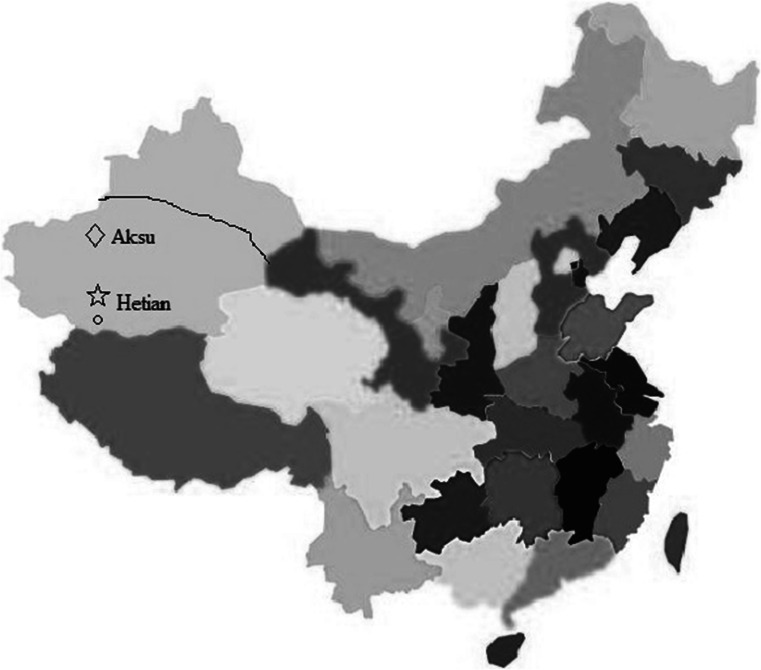
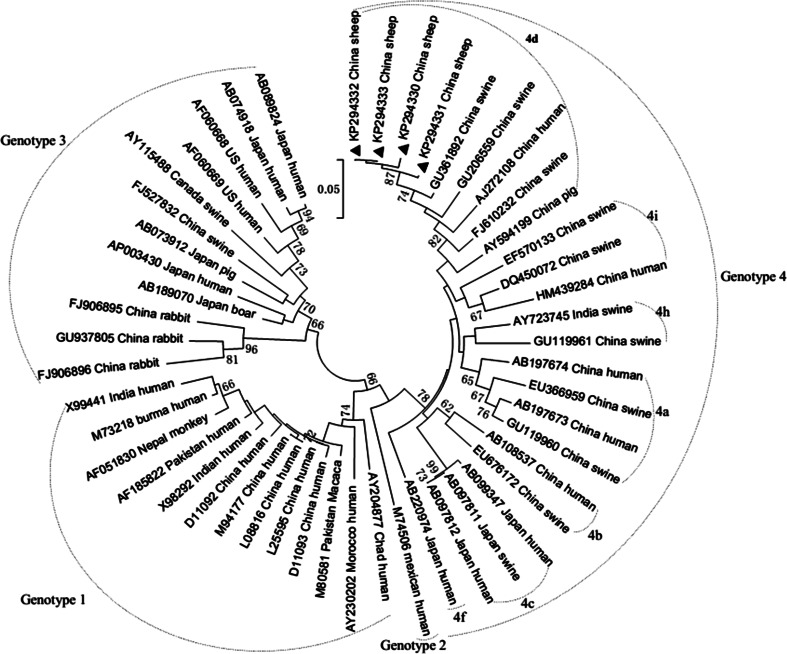
Hepatitis E virus (HEV) is a causative agent of infectious hepatitis in animals and humans both in developing and developed countries. Here, we collected 500 sheep sera and 75 raw sheep liver samples from a slaughterhouse in the southern part of the Xinjiang region, China, along with 26 sera of butchers from the same slaughterhouse. All serum samples were tested for anti-HEV antibody by enzyme-linked immunosorbent assay. Both serum and liver samples were evaluated for the presence of HEV RNA by nested polymerase chain reaction targeting partial nucleotide sequences of open reading frame 2 (ORF2). The results indicate that sheep seroprevalence was 35.20 % (176/500) and that four of the 75 (5.3 %) sheep livers showed detectable amounts of HEV RNA. The seroprevalence of the butchers was 57.7 % (15/26). The four amplicons shared 97.8-100 % nucleotide sequence identity and had pairwise sequence identities of 81.6-85.3 %, 84.2-85.3 %, 82.1-85.3 % and 84.7-97.9 % with the corresponding regions of genotypes 1, 2, 3 and 4 of HEV, respectively. A phylogenetic tree was constructed based on alignments of an amplified 186-bp ORF2 sequence and corresponding reference strains. The analysis showed that the four sheep strains detected in our study formed a lineage within a genotype 4 cluster that contains hb-3, bjsw1, T1, swCH189 and swCH25, all of which belong to genotype 4, subtype 4d. The results indicated a high level of seroconversion in sheep and suggested that sheep liver may be a source of foodborne HEV infection in humans.
Figures
References
Publication types
MeSH terms
Substances
Associated data
- Actions
- Actions
- Actions
- Actions
LinkOut - more resources
Full Text Sources
Other Literature Sources
