


The use of adjustment factors to address the impact of inflammation on vitamin A and iron status in humans
- PMID: 25833890
- PMCID: PMC4410494
- DOI: 10.3945/jn.114.194712
The use of adjustment factors to address the impact of inflammation on vitamin A and iron status in humans
Abstract
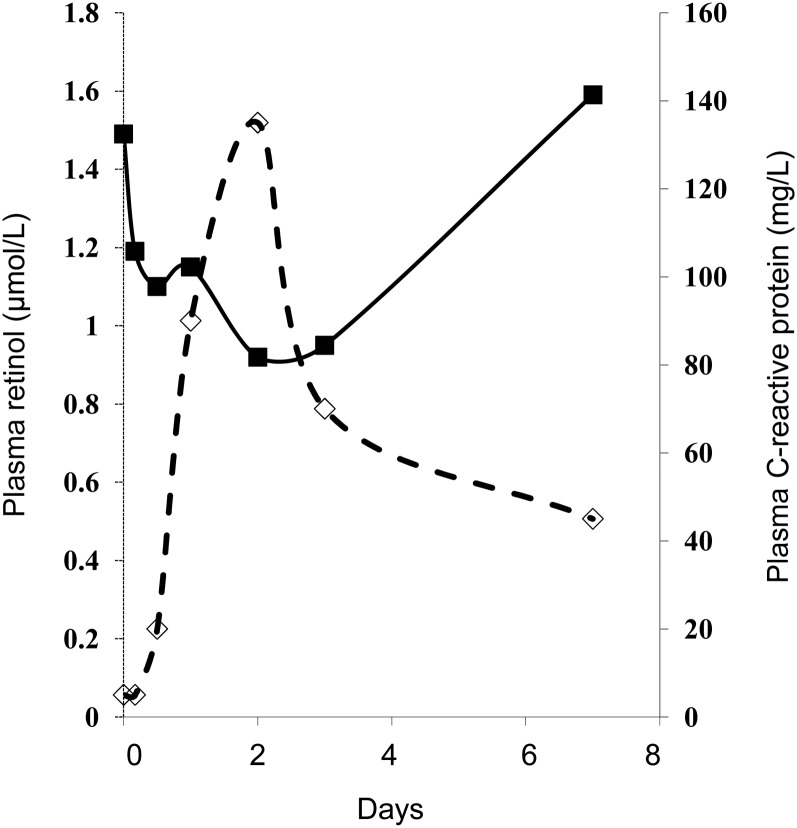
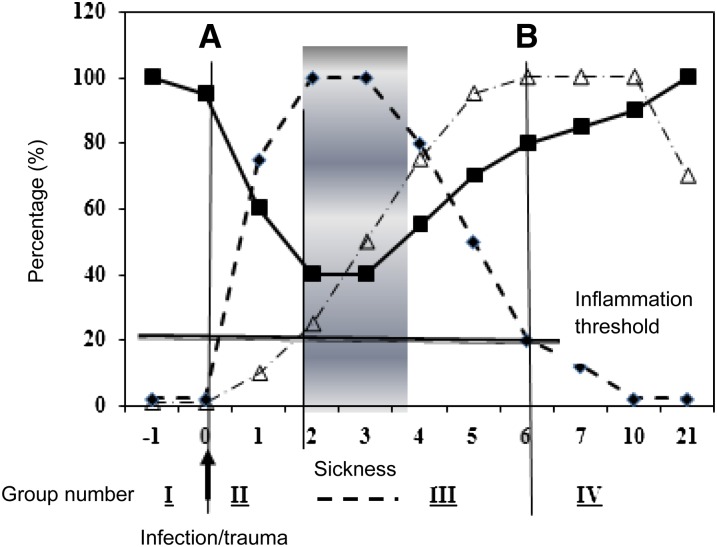
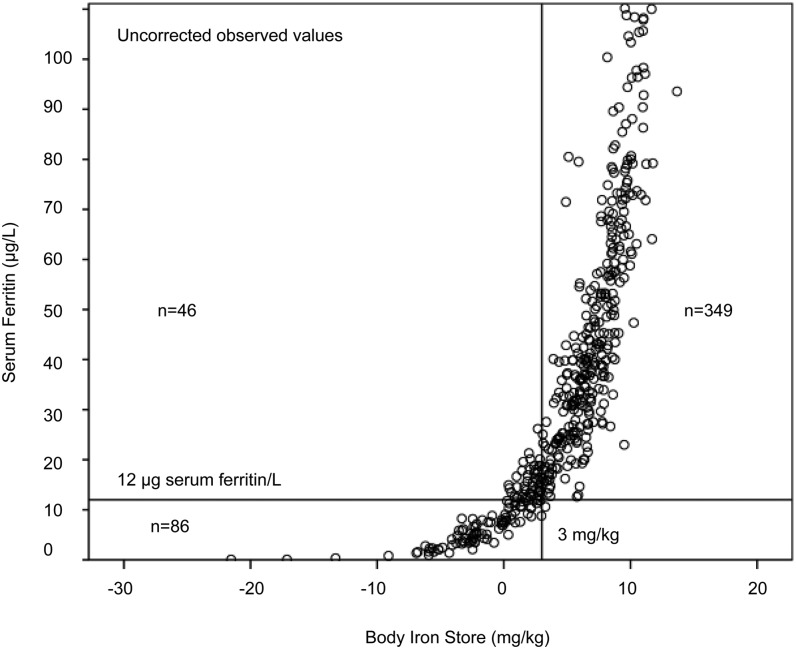
Many nutrient biomarkers are altered by inflammation. We calculated adjustment factors for retinol and ferritin by using meta-analyses of studies containing the respective biomarker and 2 acute phase proteins in serum, C-reactive protein (CRP), and α1-acid glycoprotein (AGP). With the use of CRP and AGP we identified 4 groups in each study: reference (CRP ≤5 mg/L, AGP ≤1 g/L), incubation (CRP >5 mg/L, AGP ≤1 g/L), early convalescence (CRP >5 mg/L, AGP >1 g/L), and late convalescence (CRP ≤5 mg/L, AGP >1 g/L). For each biomarker, ratios of the geometric means of the reference to each inflammation group concentration were used to calculate adjustment factors for retinol (1.13, 1.24, and 1.11) and ferritin (0.77, 0.53, and 0.75) for the incubation, early, and late convalescent groups, respectively. The application of the meta-analysis factors in more recent studies compares well with study-specific factors. The same method was used to calculate adjustment factors for soluble transferrin receptor (sTfR) and body iron stores (BISs) in Lao children. We found no advantage in adjusting sTfR for inflammation; in fact, adjustment decreased iron deficiency. Neither adjusted (10% <0 mg/kg) nor nonadjusted (12% <0 mg/kg) BISs detected as much iron deficiency as did ferritin (18% <12 μg/L) and adjusted ferritin (21% <12 μg/L) unless the cutoff for BISs was increased from 0 to <3 mg/kg. However, we could find no evidence that the larger number of children identified as having BISs <3 mg/kg had risks of anemia comparable to those identified by using ferritin <12 μg/L. In conclusion, both corrected and uncorrected ferritin concentrations <12 μg/L are associated with more iron deficiency and anemia than either sTfR >8.3 mg/L or BISs <0 mg/kg in Lao children.
Keywords: acute phase proteins; ferritin; iron; retinol; soluble transferrin receptor.
© 2015 American Society for Nutrition.
Conflict of interest statement
Author disclosures: DI Thurnham, CA Northrop-Clewes, and J Knowles, no conflicts of interest.
Figures
References
-
- Rousham EK, Northrop-Clewes CA, Lunn PG. Maternal reports of child illness and the biochemical status of the child: the use of morbidity interviews in rural Bangladesh. Br J Nutr 1998;80:451–6. - PubMed
-
- Thurnham DI, McCabe GP, Northrop-Clewes CA, Nestel P. Effects of subclinical infection on plasma retinol concentrations and assessment of prevalence of vitamin A deficiency: meta-analysis. Lancet 2003;362:2052–8. - PubMed
-
- Thurnham DI, McCabe LD, Haldar S, Wieringa FT, Northrop-Clewes CA, McCabe GP. Adjusting plasma ferritin concentrations to remove the effects of subclinical inflammation in the assessment of iron deficiency: a meta-analysis. Am J Clin Nutr 2010;92:546–55. - PubMed
-
- Galloway P, McMillan DC, Sattar N. Effect of the inflammatory response on trace element and vitamin status. Ann Clin Biochem 2000;37:289–97. - PubMed
-
- Fleck A, Myers MA. Diagnostic and prognostic significance of acute phase proteins. In: Gordon AH, Koj A, editors. The acute phase response to injury and infection. 1st ed. Amsterdam: Elsevier Scientific Publishers; 1985. p. 249–71.
Publication types
MeSH terms
Substances
LinkOut - more resources
Full Text Sources
Other Literature Sources
Medical
Research Materials
Miscellaneous
