Review
. 2015 Jun;35(6):1306-16.
doi: 10.1161/ATVBAHA.114.304650. Epub 2015 Apr 2.

Nonclassical patrolling monocyte function in the vasculature

Affiliations
Review

Nonclassical patrolling monocyte function in the vasculature

Graham Thomas et al. Arterioscler Thromb Vasc Biol. 2015 Jun.

Abstract

Nonclassical patrolling monocytes are characterized by their unique ability to actively patrol the vascular endothelium under homeostatic and inflammatory conditions. Patrolling monocyte subsets (CX3CR1(high)Ly6C(-) in mouse and CX3CR1(high)CD14(dim)CD16(+) in humans) are distinct from the classical monocyte subsets (CCR2(high)Ly6C(+) in mouse and CCR2(high)CD14(+)CD16(-) in humans) and exhibit unique functions in the vasculature and inflammatory disease. Patrolling monocytes function in several disease settings to remove damaged cells and debris from the vasculature and have been associated with wound healing and the resolution of inflammation in damaged tissues. This review highlights the unique functions of these patrolling monocytes in the vasculature and during inflammation.

Keywords: atherosclerosis; inflammation; macrophages; monocytes.


Figures

Figure 1
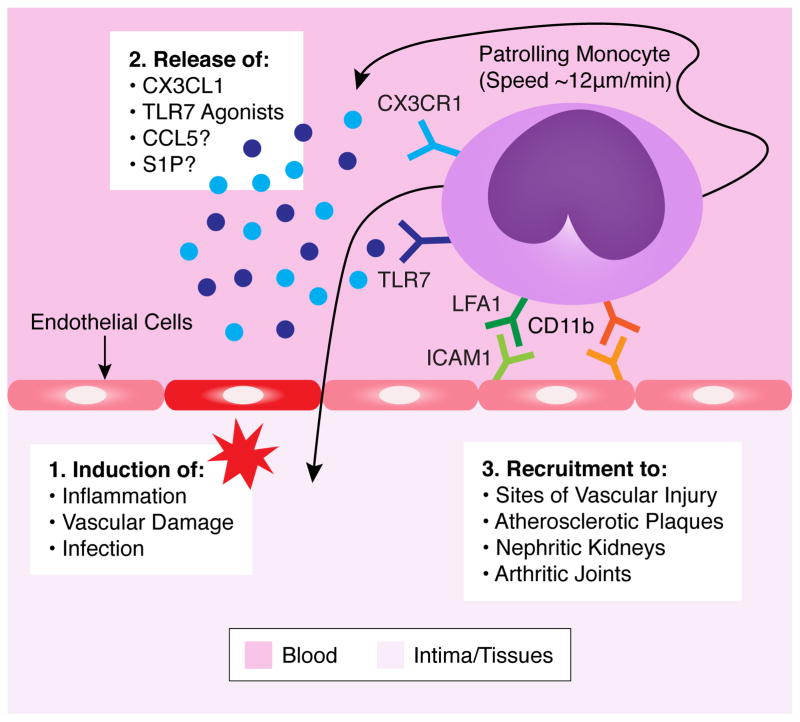
Figure 1. Patrolling and Recruitment of Nonclassical Monocytes
Resting nonclassical monocytes actively patrol the vasculature at a speed of ~12μm/min in a manner independent of blood flow. Nonclassical monocyte patrolling requires LFA1 binding with ICAM1 on vascular endothelial cells. Nonclassical monocyte patrolling and activation is also partially CD11b-dependent. In response to inflammation, vascular damage or infection, there is a release of chemoattractant factors from either endothelial cells, damaged tissues or other recruited immune cells that attract patrolling monocytes. These chemoattractant factors include CX3CL1, TLR7 agonists, CCL5 and S1P, which monocytes can respond to via intrinsic expression of cognate receptors CX3CR1, TLR7 and possibly CCR5 or S1PR. Patrolling monocytes are then either recruited locally to sites of vascular injury or can enter areas of inflammation such as atherosclerotic plaques, nephritic kidneys or arthritic joints.
Figure 1
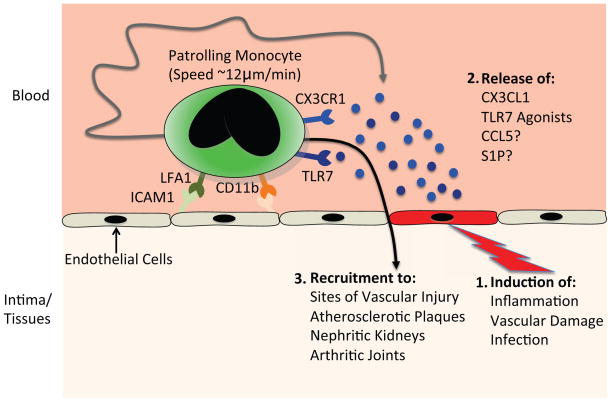
Figure 1. Patrolling and Recruitment of Nonclassical Monocytes
Resting nonclassical monocytes actively patrol the vasculature at a speed of ~12μm/min in a manner independent of blood flow. Nonclassical monocyte patrolling requires LFA1 binding with ICAM1 on vascular endothelial cells. Nonclassical monocyte patrolling and activation is also partially CD11b-dependent. In response to inflammation, vascular damage or infection, there is a release of chemoattractant factors from either endothelial cells, damaged tissues or other recruited immune cells that attract patrolling monocytes. These chemoattractant factors include CX3CL1, TLR7 agonists, CCL5 and S1P, which monocytes can respond to via intrinsic expression of cognate receptors CX3CR1, TLR7 and possibly CCR5 or S1PR. Patrolling monocytes are then either recruited locally to sites of vascular injury or can enter areas of inflammation such as atherosclerotic plaques, nephritic kidneys or arthritic joints.

References

    1. Swirski FK. Monocyte recruitment and macrophage proliferation in atherosclerosis. Kardiol Pol. 2014;72:311–314. - PubMed
    1. Swirski FK, Nahrendorf M. Leukocyte behavior in atherosclerosis, myocardial infarction, and heart failure. Science. 2013;339:161–166. - PMC - PubMed
    1. Swirski FK, Libby P, Aikawa E, Alcaide P, Luscinskas FW, Weissleder R, Pittet MJ. Ly-6chi monocytes dominate hypercholesterolemia-associated monocytosis and give rise to macrophages in atheromata. J Clin Invest. 2007;117:195–205. - PMC - PubMed
    1. Smith JD, Trogan E, Ginsberg M, Grigaux C, Tian J, Miyata M. Decreased atherosclerosis in mice deficient in both macrophage colony-stimulating factor (op) and apolipoprotein e. Proc Natl Acad Sci U S A. 1995;92:8264–8268. - PMC - PubMed
    1. Combadière C, Potteaux S, Rodero M, Simon T, Pezard A, Esposito B, Merval R, Proudfoot A, Tedgui A, Mallat Z. Combined inhibition of ccl2, cx3cr1, and ccr5 abrogates ly6c(hi) and ly6c(lo) monocytosis and almost abolishes atherosclerosis in hypercholesterolemic mice. Circulation. 2008;117:1649–1657. - PubMed

Publication types