miR-182 integrates apoptosis, growth, and differentiation programs in glioblastoma
- PMID: 25838542
- PMCID: PMC4387715
- DOI: 10.1101/gad.257394.114
miR-182 integrates apoptosis, growth, and differentiation programs in glioblastoma
Erratum in
-
Corrigendum: miR-182 integrates apoptosis, growth, and differentiation programs in glioblastoma.Genes Dev. 2024 Apr 1;38(7-8):355. doi: 10.1101/gad.351832.124. Genes Dev. 2024. PMID: 38772726 Free PMC article. No abstract available.
Abstract
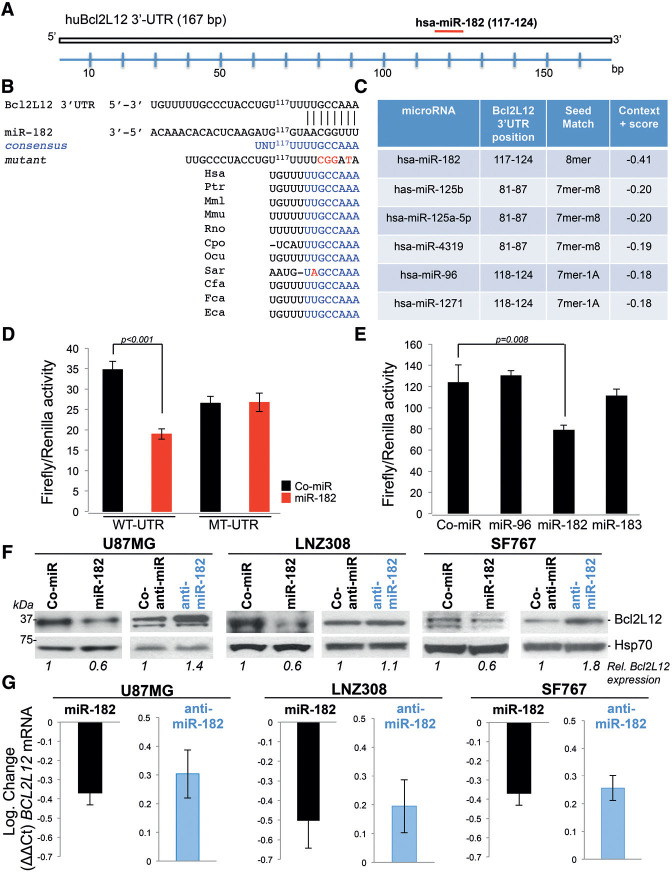
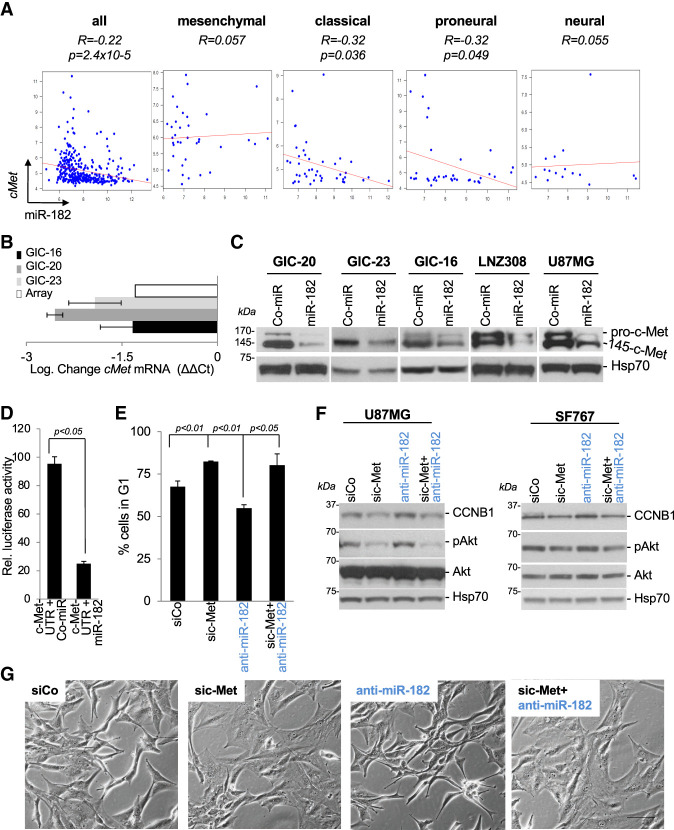
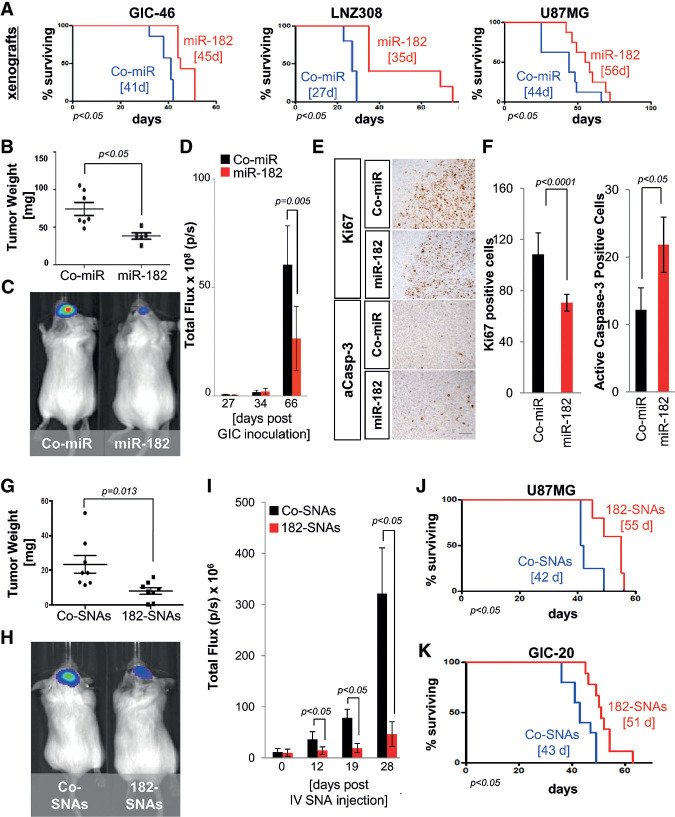
Glioblastoma multiforme (GBM) is a lethal, therapy-resistant brain cancer consisting of numerous tumor cell subpopulations, including stem-like glioma-initiating cells (GICs), which contribute to tumor recurrence following initial response to therapy. Here, we identified miR-182 as a regulator of apoptosis, growth, and differentiation programs whose expression level is correlated with GBM patient survival. Repression of Bcl2-like12 (Bcl2L12), c-Met, and hypoxia-inducible factor 2α (HIF2A) is of central importance to miR-182 anti-tumor activity, as it results in enhanced therapy susceptibility, decreased GIC sphere size, expansion, and stemness in vitro. To evaluate the tumor-suppressive function of miR-182 in vivo, we synthesized miR-182-based spherical nucleic acids (182-SNAs); i.e., gold nanoparticles covalently functionalized with mature miR-182 duplexes. Intravenously administered 182-SNAs penetrated the blood-brain/blood-tumor barriers (BBB/BTB) in orthotopic GBM xenografts and selectively disseminated throughout extravascular glioma parenchyma, causing reduced tumor burden and increased animal survival. Our results indicate that harnessing the anti-tumor activities of miR-182 via safe and robust delivery of 182-SNAs represents a novel strategy for therapeutic intervention in GBM.
Keywords: Bcl2L12; HIF2A; c-Met; glioblastoma; miR-182; nanotechnology; spherical nucleic acids.
© 2015 Kouri et al.; Published by Cold Spring Harbor Laboratory Press.
Figures




References
-
- Allhenn D, Boushehri MA, Lamprecht A. 2012. Drug delivery strategies for the treatment of malignant gliomas. Int J Pharm 436: 299–310. - PubMed
-
- Bao S, Wu Q, McLendon RE, Hao Y, Shi Q, Hjelmeland AB, Dewhirst MW, Bigner DD, Rich JN. 2006. Glioma stem cells promote radioresistance by preferential activation of the DNA damage response. Nature 444: 756–760. - PubMed
-
- Boccaccio C, Comoglio PM. 2006. Invasive growth: a MET-driven genetic programme for cancer and stem cells. Nat Rev Cancer 6: 637–645. - PubMed
-
- Boccaccio C, Comoglio PM. 2013. The MET oncogene in glioblastoma stem cells: implications as a diagnostic marker and a therapeutic target. Cancer Res 73: 3193–3199. - PubMed
Publication types
MeSH terms
Substances
Grants and funding
LinkOut - more resources
Full Text Sources
Other Literature Sources
Miscellaneous