NGF-induced TrkA/CD44 association is involved in tumor aggressiveness and resistance to lestaurtinib
- PMID: 25840418
- PMCID: PMC4496399
- DOI: 10.18632/oncotarget.3227
NGF-induced TrkA/CD44 association is involved in tumor aggressiveness and resistance to lestaurtinib
Abstract
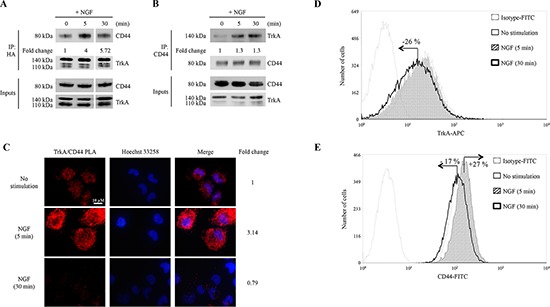
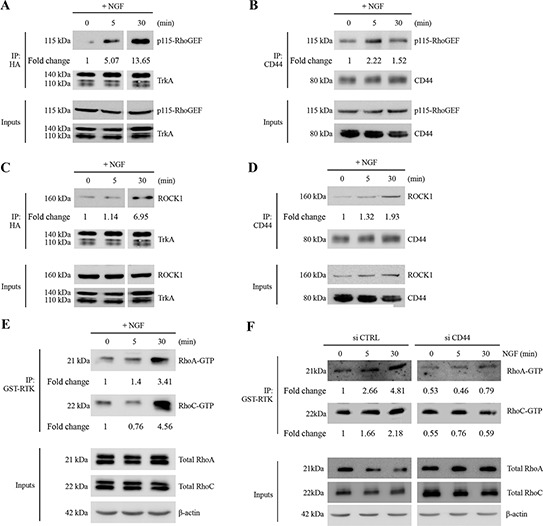
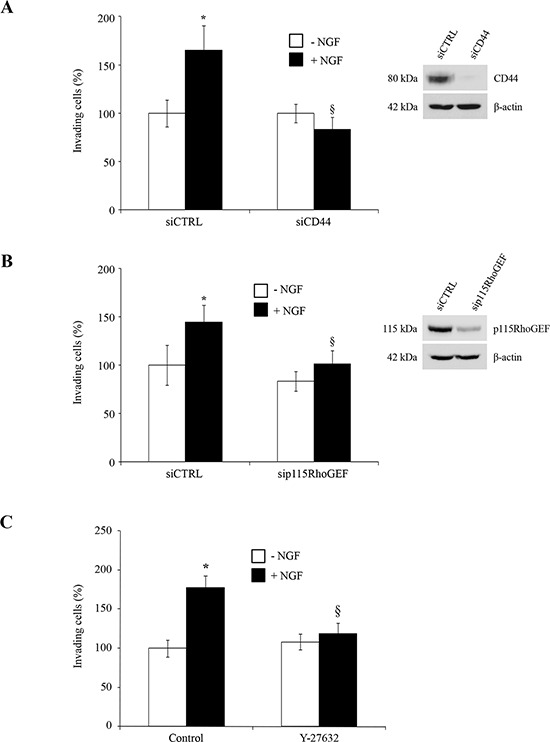
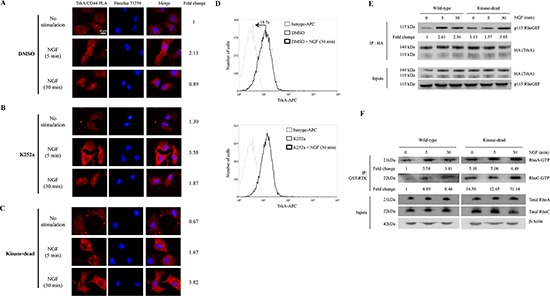
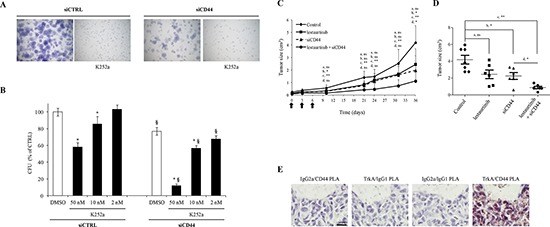
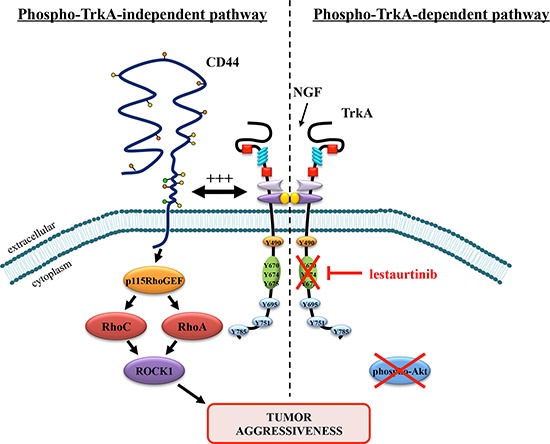
There is accumulating evidence that TrkA and its ligand Nerve Growth Factor (NGF) are involved in cancer development. Staurosporine derivatives such as K252a and lestaurtinib have been developed to block TrkA kinase signaling, but no clinical trial has fully demonstrated their therapeutic efficacy. Therapeutic failures are likely due to the existence of intrinsic signaling pathways in cancer cells that impede or bypass the effects of TrkA tyrosine kinase inhibitors. To verify this hypothesis, we combined different approaches including mass spectrometry proteomics, co-immunoprecipitation and proximity ligation assays. We found that NGF treatment induced CD44 binding to TrkA at the plasma membrane and subsequent activation of the p115RhoGEF/RhoA/ROCK1 pathway to stimulate breast cancer cell invasion. The NGF-induced CD44 signaling was independent of TrkA kinase activity. Moreover, both TrkA tyrosine kinase inhibition with lestaurtinib and CD44 silencing with siRNA inhibited cell growth in vitro as well as tumor development in mouse xenograft model; combined treatment significantly enhanced the antineoplastic effects of either treatment alone. Altogether, our results demonstrate that NGF-induced tyrosine kinase independent TrkA signaling through CD44 was sufficient to maintain tumor aggressiveness. Our findings provide an alternative mechanism of cancer resistance to lestaurtinib and indicate that dual inhibition of CD44 and TrkA tyrosine kinase activity may represent a novel therapeutic strategy.
Keywords: CD44; NGF; TrkA; lestaurtinib; resistance.
Figures
References
-
- Adriaenssens E, Vanhecke E, Saule P, Mougel A, Page A, Romon R, Nurcombe V, Le Bourhis X, Hondermarck H. Nerve growth factor is a potential therapeutic target in breast cancer. Cancer research. 2008;68:346–351. - PubMed
-
- Bloom AP, Jimenez-Andrade JM, Taylor RN, Castaneda-Corral G, Kaczmarska MJ, Freeman KT, Coughlin KA, Ghilardi JR, Kuskowski MA, Mantyh PW. Breast cancer-induced bone remodeling, skeletal pain, and sprouting of sensory nerve fibers. The journal of pain: official journal of the American Pain Society. 2011;12:698–711. - PMC - PubMed
-
- Marchesi F, Piemonti L, Mantovani A, Allavena P. Molecular mechanisms of perineural invasion, a forgotten pathway of dissemination and metastasis. Cytokine & growth factor reviews. 2010;21:77–82. - PubMed
Publication types
MeSH terms
Substances
LinkOut - more resources
Full Text Sources
Other Literature Sources
Miscellaneous