


Factors associated with high short-acting β2-agonist use in urban children with asthma
- PMID: 25840499
- PMCID: PMC4426068
- DOI: 10.1016/j.anai.2015.03.002
Factors associated with high short-acting β2-agonist use in urban children with asthma
Abstract
Background: One goal of guideline-based asthma therapy is minimal use of short-acting β₂ agonist (SABA) medications. Inner-city children with asthma are known to have high SABA use.
Objective: To examine factors associated with high SABA use in inner-city children with asthma.
Methods: One hundred inner-city children with persistent asthma were enrolled into a randomized controlled trial of an emergency department (ED) and home intervention. All children underwent serologic allergen specific IgE and salivary cotinine testing at the ED enrollment visit. Pharmacy records for the past 12 months were obtained. Number of SABA fills during the past 12 months was categorized into low- to moderate- vs high-use groups. SABA groups were compared by the number of symptom days and nights, allergen sensitization, and exposures. Regression models were used to predict high SABA use.
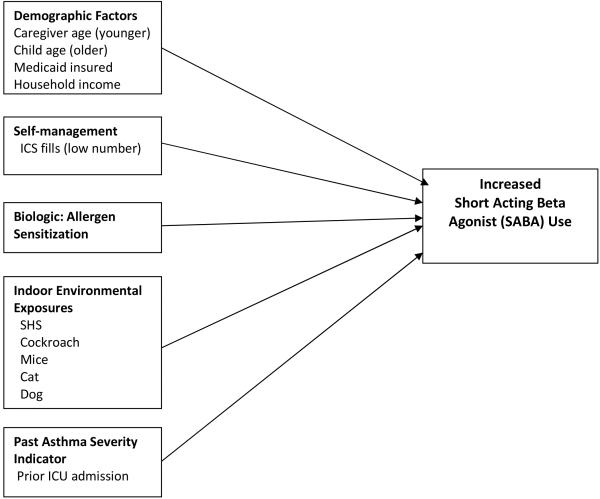
Results: Mean number of SABA fills over 12 months was 3.12. Unadjusted bivariate analysis showed that high SABA users were more than 5 times more likely to have an asthma hospitalization, almost 3 times more likely to have an asthma intensive care unit admission, and more than 3 times more likely to have prior specialty asthma care or positive cockroach sensitization than low to moderate SABA users. In the final regression model, for every additional inhaled corticosteroid fill, a child was 1.4 times more likely and a child with positive cockroach sensitization was almost 7 times more likely to have high SABA use when controlling for prior intensive care unit admission, receipt of specialty care, child age, and income.
Conclusion: Providers should closely monitor SABA and controller medication use, allergen sensitization, and exposures in children with persistent asthma.
Trial registration: ClinicalTrials.gov, identifier NCT01981564.
Copyright © 2015 American College of Allergy, Asthma & Immunology. Published by Elsevier Inc. All rights reserved.
Figures


References
-
- Akinbami LJ, Moorman JE, Liu X. Asthma Prevalence, heath care use, and mortality: United States: 2005-2009. National Health Stat Report. 2011;12(32):1–14. - PubMed
-
- Akinbami LJ, Moorman JE, Garbe PL, Sondik EJ. Status of Childhood Asthma in the United States, 1908-2007. Pediatrics. 2009;123(Supp 3):S131–S145. - PubMed
-
- Crocker D, Brown C, Moolenaar R, et al. Racial and Ethnic disparities in asthma medication usage and health-care utilization. Chest. 2009;136(4):1063–1071. - PubMed
-
- Diaz T, Sturm T, Matte T, et al. Medication use among children with asthma in East Harlem. Pediatrics. 2000;105(6):1188–1193. - PubMed
Publication types
MeSH terms
Substances
Associated data
Grants and funding
LinkOut - more resources
Full Text Sources
Other Literature Sources
Medical
Miscellaneous
