CD30 Downregulation, MMAE Resistance, and MDR1 Upregulation Are All Associated with Resistance to Brentuximab Vedotin
- PMID: 25840583
- PMCID: PMC4458438
- DOI: 10.1158/1535-7163.MCT-15-0036
CD30 Downregulation, MMAE Resistance, and MDR1 Upregulation Are All Associated with Resistance to Brentuximab Vedotin
Abstract
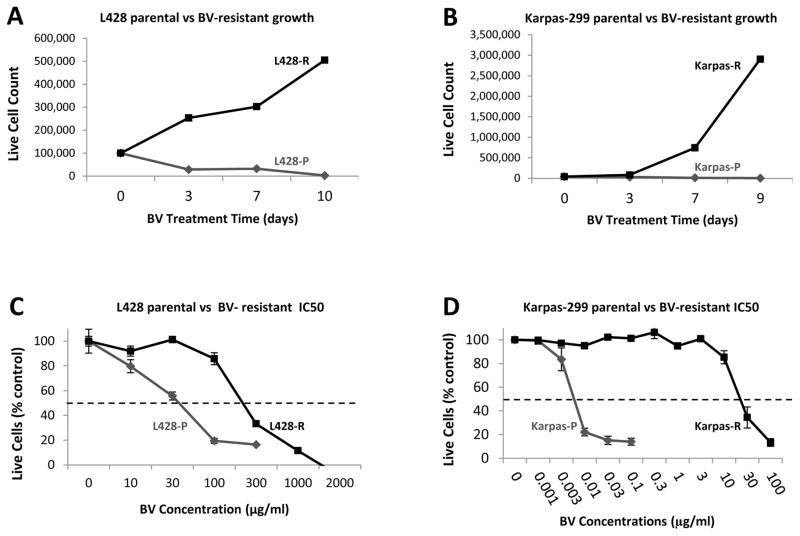
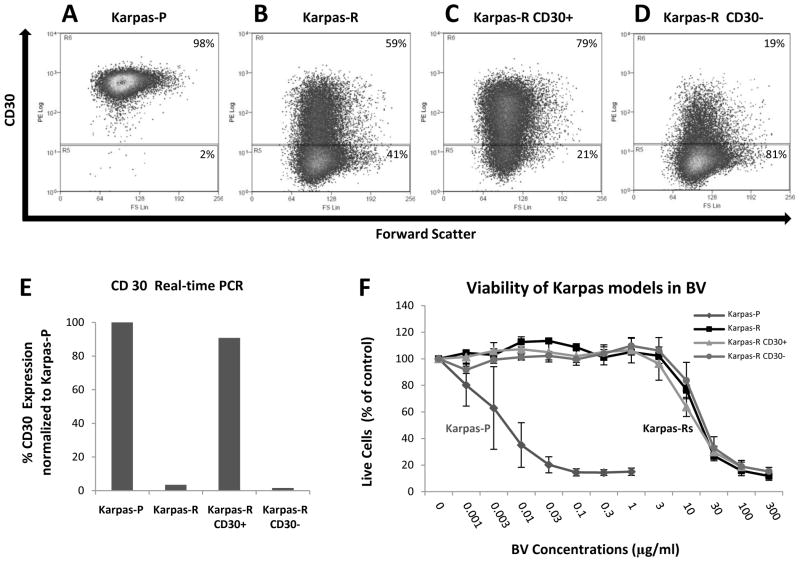
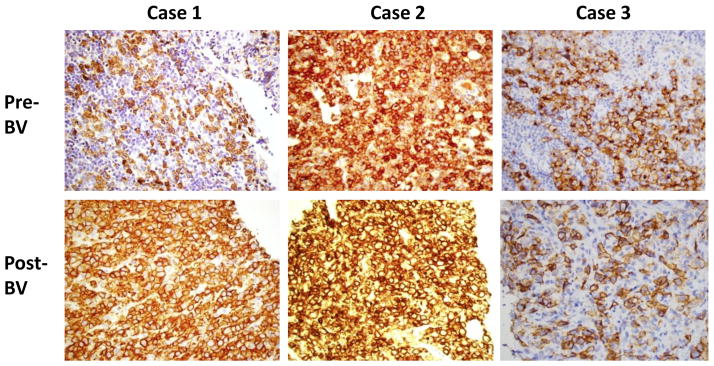
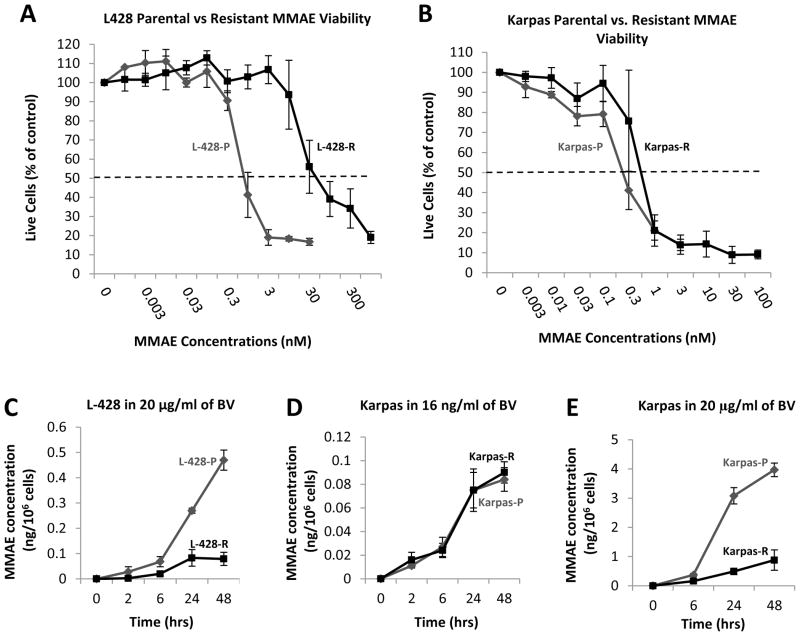
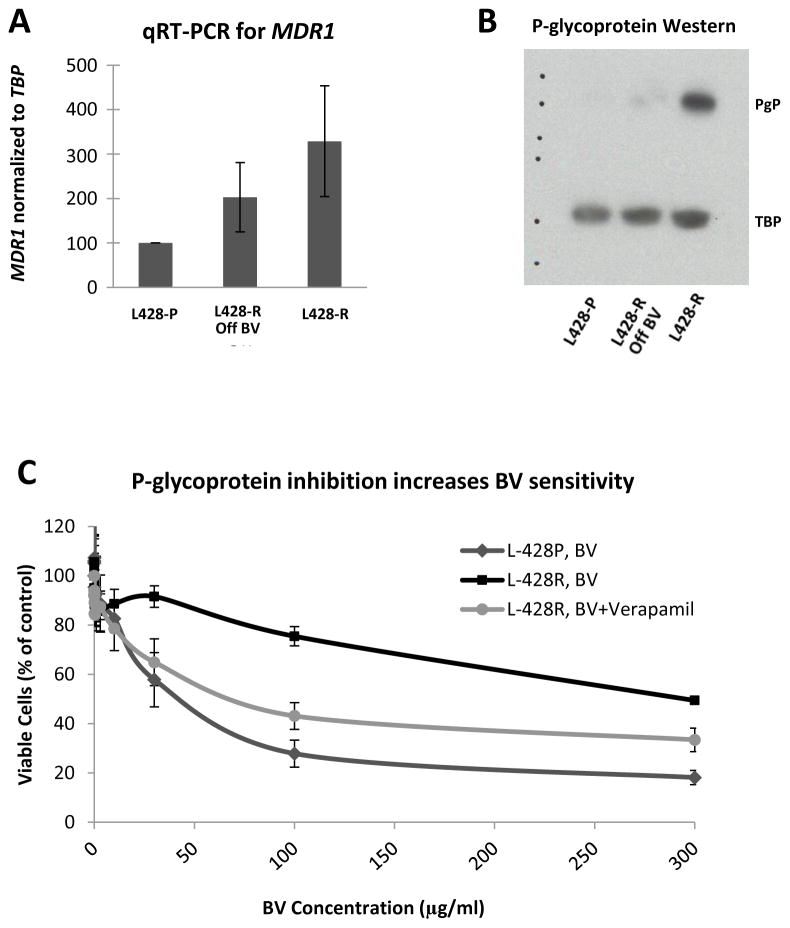
Brentuximab vedotin (BV) is an antibody-drug conjugate that specifically delivers the potent cytotoxic drug monomethyl auristatin E (MMAE) to CD30-positive cells. BV is FDA approved for treatment of relapsed/refractory Hodgkin lymphoma and anaplastic large cell lymphoma (ALCL); however, many patients do not achieve complete remission and develop BV-resistant disease. We selected for BV-resistant Hodgkin lymphoma (L428) and ALCL (Karpas-299) cell lines using either constant (ALCL) or pulsatile (Hodgkin lymphoma) exposure to BV. We confirmed drug resistance by MTS assay and analyzed CD30 expression in resistant cells by flow cytometry, qRT-PCR, and Western blotting. We also measured drug exporter expression, MMAE resistance, and intracellular MMAE concentrations in BV-resistant cells. In addition, tissue biopsy samples from 10 Hodgkin lymphoma and 5 ALCL patients who had relapsed or progressed after BV treatment were analyzed by immunohistocytochemistry for CD30 expression. The resistant ALCL cell line, but not the Hodgkin lymphoma cell line, demonstrated downregulated CD30 expression compared with the parental cell line. In contrast, the Hodgkin lymphoma cell line, but not the ALCL cell line, exhibited MMAE resistance and increased expression of the MDR1 drug exporter compared with the parental line. For both Hodgkin lymphoma and ALCL, samples from patients relapsed/resistant on BV persistently expressed CD30 by immunohistocytochemistry. One Hodgkin lymphoma patient sample expressed MDR1 by immunohistocytochemistry. Although loss of CD30 expression is a possible mode of BV resistance in ALCL in vitro models, this has not been confirmed in patients. MMAE resistance and MDR1 expression are possible modes of BV resistance for Hodgkin lymphoma both in vitro and in patients.
©2015 American Association for Cancer Research.
Figures
References
-
- American Cancer Society. Cancer Facts and Figures. 2014 Available from: http://www.cancer.org/research/cancerfactsstatistics/cancerfactsfigures2....
-
- Quddus F, Armitage JO. Salvage therapy for Hodgkin’s lymphoma. Cancer J. 2009;15:161–3. - PubMed
-
- Savage KJ, Harris NL, Vose JM, Ullrich F, Jaffe ES, Connors JM, et al. ALK anaplastic large-cell lymphoma is clinically and immunophenotypically different from both ALK+ ALCL and peripheral T-cell lymphoma, not otherwise specified: report from the International Peripheral T-Cell Lymphoma Project. Blood. 2008;111:5496–504. - PubMed
-
- Moskowitz CH, Nimer SD, Zelenetz AD, Trippett T, Hedrick EE, Filippa DA, et al. A 2-step comprehensive high-dose chemoradiotherapy second-line program for relapsed and refractory Hodgkin disease: analysis by intent to treat and development of a prognostic model. Blood. 2001;97:616–23. - PubMed
-
- Kuruvilla J, Nagy T, Pintilie M, Tsang R, Keating A, Crump M. Similar response rates and superior early progression-free survival with gemcitabine, dexamethasone, and cisplatin salvage therapy compared with carmustine, etoposide, cytarabine, and melphalan salvage therapy prior to autologous stem cell transplantation for recurrent or refractory Hodgkin lymphoma. Cancer. 2006;106:353–60. - PubMed
Publication types
MeSH terms
Substances
Grants and funding
LinkOut - more resources
Full Text Sources
Other Literature Sources