


Recurrent TERT promoter mutations identified in a large-scale study of multiple tumour types are associated with increased TERT expression and telomerase activation
- PMID: 25843513
- PMCID: PMC4467782
- DOI: 10.1016/j.ejca.2015.03.010
Recurrent TERT promoter mutations identified in a large-scale study of multiple tumour types are associated with increased TERT expression and telomerase activation
Abstract
Background: Several somatic mutation hotspots were recently identified in the telomerase reverse transcriptase (TERT) promoter region in human cancers. Large scale studies of these mutations in multiple tumour types are limited, in particular in Asian populations. This study aimed to: analyse TERT promoter mutations in multiple tumour types in a large Chinese patient cohort, investigate novel tumour types and assess the functional significance of the mutations.
Methods: TERT promoter mutation status was assessed by Sanger sequencing for 13 different tumour types and 799 tumour tissues from Chinese cancer patients. Thymic epithelial tumours, gastrointestinal leiomyoma, and gastric schwannoma were included, for which the TERT promoter has not been previously sequenced. Functional studies included TERT expression by reverse-transcriptase quantitative polymerase chain reaction (RT-qPCR), telomerase activity by the telomeric repeat amplification protocol (TRAP) assay and promoter activity by the luciferase reporter assay.
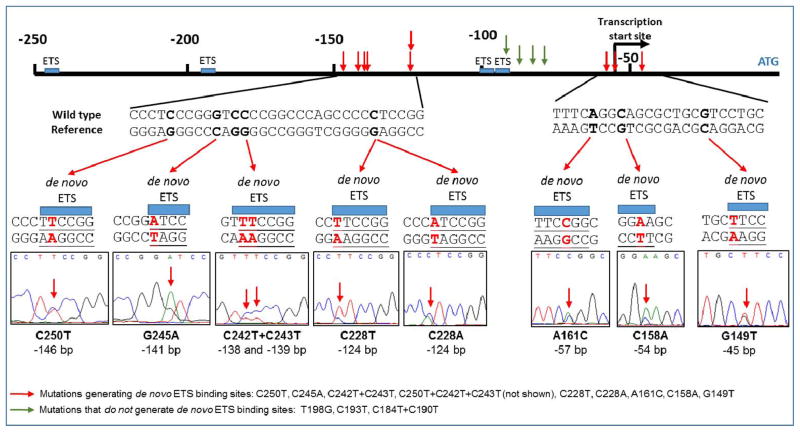
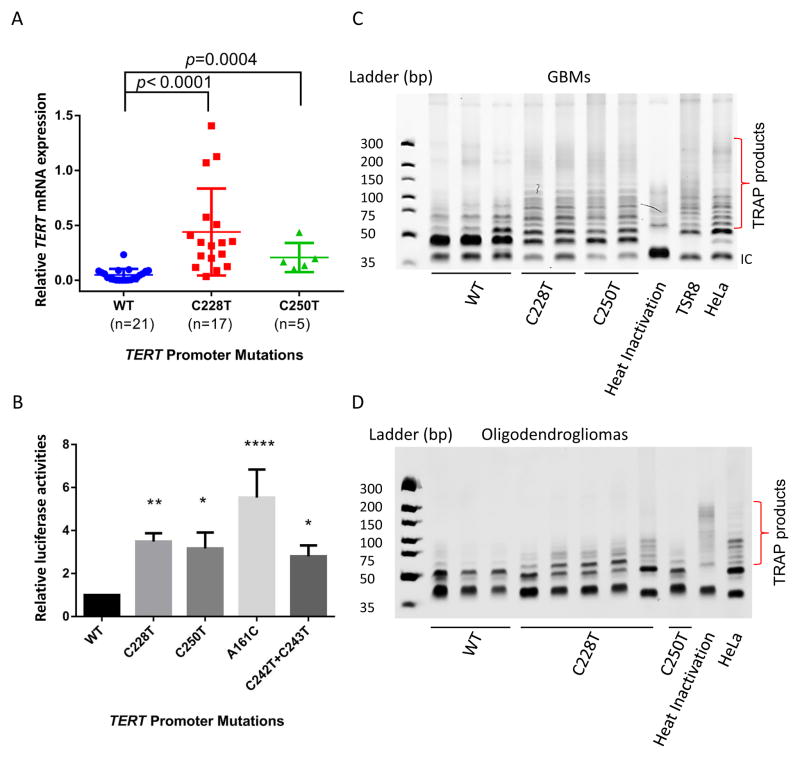
Results: TERT promoter mutations were highly frequent in glioblastoma (83.9%), urothelial carcinoma (64.5%), oligodendroglioma (70.0%), medulloblastoma (33.3%) and hepatocellular carcinoma (31.4%). C228T and C250T were the most common mutations. In urothelial carcinoma, several novel rare mutations were identified. TERT promoter mutations were absent in gastrointestinal stromal tumour (GIST), thymic epithelial tumours, gastrointestinal leiomyoma, gastric schwannoma, cholangiocarcinoma, gastric and pancreatic cancer. TERT promoter mutations highly correlated with upregulated TERT mRNA expression and telomerase activity in adult gliomas. These mutations differentially enhanced the transcriptional activity of the TERT core promoter.
Conclusions: TERT promoter mutations are frequent in multiple tumour types and have similar distributions in Chinese cancer patients. The functional significance of these mutations reflect the importance to telomere maintenance and hence tumourigenesis, making them potential therapeutic targets.
Keywords: China; Genetics; Glioma; Neoplasms; Promoter regions; Telomerase.
Copyright © 2015 Elsevier Ltd. All rights reserved.
Conflict of interest statement
Under agreements between Duke University and Blueprint Medicines H.Y. is entitled to a share of the royalties received by the University on sales of products related to genes described in this manuscript. H.Y. receives royalties from Agios Pharmaceuticals, Sanofi-Aventis and Personal Genome Diagnostics. S.W. and H.Y. are co-founders and own stocks of Beijing Pangenomics Technology, Co. Ltd.
Figures
References
-
- Horn S, Figl A, Rachakonda PS, Fischer C, Sucker A, Gast A, et al. TERT promoter mutations in familial and sporadic melanoma. Science. 2013;339(6122):959–61. - PubMed
-
- Arita H, Narita Y, Fukushima S, Tateishi K, Matsushita Y, Yoshida A, et al. Upregulating mutations in the TERT promoter commonly occur in adult malignant gliomas and are strongly associated with total 1p19q loss. Acta Neuropathol. 2013;126(2):267–76. - PubMed
Publication types
MeSH terms
Substances
Grants and funding
LinkOut - more resources
Full Text Sources
Other Literature Sources
