


Developmental changes in large-scale network connectivity in autism
- PMID: 25844325
- PMCID: PMC4375789
- DOI: 10.1016/j.nicl.2015.02.024
Developmental changes in large-scale network connectivity in autism
Abstract
Background: Disrupted cortical connectivity is thought to underlie the complex cognitive and behavior profile observed in individuals with autism spectrum disorder (ASD). Previous neuroimaging research has identified patterns of both functional hypo- and hyper-connectivity in individuals with ASD. A recent theory attempting to reconcile conflicting results in the literature proposes that hyper-connectivity of brain networks may be more characteristic of young children with ASD, while hypo-connectivity may be more prevalent in adolescents and adults with the disorder when compared to typical development (TD) (Uddin etal., 2013). Previous work has examined only young children, mixed groups of children and adolescents, or adult cohorts in separate studies, leaving open the question of developmental influences on functional brain connectivity in ASD.
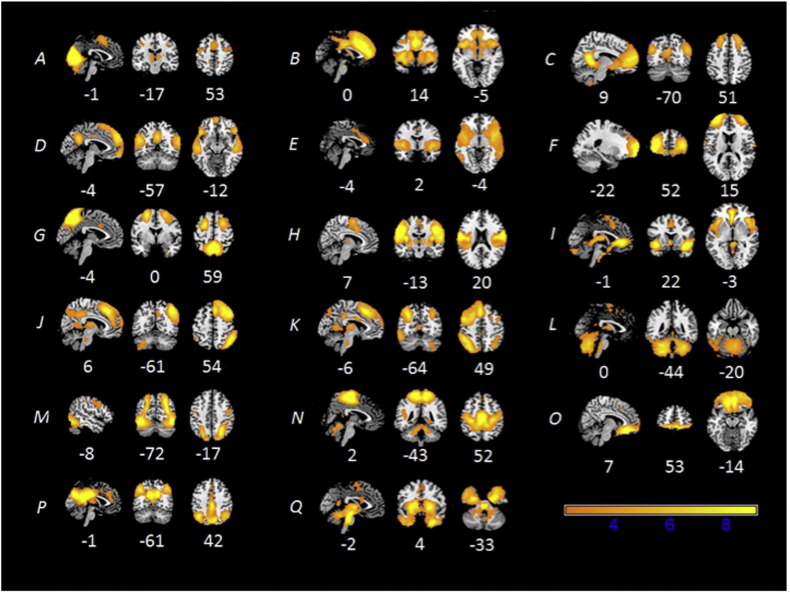
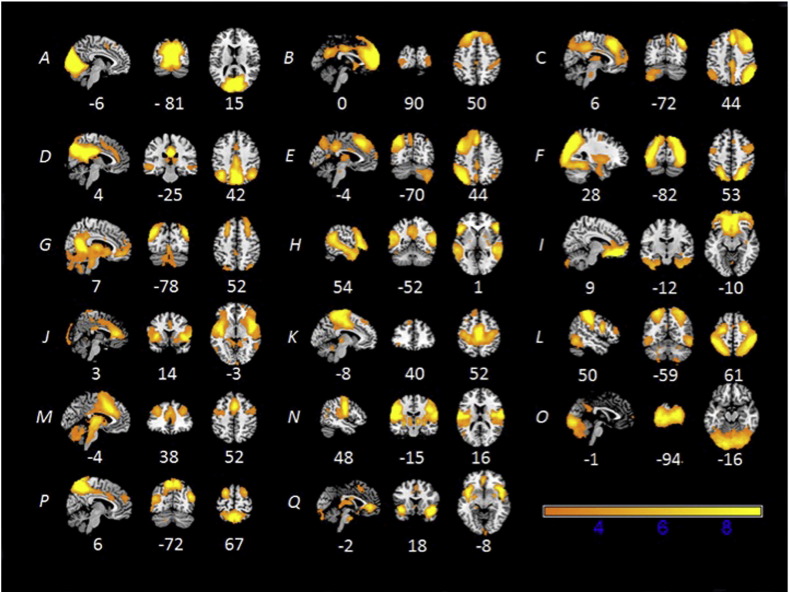
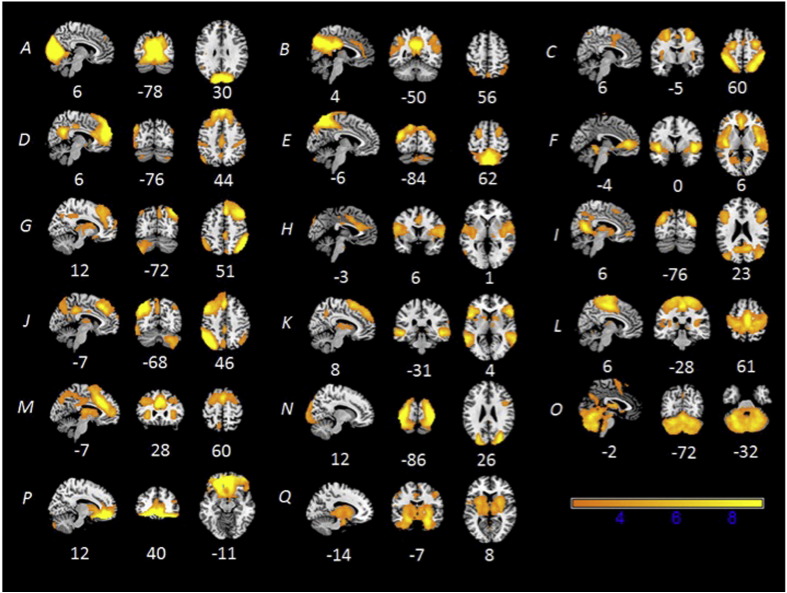
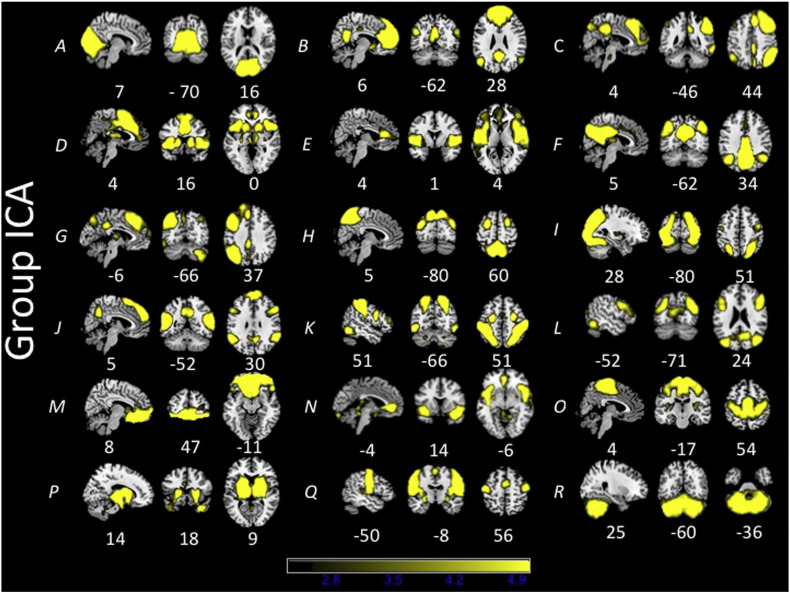
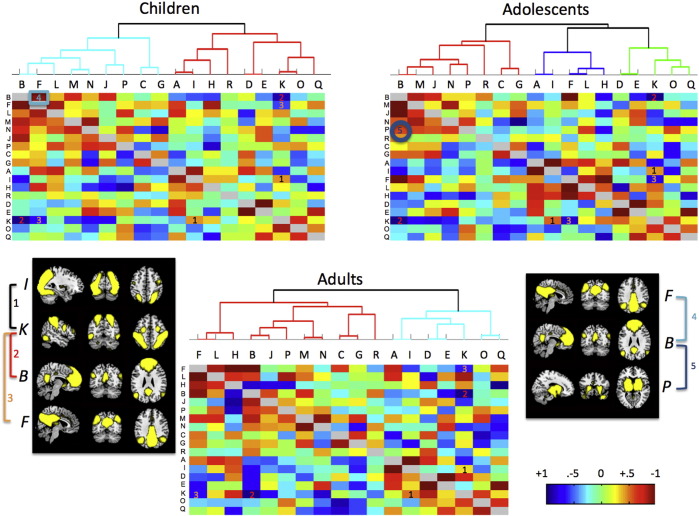
Methods: The current study tests this developmental hypothesis by examining within- and between-network resting state functional connectivity in a large sample of 26 children, 28 adolescents, and 18 adults with ASD and age- and IQ-matchedTD individuals for the first time using an entirely data-driven approach. Independent component analyses (ICA) and dual regression was applied to data from three age cohorts to examine the effects of participant age on patterns of within-networkwhole-brain functional connectivity in individuals with ASD compared with TD individuals. Between-network connectivity differences were examined for each age cohort by comparing correlations between ICA components across groups.
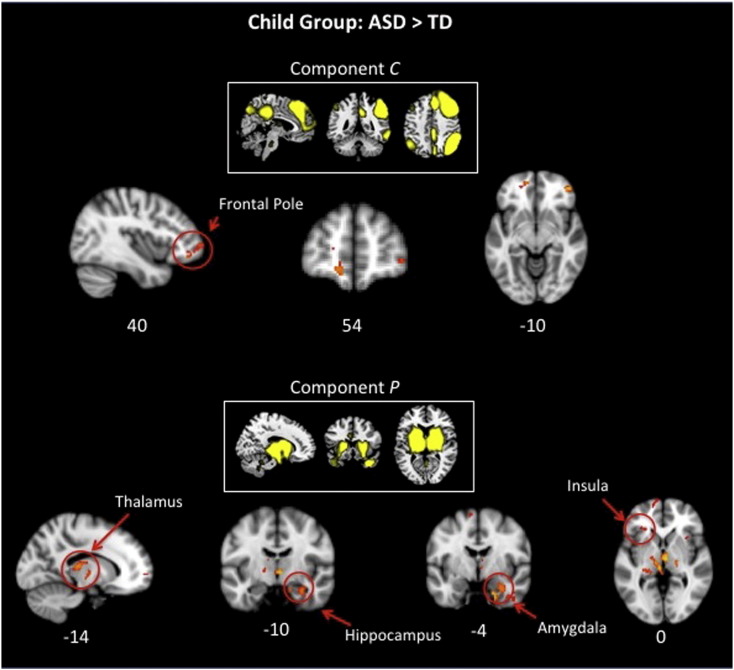
Results: We find that in the youngest cohort (age 11 and under), children with ASD exhibit hyper-connectivity within large-scale brain networks as well as decreased between-network connectivity compared with age-matchedTD children. In contrast, adolescents with ASD (age 11-18) do not differ from TD adolescents in within-network connectivity, yet show decreased between-network connectivity compared with TD adolescents. Adults with ASD show no within- or between-network differences in functional network connectivity compared with neurotypical age-matched individuals.
Conclusions: Characterizing within- and between-network functional connectivity in age-stratified cohorts of individuals with ASD and TD individuals demonstrates that functional connectivity atypicalities in the disorder are not uniform across the lifespan. These results demonstrate how explicitly characterizing participant age and adopting a developmental perspective can lead to a more nuanced understanding of atypicalities of functional brain connectivity in autism.
Keywords: Autism spectrum disorder; Functional connectivity; Independent component analysis; Resting state fMRI; Salience network.
Figures
References
Publication types
MeSH terms
Grants and funding
LinkOut - more resources
Full Text Sources
Other Literature Sources
Medical
Molecular Biology Databases
Miscellaneous
