


Relationships among spousal communication, self-efficacy, and motivation among expectant Latino fathers who smoke
- PMID: 25844907
- PMCID: PMC4579045
- DOI: 10.1037/hea0000224
Relationships among spousal communication, self-efficacy, and motivation among expectant Latino fathers who smoke
Abstract
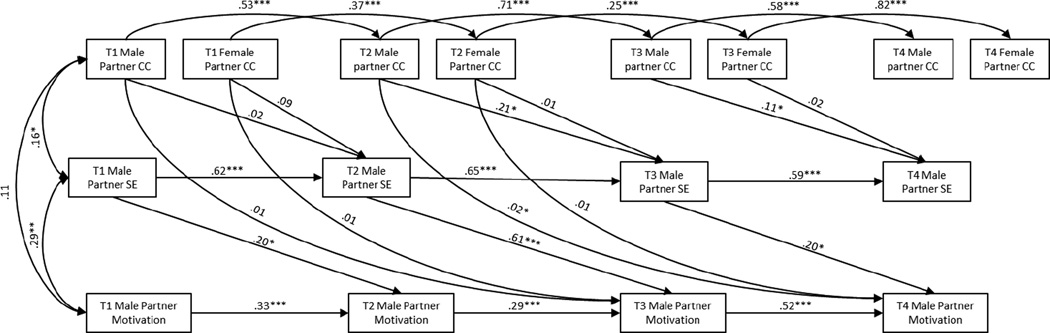
Objective: Cigarette smoking is a prevalent problem among Latinos, yet little is known about what factors motivate them to quit smoking or make them feel more confident that they can. Given cultural emphases on familial bonds among Latinos (e.g., familismo), it is possible that communication processes among Latino spouses play an important role. The present study tested a mechanistic model in which perceived spousal constructive communication patterns predicted changes in level of motivation for smoking cessation through changes in self-efficacy among Latino expectant fathers.
Methods: Latino males (n = 173) and their pregnant partners participated in a couple-based intervention targeting males' smoking. Couples completed self-report measures of constructive communication, self-efficacy (male partners only), and motivation to quit (male partners only) at 4 time points throughout the intervention.
Results: Higher levels of perceived constructive communication among Latino male partners predicted subsequent increases in male partners' self-efficacy and, to a lesser degree, motivation to quit smoking; however, self-efficacy did not mediate associations between constructive communication and motivation to quit smoking. Furthermore, positive relationships with communication were only significant at measurements taken after completion of the intervention. Female partners' level of perceived constructive communication did not predict male partners' outcomes.
Conclusion: These results provide preliminary evidence to support the utility of couple-based interventions for Latino men who smoke. Findings also suggest that perceptions of communication processes among Latino partners (particularly male partners) may be an important target for interventions aimed at increasing desire and perceived ability to quit smoking among Latino men. (PsycINFO Database Record
(c) 2015 APA, all rights reserved).
Conflict of interest statement
Declaration of Conflicting Interests
The author(s) declared no potential conflicts of interests with respect to the authorship and/or publication of this article.
Figures
References
-
- Bandura A. Self-efficacy: Toward a unifying theory of behavioral change. New York, NY, US: Psychology Press, New York, NY; 1999. - PubMed
-
- Bandura A. Social cognitive theory of self-regulation. Organizational behavior and human decision processes. 1991;50(2):248–287.
-
- Bock BC, Niaura RS, Neighbors CJ, Carmona-Barros R, Azam M. Differences between Latino and non-Latino White smokers in cognitive and behavioral characteristics relevant to smoking cessation. Addictive behaviors. 2005;30(4):711–724. - PubMed
-
- CDC. Vital signs: current cigarette smoking among adults aged ≥18 years—United States, 2005–2010. MMWR. 2011;60:1207–1212. - PubMed
-
- Coyne JC, Smith DAF. Couples coping with a myocardial infarction: Contextual perspective on patient self-efficacy. Journal of Family Psychology. 1994;8(1):43–54. doi: http://dx.doi.org/10.1037/0893-3200.8.1.43. - DOI
Publication types
MeSH terms
Substances
Grants and funding
LinkOut - more resources
Full Text Sources
Other Literature Sources
