. 2015 Aug 15;11(8):861-8.
doi: 10.5664/jcsm.4934.

Oral Appliance Treatment Response and Polysomnographic Phenotypes of Obstructive Sleep Apnea

Affiliations

Oral Appliance Treatment Response and Polysomnographic Phenotypes of Obstructive Sleep Apnea

Kate Sutherland et al. J Clin Sleep Med. .

Abstract

Study objectives: Mandibular advancement splints (MAS) are an effective treatment for obstructive sleep apnea (OSA); however, therapeutic response is variable. Younger age, female gender, less obesity, and milder and supine-dependent OSA have variably been associated with treatment success in relatively small samples. Our objective was to utilize a large cohort of MAS treated patients (1) to compare efficacy across patients with different phenotypes of OSA and (2) to assess demographic, anthropometric, and polysomnography variables as treatment response predictors.

Methods: Retrospective analysis of MAS-treated patients participating in clinical trials in sleep centers in Sydney, Australia between years 2000-2013. All studies used equivalent customized two-piece MAS devices and treatment protocols. Treatment response was defined as (1) apnea-hypopnea index (AHI) < 5/h, (2) AHI < 10/h and ≥ 50% reduction, and (3) ≥ 50% AHI reduction.

Results: A total of 425 patients (109 female) were included (age 51.2 ± 10.9 years, BMI 29.2 ± 5.0 kg/m2). MAS reduced AHI by 50.3% ± 50.7% across the group. Supine-predominant OSA patients had lower treatment response rates than non-positional OSA (e.g., 36% vs. 59% for AHI < 10/h). REM-predominant OSA showed a lower response rate than either NREM or non-stage dependent OSA. In prediction modelling, age, baseline AHI, and anthropometric variables were predictive of MAS treatment outcome but not OSA phenotype. Gender was not associated with treatment outcome.

Conclusion: Lower MAS treatment response rates were observed in supine and REM sleep. In a large sample, we confirm that demographic, anthropometric, and polysomnographic data only weakly inform about MAS efficacy, supporting the need for alternative objective prediction methods to reliably select patients for MAS treatment.

Keywords: obstructive sleep apnea; oral appliance; polysomnography; treatment response.


Figures

Figure 1
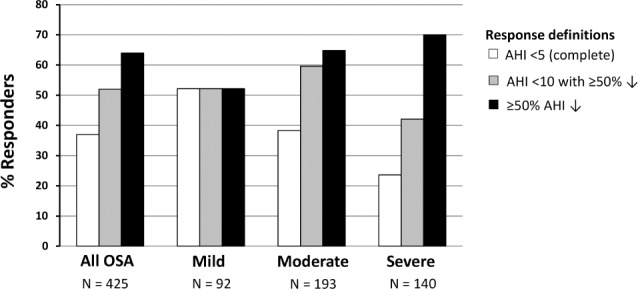
Figure 1. Mandibular advancement splint (MAS) treatment response.
Treatment response was assessed by three definitions: (1) complete response or AHI < 5/h with MAS; (2) AHI < 10/h plus > 50% AHI reduction from baseline; (3) > 50% reduction from baseline. Response rates are shown for all patients as well as subgroups of mild (AHI 5–14.9/h), moderate (AHI 15–29.9/h) and severe (AHI > 30/h) OSA.
Figure 2
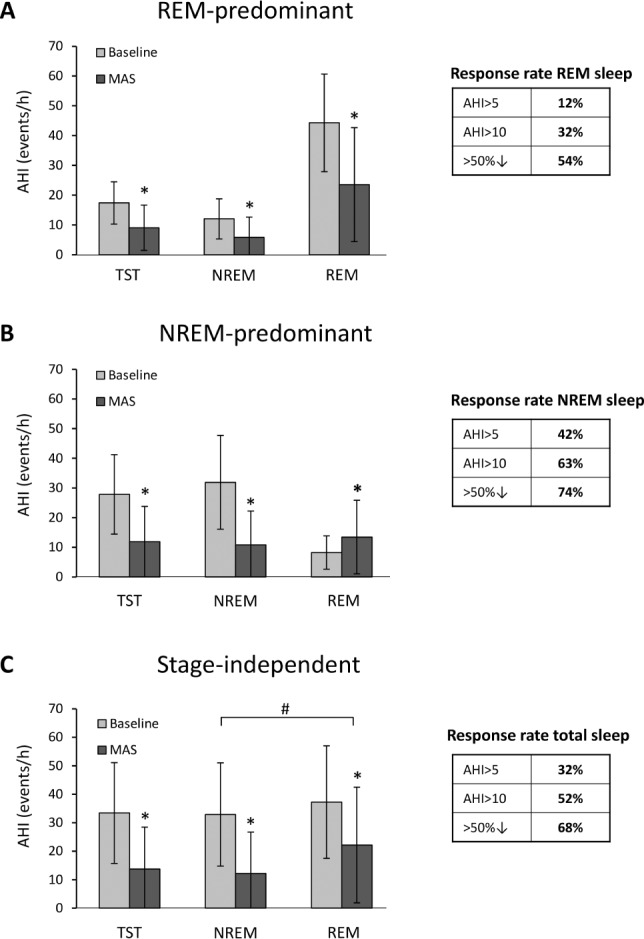
Figure 2. Sleep stage phenotypes and mandibular advancement splint (MAS) efficacy.
OSA patients were classified as A: REM-predominant (n = 133), B: NREM-predominant (n = 73) or C: stage-independent (n = 198) phenotypes. Response rates are shown for each OSA phenotype using three definitions of response: AHI > 5 (treatment AHI < 5/h), AHI > 10 (treatment AHI < 10/h with ≥ 50% reduction from baseline AHI) and > 50% (≥ 50% AHI reduction from baseline). *p < 0.001 Baseline AHI vs. MAS AHI. #p < 0.001 change in NREM-AHI vs. change in REM-AHI.
Figure 3
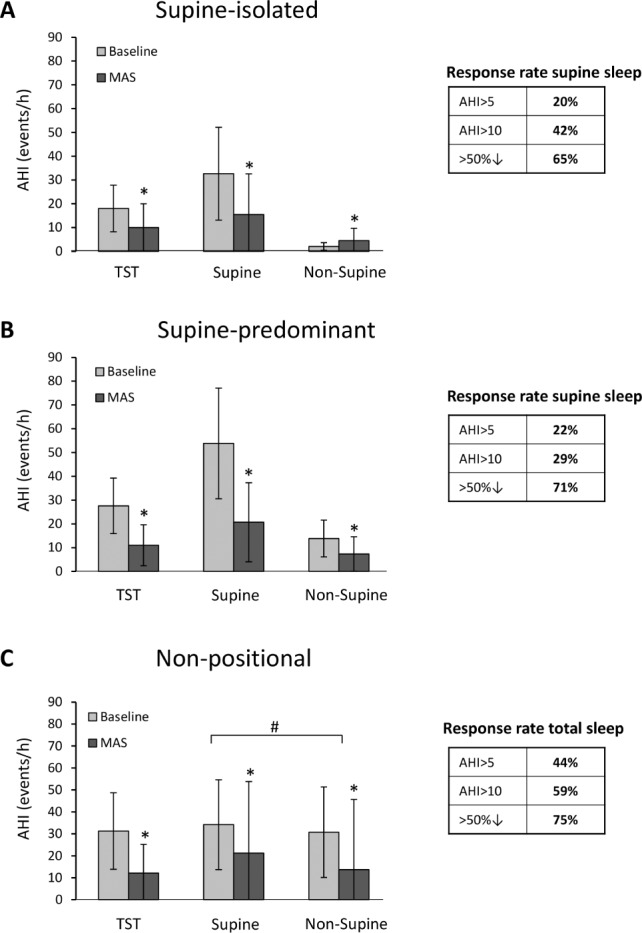
Figure 3. Body position phenotypes and mandibular advancement splint (MAS) efficacy.
OSA patients were classified as A: Supine-isolated (n = 55), B: Supine-predominant (n = 83) or C: non-positional (n = 61) phenotypes. Response rates are shown for each OSA phenotype using three definitions of response: AHI > 5 (treatment AHI < 5/h), AHI > 10 (treatment AHI < 10/h with ≥ 50% reduction from baseline AHI) and > 50% (≥ 50% AHI reduction from baseline). *p < 0.01 Baseline AHI vs. MAS AHI. #p < 0.001 change in Supine-AHI vs. change in Non-Supine-AHI.
Figure 4
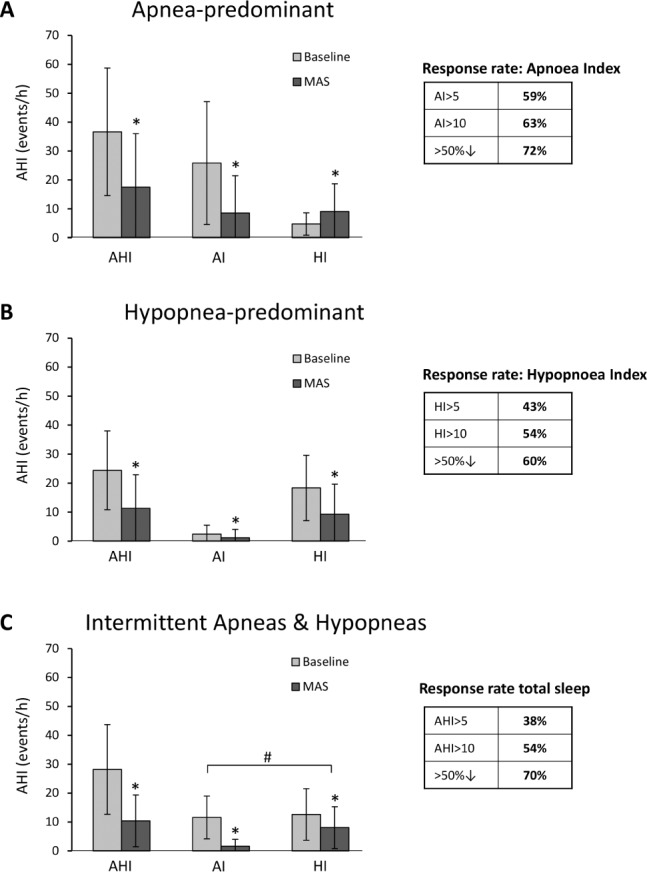
Figure 4. Extent of upper airway collapse (apnea vs. hypopnea) and mandibular advancement splint (MAS) efficacy.
OSA patients were classified as A: Apnea-predominant (n = 46), B: Hypopnea-predominant (n = 216) or C: Intermittent Apnea/Hypopnea (n = 92). Response rates are shown for each OSA phenotype using three definitions of response: AHI/AI/HI > 5 (treatment AHI/AI/HI < 5/h), AHI/AI/HI > 10 (treatment AHI < 10/h with ≥ 50% reduction from baseline AHI) and > 50% (≥ 50% AHI/AI/HI reduction from baseline).*p < 0.01 Baseline AHI/AI/HI vs. MAS AHI/AI/HI. #p < 0.001 change in Apnea Index vs. Hypopnea Index.
Figure 5
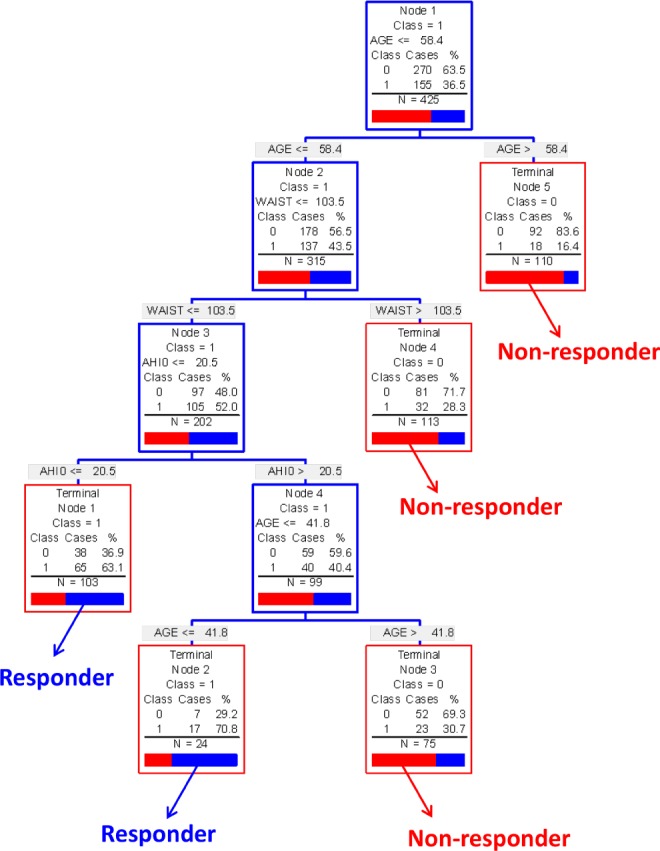
Figure 5. Classification and regression tree (CART) model MAS treatment outcome (response AHI < 10, definition 2).
The modelling process starts with the entire patient sample (top blue box). The group is then sequentially split using the variable and cut-point which correctly classifies the maximum number of patients as either responders or non-responders. When no more splits can be made the patients are left in a “terminal node” (red box) where they can be classified as either responders or non-responders based on the predominant classification of patients in that terminal node. The proportion of responders (blue or “1”) and non-responders (red or “0”) in each terminal node is shown. Predictive variables were age, neck circumference (NECK), and waist circumference (WAIST). This model correctly classified 64% or patients on MAS treatment outcome. Non-predictive variables considered in model: baseline AHI, gender, BMI, sleep stage, and body position OSA phenotype.

References

    1. Sutherland K, Vanderveken OM, Tsuda H, et al. Oral appliance treatment for obstructive sleep apnea: an update. J Clin Sleep Med. 2014;10:215–27. - PMC - PubMed
    1. Marklund M, Verbraecken J, Randerath W. Non-CPAP therapies in obstructive sleep apnoea: mandibular advancement device therapy. Eur Respir J. 2012;39:1241–7. - PubMed
    1. Mehta A, Qian J, Petocz P, Darendeliler MA, Cistulli PA. A randomized, controlled study of a mandibular advancement splint for obstructive sleep apnea. Am J Respir Crit Care Med. 2001;163:1457–61. - PubMed
    1. Kushida CA, Littner MR, Morgenthaler T, et al. Practice parameters for the indications for polysomnography and related procedures: an update for 2005. Sleep. 2005;28:499–521. - PubMed
    1. Phillips CL, Grunstein RR, Darendeliler MA, et al. Health outcomes of continuous positive airway pressure versus oral appliance treatment for obstructive sleep apnea: a randomized controlled trial. Am J Respir Crit Care Med. 2013;187:879–87. - PubMed