


US protected lands mismatch biodiversity priorities
- PMID: 25847995
- PMCID: PMC4413281
- DOI: 10.1073/pnas.1418034112
US protected lands mismatch biodiversity priorities
Abstract
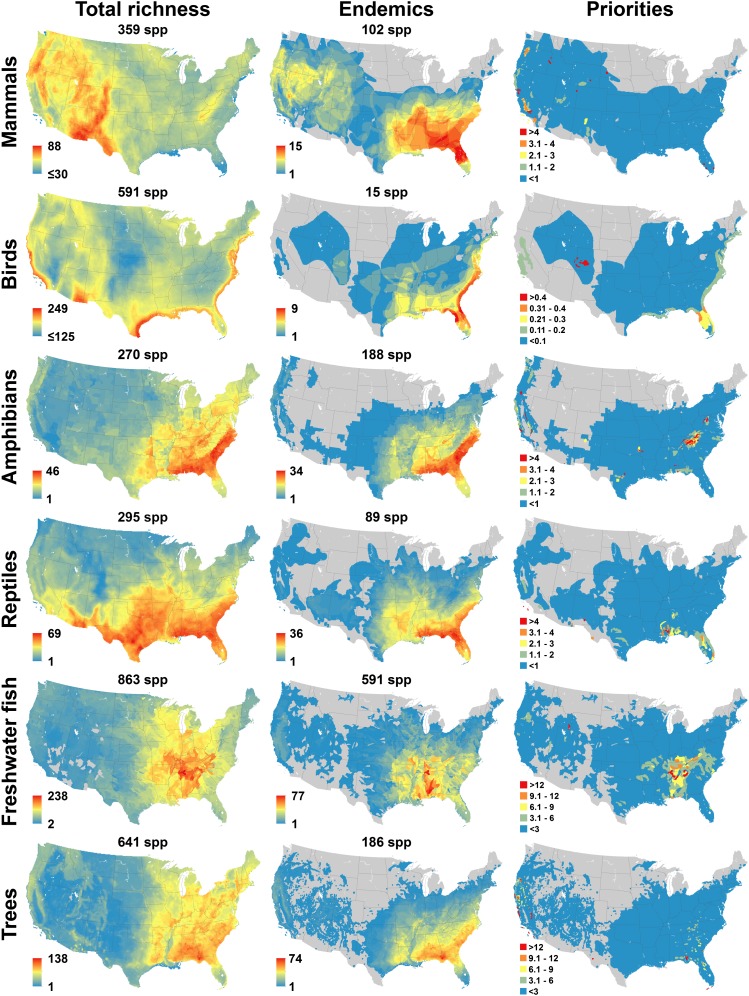
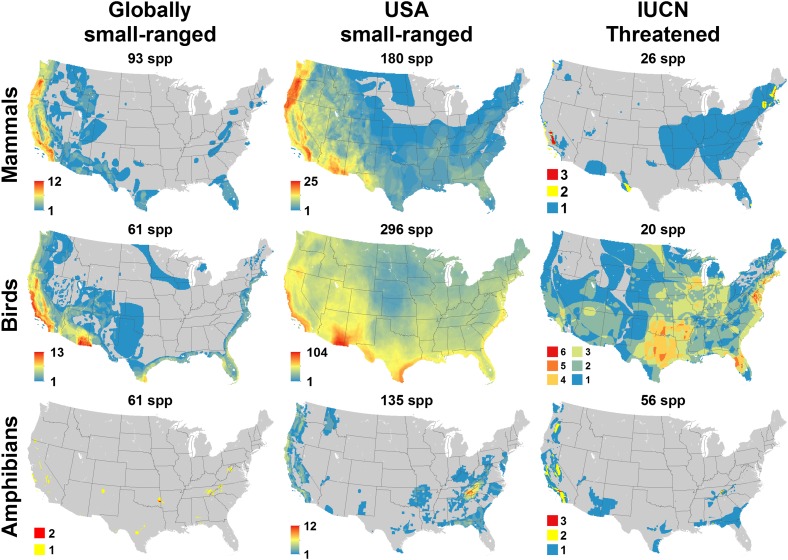
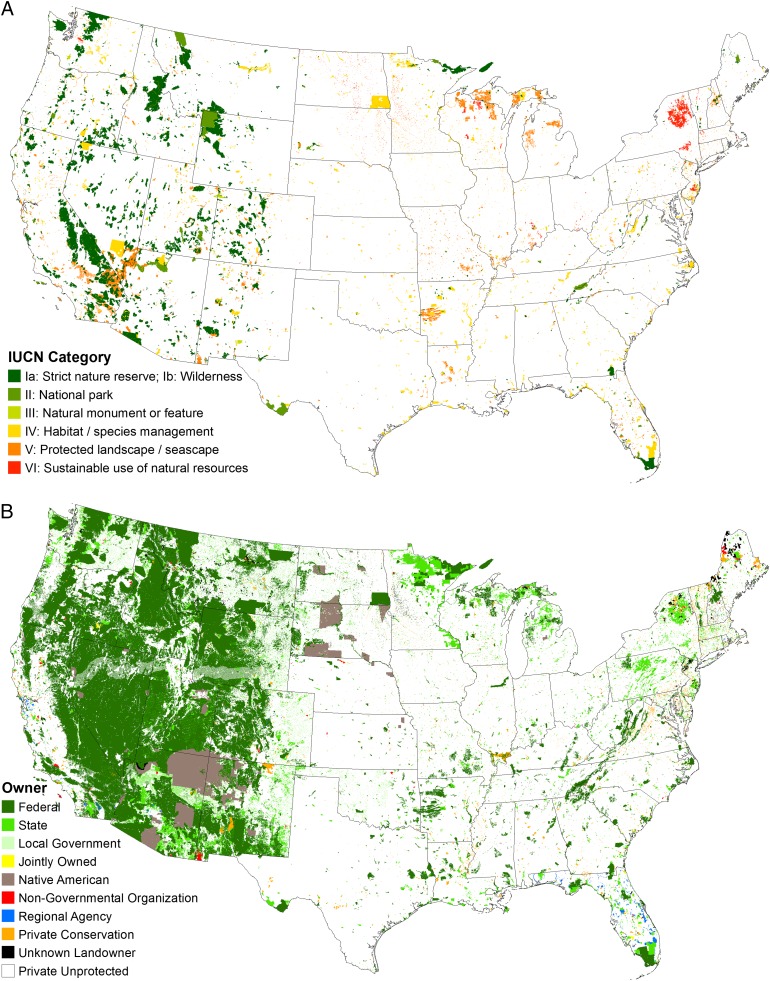
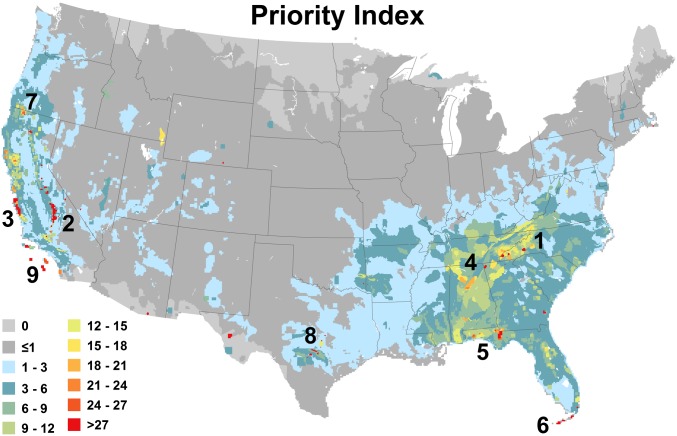
Because habitat loss is the main cause of extinction, where and how much society chooses to protect is vital for saving species. The United States is well positioned economically and politically to pursue habitat conservation should it be a societal goal. We assessed the US protected area portfolio with respect to biodiversity in the country. New synthesis maps for terrestrial vertebrates, freshwater fish, and trees permit comparison with protected areas to identify priorities for future conservation investment. Although the total area protected is substantial, its geographic configuration is nearly the opposite of patterns of endemism within the country. Most protected lands are in the West, whereas the vulnerable species are largely in the Southeast. Private land protections are significant, but they are not concentrated where the priorities are. To adequately protect the nation's unique biodiversity, we recommend specific areas deserving additional protection, some of them including public lands, but many others requiring private investment.
Keywords: conservation priorities; endemism; extinction; protected areas; range size.
Conflict of interest statement
The authors declare no conflict of interest.
Figures
Comment in
-
Reply to Brown et al.: Species and places are the priorities for conservation, not economic efficiency.Proc Natl Acad Sci U S A. 2015 Aug 11;112(32):E4343. doi: 10.1073/pnas.1511375112. Epub 2015 Aug 3. Proc Natl Acad Sci U S A. 2015. PMID: 26240312 Free PMC article. No abstract available.
-
Effective conservation requires clear objectives and prioritizing actions, not places or species.Proc Natl Acad Sci U S A. 2015 Aug 11;112(32):E4342. doi: 10.1073/pnas.1509189112. Epub 2015 Aug 3. Proc Natl Acad Sci U S A. 2015. PMID: 26240326 Free PMC article. No abstract available.
References
-
- Scott JM. A representative biological reserve system for the United States. Soc Conserv Biol Newsl. 1999;6(2):1–9.
-
- Scott JM, et al. Nature reserves: Do they capture the full range of America’s biological diversity? Ecol Appl. 2001;11(4):999–1007.
-
- Rouget M, Richardson DM, Cowling RM. The current configuration of protected areas in the Cape Floristic Region, South Africa—reservation bias and representation of biodiversity patterns and processes. Biol Conserv. 2003;112(1-2):129–145.
-
- Ceballos G, Ehrlich PR, Soberón J, Salazar I, Fay JP. Global mammal conservation: What must we manage? Science. 2005;309(5734):603–607. - PubMed
Publication types
MeSH terms
LinkOut - more resources
Full Text Sources
Other Literature Sources
Molecular Biology Databases
