


Genetic mapping of QTLs controlling fatty acids provided insights into the genetic control of fatty acid synthesis pathway in peanut (Arachis hypogaea L.)
- PMID: 25849082
- PMCID: PMC4388682
- DOI: 10.1371/journal.pone.0119454
Genetic mapping of QTLs controlling fatty acids provided insights into the genetic control of fatty acid synthesis pathway in peanut (Arachis hypogaea L.)
Abstract
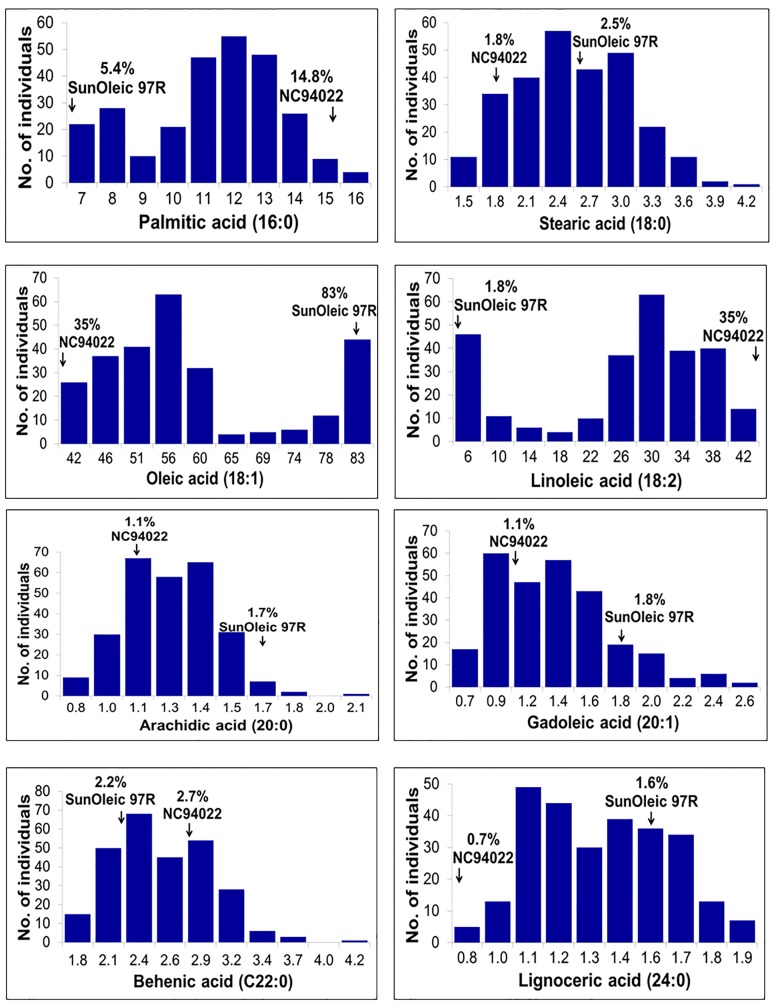
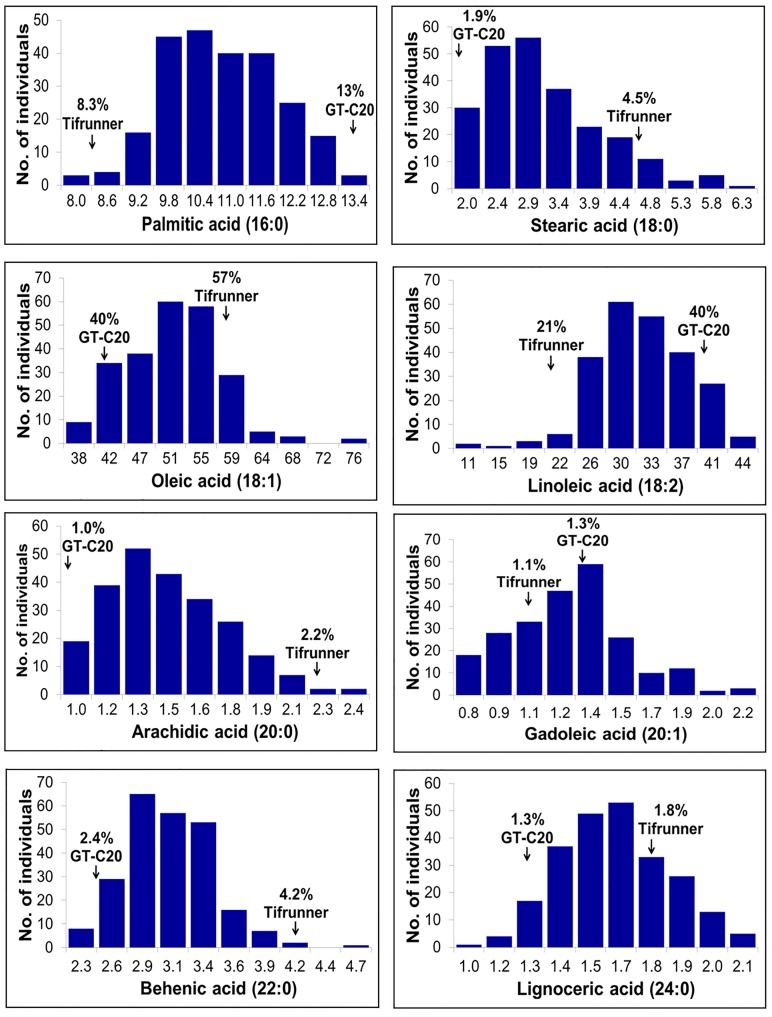
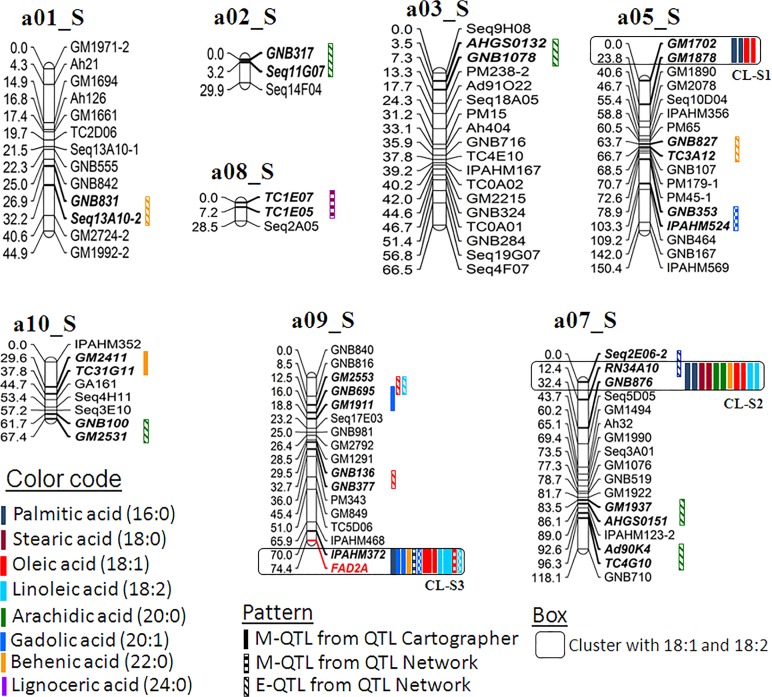
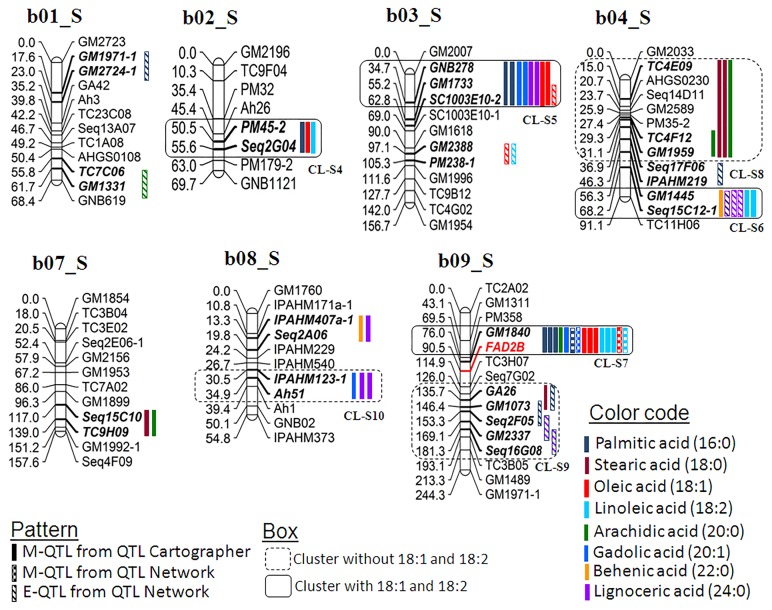
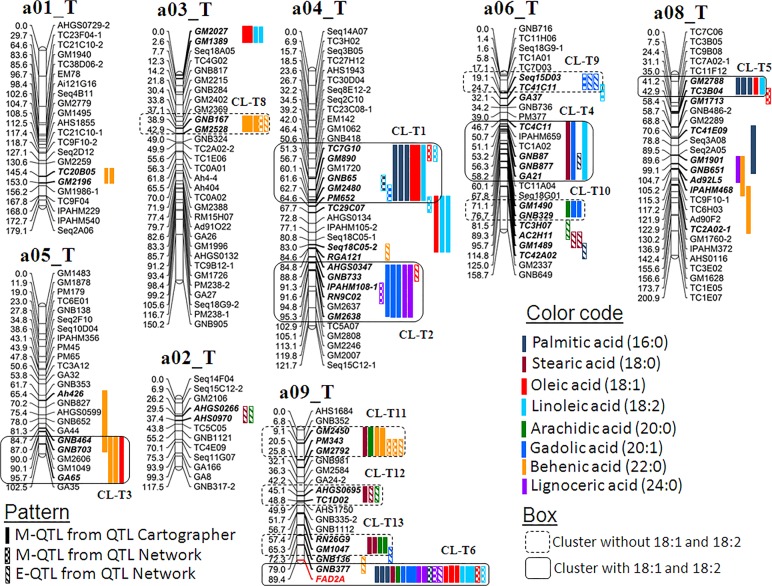
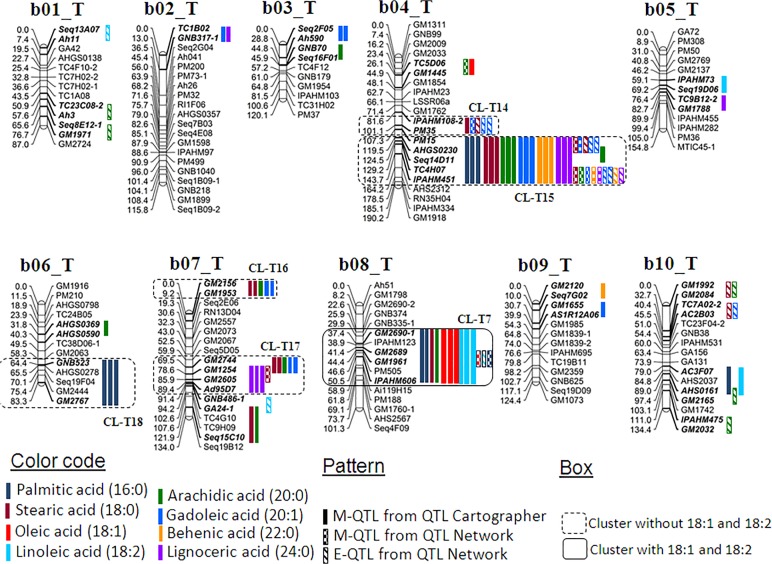
Peanut, a high-oil crop with about 50% oil content, is either crushed for oil or used as edible products. Fatty acid composition determines the oil quality which has high relevance to consumer health, flavor, and shelf life of commercial products. In addition to the major fatty acids, oleic acid (C18:1) and linoleic acid (C18:2) accounting for about 80% of peanut oil, the six other fatty acids namely palmitic acid (C16:0), stearic acid (C18:0), arachidic acid (C20:0), gadoleic acid (C20:1), behenic acid (C22:0), and lignoceric acid (C24:0) are accounted for the rest 20%. To determine the genetic basis and to improve further understanding on effect of FAD2 genes on these fatty acids, two recombinant inbred line (RIL) populations namely S-population (high oleic line 'SunOleic 97R' × low oleic line 'NC94022') and T-population (normal oleic line 'Tifrunner' × low oleic line 'GT-C20') were developed. Genetic maps with 206 and 378 marker loci for the S- and the T-population, respectively were used for quantitative trait locus (QTL) analysis. As a result, a total of 164 main-effect (M-QTLs) and 27 epistatic (E-QTLs) QTLs associated with the minor fatty acids were identified with 0.16% to 40.56% phenotypic variation explained (PVE). Thirty four major QTLs (>10% of PVE) mapped on five linkage groups and 28 clusters containing more than three QTLs were also identified. These results suggest that the major QTLs with large additive effects would play an important role in controlling composition of these minor fatty acids in addition to the oleic and linoleic acids in peanut oil. The interrelationship among these fatty acids should be considered while breeding for improved peanut genotypes with good oil quality and desired fatty acid composition.
Conflict of interest statement
Figures

References
-
- Dean LL, Hendrix KW, Holbrook CC, Sanders TH. Content of some nutrient in the core of the core of peanut germplasm collection. Peanut Sci. 2009;36: 104–120.
-
- Rizzo WB, Watkins PA, Phillips MW, Cranin D, Campbell B, Avigan J. Adrenoleukodystrophy: Oleic acid lowers fibroblast saturated C22-26 fatty acids. Neurology 1986;36: 357–61. - PubMed
-
- Vassiliou EK, Gonzalez A, Garcia C, Tadros JH, Chakraborty G, Toney JH. Oleic acid and peanut oil high in oleic acid reverse the inhibitory effect of insulin production of the inflammatory cytokine TNF-a both in vitro and in vivo system. Lipids Health Dis. 2009;8: 25 10.1186/1476-511X-8-25 - DOI - PMC - PubMed
-
- Wang ML, Chen CY, Davis J, Guo B, Stalker HT, Pittman RN. Assessment of oil content and fatty acid composition variability in different peanut subspecies and botanical varieties. Plant Genet Resour C. 2009;8: 71–73.
Publication types
MeSH terms
Substances
LinkOut - more resources
Full Text Sources
Other Literature Sources
Research Materials
Miscellaneous
