. 2015 Apr 7;10(4):e0121902.
doi: 10.1371/journal.pone.0121902. eCollection 2015.

Fusarium oxysporum triggers tissue-specific transcriptional reprogramming in Arabidopsis thaliana

Affiliations

Fusarium oxysporum triggers tissue-specific transcriptional reprogramming in Arabidopsis thaliana

Rebecca Lyons et al. PLoS One. .

Abstract

Some of the most devastating agricultural diseases are caused by root-infecting pathogens, yet the majority of studies on these interactions to date have focused on the host responses of aerial tissues rather than those belowground. Fusarium oxysporum is a root-infecting pathogen that causes wilt disease on several plant species including Arabidopsis thaliana. To investigate and compare transcriptional changes triggered by F. oxysporum in different Arabidopsis tissues, we infected soil-grown plants with F. oxysporum and subjected root and leaf tissue harvested at early and late timepoints to RNA-seq analyses. At least half of the genes induced or repressed by F. oxysporum showed tissue-specific regulation. Regulators of auxin and ABA signalling, mannose binding lectins and peroxidases showed strong differential expression in root tissue. We demonstrate that ARF2 and PRX33, two genes regulated in the roots, promote susceptibility to F. oxysporum. In the leaves, defensins and genes associated with the response to auxin, cold and senescence were strongly regulated while jasmonate biosynthesis and signalling genes were induced throughout the plant.


Conflict of interest statement

Competing Interests: The authors have declared that no competing interests exist.

Figures

Fig 1
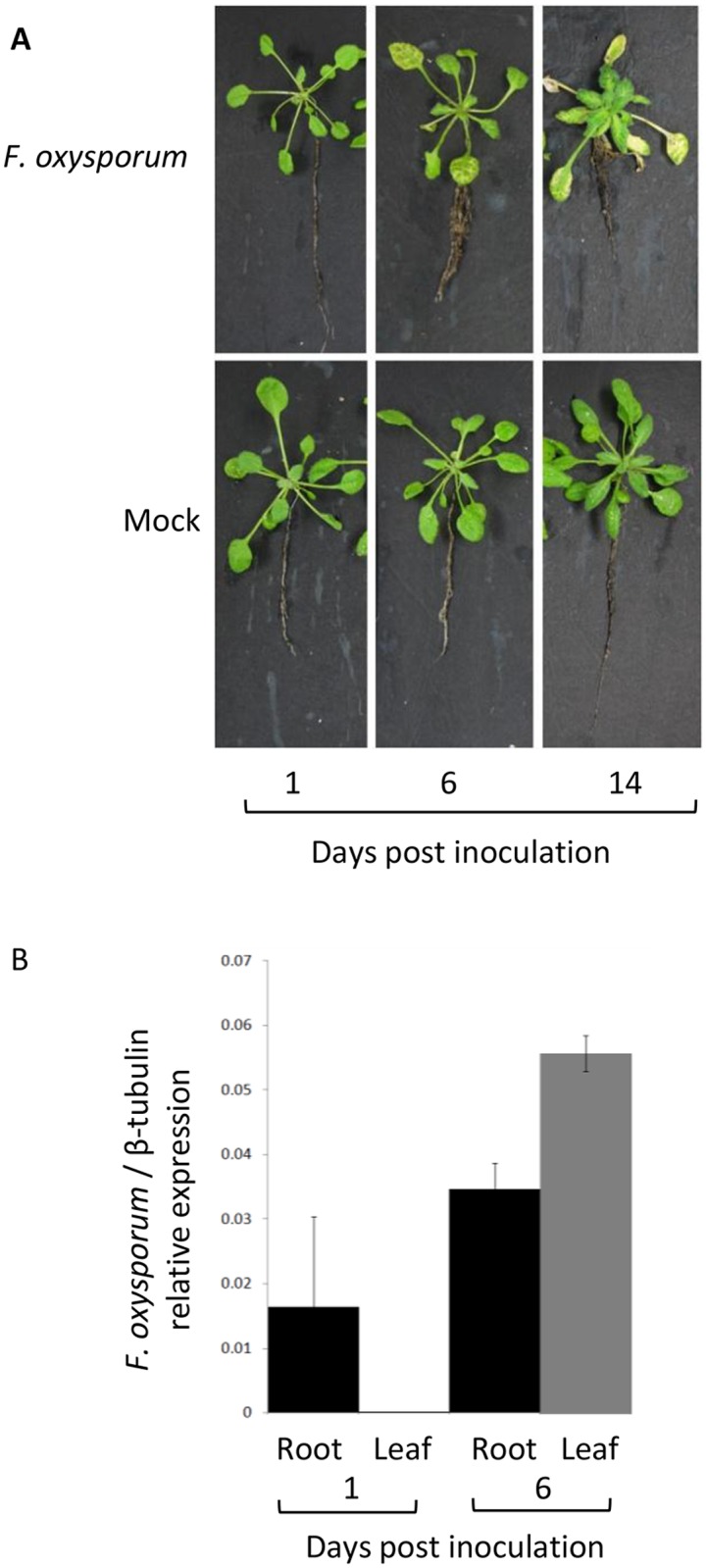
Fig 1. Disease symptoms and detection of F. oxysporum RNA in A. thaliana plants after F. oxysporum infection.
(A) Representative plants were uprooted and photographed at 1, 6 or 14 days after F. oxysporum or mock inoculation. (B) Relative expression of F. oxysporum β-tubulin normalised to A. thaliana actin in root (black) and leaf (grey) tissue. Data show mean relative expression and standard error from 3 biological replicates containing pools of 10 plants.
Fig 2
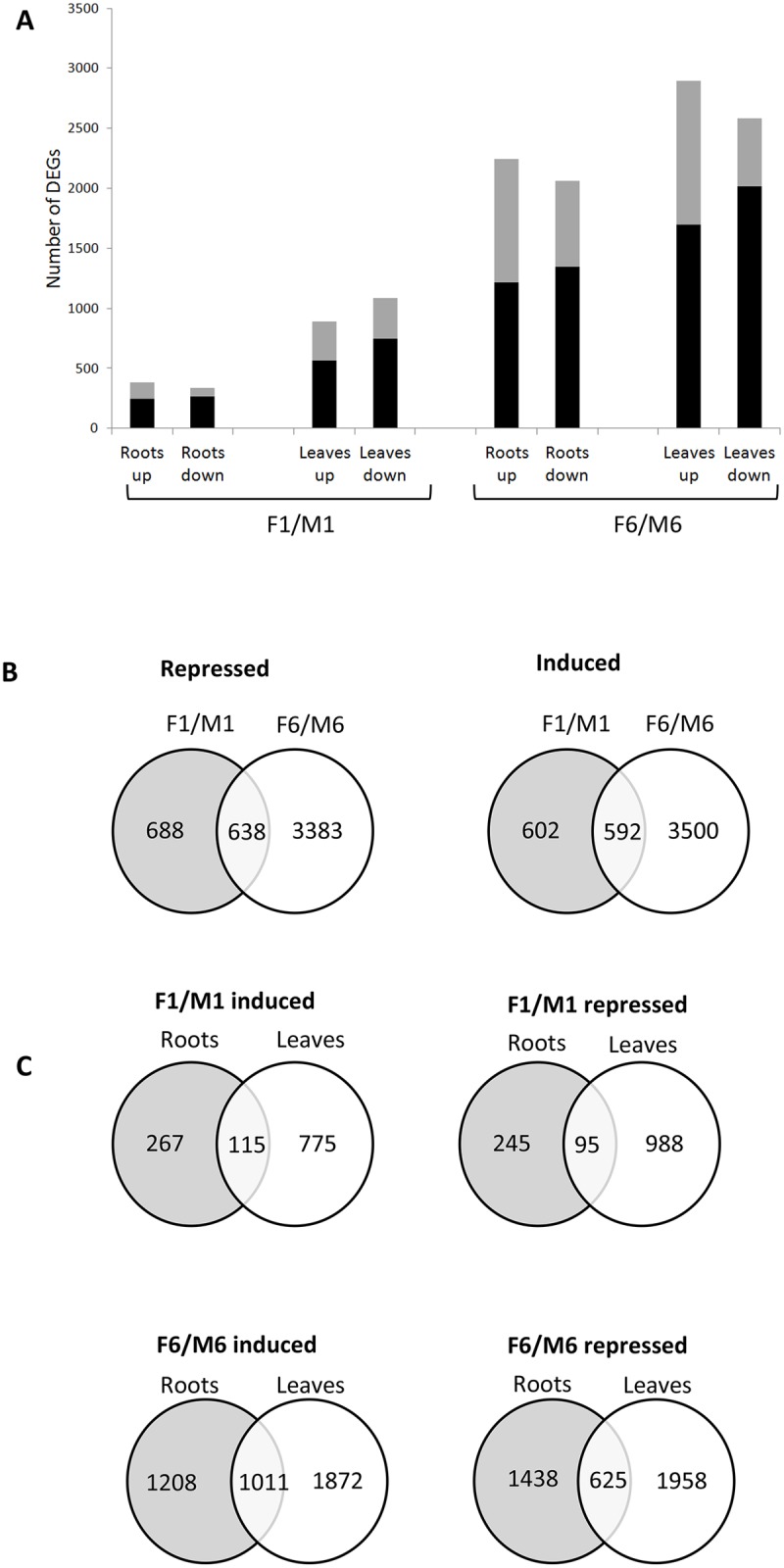
Fig 2. Genes induced or repressed in different tissues at early and late timepoints after F. oxysporum infection.
(A) The number of genes induced (up) or repressed (down) by F. oxysporum in roots and leaves at 1 or 6 dpi. Black bars represent genes regulated <2 fold; grey bars represent genes regulated > 2 fold. (B) Overlap in F. oxysporum—responsive genes between two timepoints, 1 (F1/M1) and 6 dpi (F6/M6). (C) Overlap in F. oxysporum—responsive genes between roots and leaves.
Fig 3
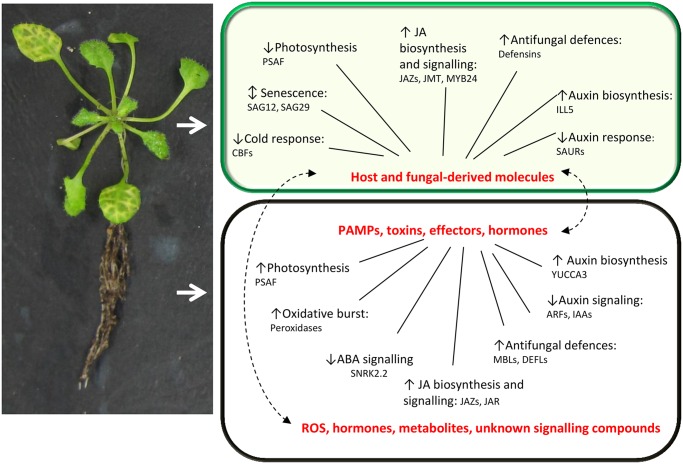
Fig 3. Key processes that undergo transcriptional reprogramming in response to F. oxysporum infection.
Arrows indicate trend of transcriptional regulation in each of the functional categories, which were chosen based on the strength of the transcriptional response strength and the number of genes regulated. An example of a gene in each functional category is given. Upon perception of F. oxysporum in the roots, the basal defence response is elicited. F. oxysporum effectors, toxins and hormone mimics such as bioactive JAs trigger transcriptional changes and production of host-derived signalling compounds. Systemic movement of both fungal and host derived signalling molecules elicit transcriptional changes in the leaves ahead of the fungus. Transcriptional changes in both tissues are a consequence of active defence responses (i.e. production of antifungal compounds, defence signalling) F. oxysporum- driven manipulation (i.e. increased senescence in the leaves to facilitate necrotrophic infection), and the response of the plant to stress incurred by infection (i.e. changes in photosynthesis and flowering time minimise the fitness cost to the plant).
Fig 4
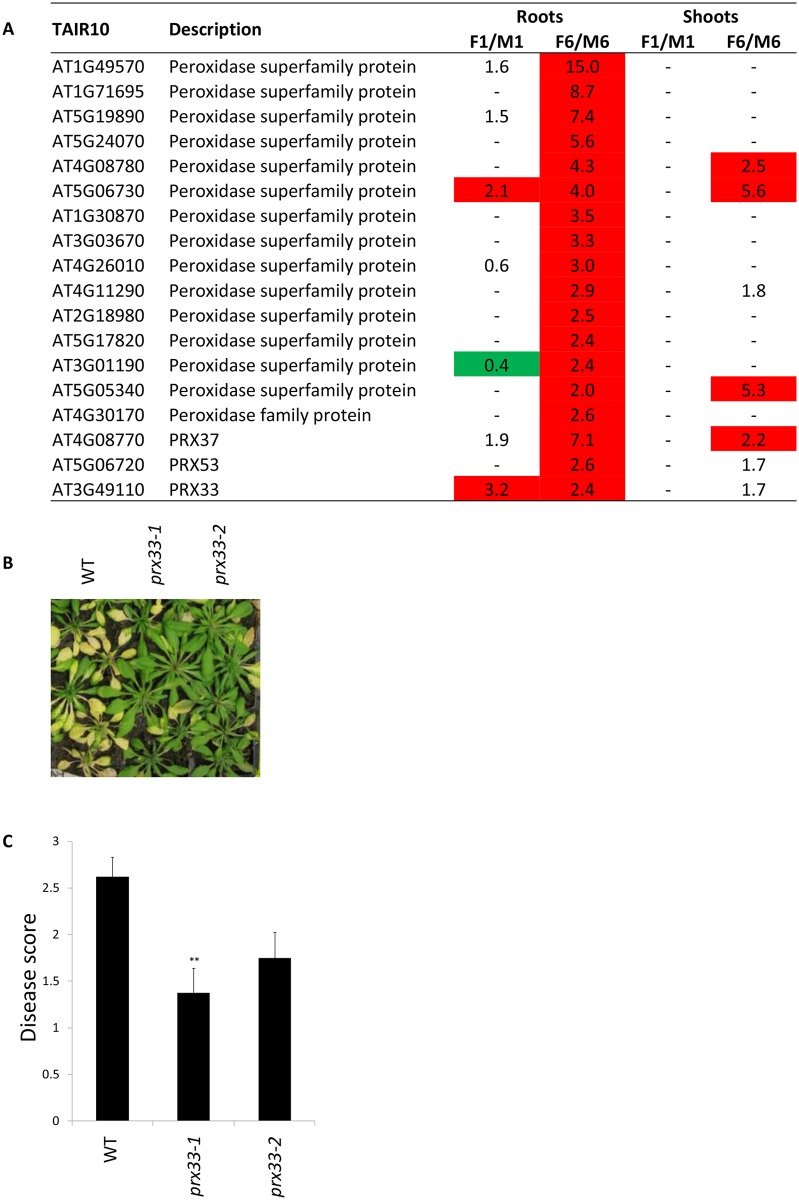
Fig 4. PRX33 is induced by F. oxysporum and promotes susceptibility to F. oxysporum.
(A) The fold induction or repression of peroxidases in response to F. oxysporum. (B) Representative F. oxysporum- inoculated WT and prx33 mutant plants at 14 days post inoculation. (C) Mean disease score and standard error from 16 plants. Asterisk indicates significant difference relative to WT (P<0.01).
Fig 5
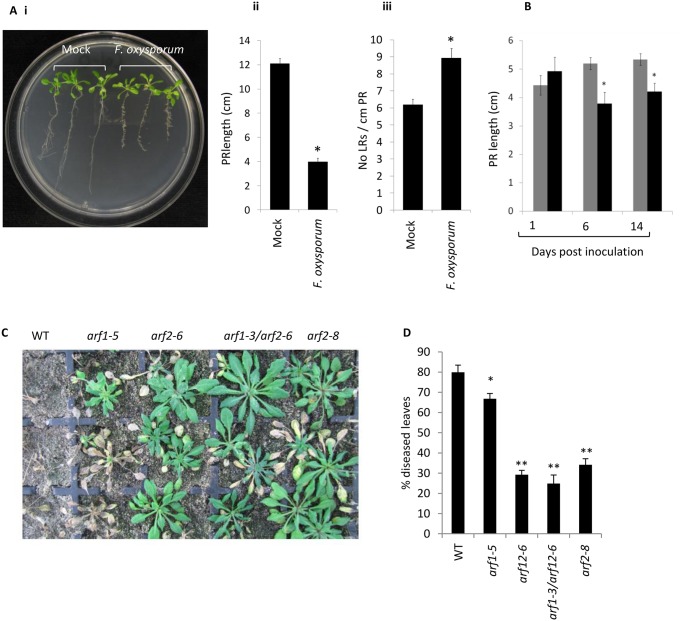
Fig 5. Auxin-related phenotypes and role of ARF2 in the A. thaliana—F. oxysporum interaction.
(A) F. oxysporum inoculation triggers root growth inhibition and lateral root (LR) proliferation in agar-grown Col-0 seedlings. (i) Two week old seedlings were inoculated with water (mock) or F. oxysporum and photographed at 9 days post inoculation. (ii) Mean primary root (PR) length or (iii) mean number of LRs per cm PR in mock or F. oxysporum—inoculated agar-grown seedlings measured at 9 dpi. (B) F. oxysporum inoculation triggers root growth inhibition in soil-grown Col-0 plants. Mean PR length in mock (grey bars) or F. oxysporum (black bars)–inoculated soil-grown plants at 1, 6 and 14 dpi. Data shown are mean and standard error from >13 plants. Asterisk indicates significant difference between mock and F. oxysporum treatment (P<0.05). (C) Representative F. oxysporum- inoculated WT (Col-0) and mutant plants at 14 days post inoculation (dpi). (D) Mean percentage of diseased leaves per plant and standard error from at least 30 plants per line. Asterisks indicate significant difference relative to WT (*P<0.05; **P<0.01).

References

    1. De Coninck B, Timmermans P, Vos C, Cammue BPA, Kazan K. What lies beneath: belowground defense strategies in plants, Trends in Plant Science. 2014;20: 91–101. 10.1016/j.tplants.2014.09.007 - DOI - PubMed
    1. Balmer D, Mauch-Mani B. More beneath the surface? Root versus shoot antifungal plant defenses. Front Plant Sci. 2013;4: 256 10.3389/fpls.2013.00256 - DOI - PMC - PubMed
    1. Jones JD, Dangl JL. The Plant immune system. Nature. 2006;16: 323–9. - PubMed
    1. Dong X, Xiong Y, Ling N, Shen Q, Guo S. Fusaric acid accelerates the senescence of leaf in banana when infected by Fusarium. World J Microbiol Biotechnol. 2014;30:1399–408. 10.1007/s11274-013-1564-1 - DOI - PubMed
    1. Schenk PM, Kazan K, Rusu AG, Manners JM, Maclean DJ. The SEN1 gene of Arabidopsis is regulated by signals that link plant defence responses and senescence. Plant Physiol Biochem. 2005;43: 997–1005. - PubMed

Publication types

MeSH terms

Substances

LinkOut - more resources