


Combining the sterile insect technique with the incompatible insect technique: I-impact of wolbachia infection on the fitness of triple- and double-infected strains of Aedes albopictus
- PMID: 25849812
- PMCID: PMC4388707
- DOI: 10.1371/journal.pone.0121126
Combining the sterile insect technique with the incompatible insect technique: I-impact of wolbachia infection on the fitness of triple- and double-infected strains of Aedes albopictus
Abstract
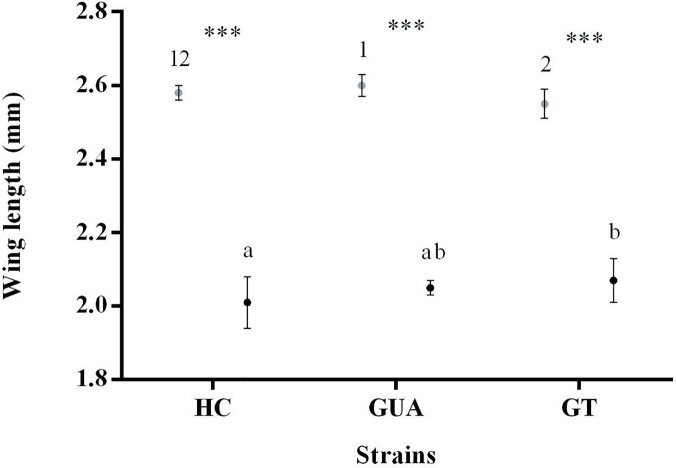
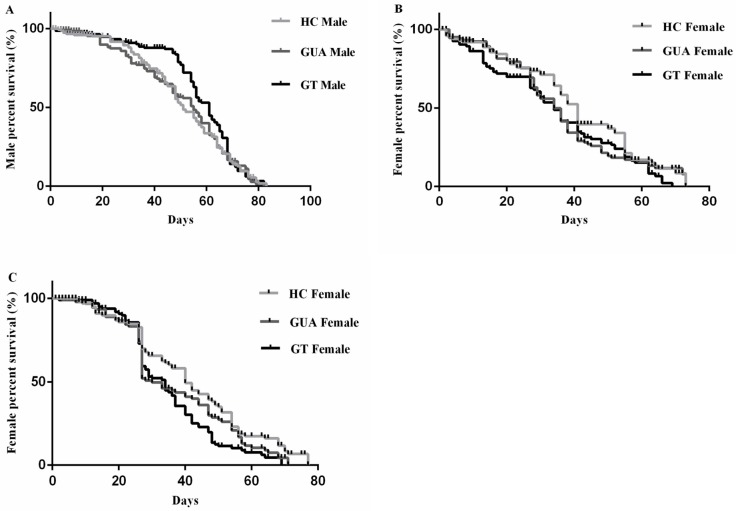
The mosquito species Aedes albopictus is a major vector of the human diseases dengue and chikungunya. Due to the lack of efficient and sustainable methods to control this mosquito species, there is an increasing interest in developing and applying the sterile insect technique (SIT) and the incompatible insect technique (IIT), separately or in combination, as population suppression approaches. Ae. albopictus is naturally double-infected with two Wolbachia strains, wAlbA and wAlbB. A new triple Wolbachia-infected strain (i.e., a strain infected with wAlbA, wAlbB, and wPip), known as HC and expressing strong cytoplasmic incompatibility (CI) in appropriate matings, was recently developed. In the present study, we compared several fitness traits of three Ae. albopictus strains (triple-infected, double-infected and uninfected), all of which were of the same genetic background ("Guangzhou City, China") and were reared under the same conditions. Investigation of egg-hatching rate, survival of pupae and adults, sex ratio, duration of larval stages (development time from L1 to pupation), time to emergence (development time from L1 to adult emergence), wing length, female fecundity and adult longevity indicated that the presence of Wolbachia had only a minimal effect on host fitness. Based on this evidence, the HC strain is currently under consideration for mass rearing and application in a combined SIT-IIT strategy to control natural populations of Ae. albopictus in mainland China.
Conflict of interest statement
Figures
References
-
- Gratz NG (2004) Critical review of the vector status of Aedes albopictus . Med Vet Entomol 18: 215–227. - PubMed
-
- Edwards CA, Adams RS (1970) Persistent pesticides in the environment. Crit Rev Env Contr 1: 7–67.
-
- Ritter L, Solomon KR, Forget J, Stemeroff M, O'Leary C (1995) Persistant organic pollutants: an assessment report on DDT, aldrin, dieldrin, endrin, chlordane, heptachlor, hexachlorobenzene, mirex, toxaphene, polychlorinated biphenyls, dioxins and furans. December International Programme on Chemical Safety (IPCS) within the framework of the Inter-Organization Programme for the Sound Management of Chemicals (IOMC)
Publication types
MeSH terms
LinkOut - more resources
Full Text Sources
Other Literature Sources
