


Brain-derived neurotrophic factor ameliorates learning deficits in a rat model of Alzheimer's disease induced by aβ1-42
- PMID: 25849905
- PMCID: PMC4388634
- DOI: 10.1371/journal.pone.0122415
Brain-derived neurotrophic factor ameliorates learning deficits in a rat model of Alzheimer's disease induced by aβ1-42
Abstract
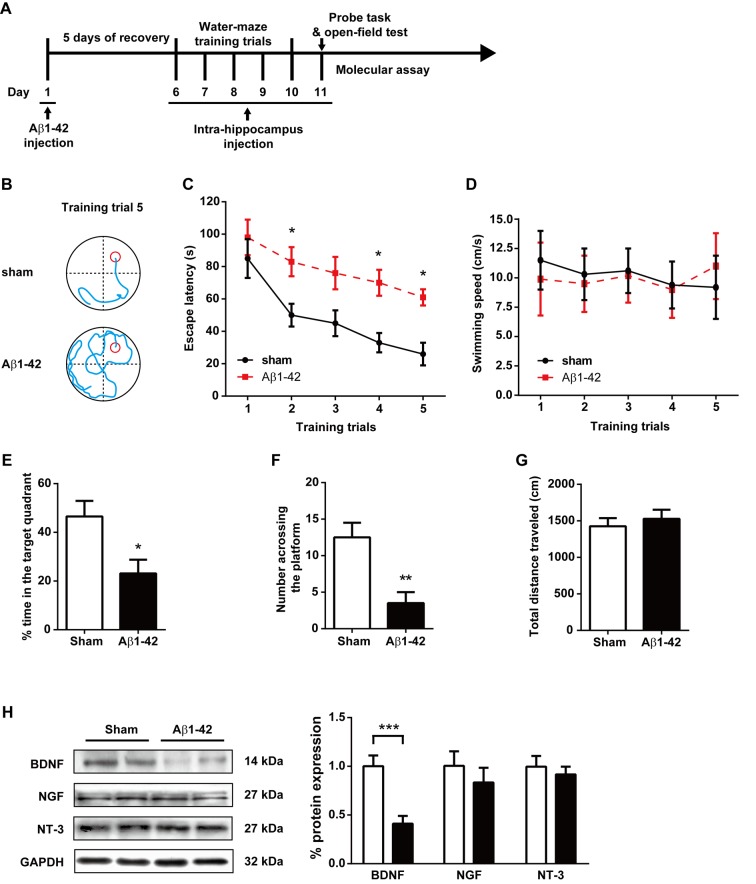
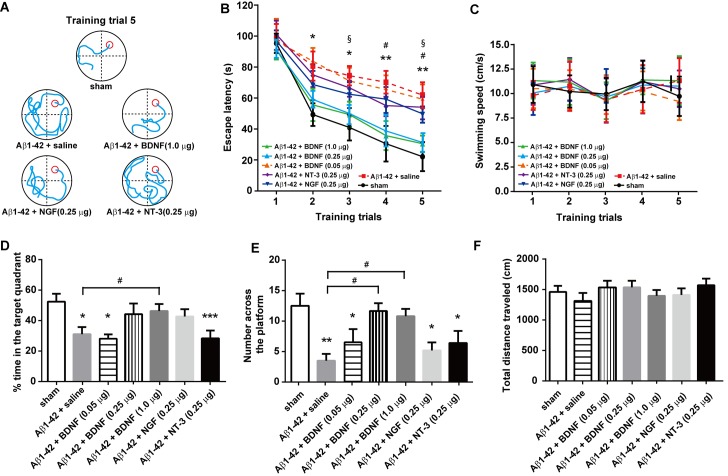
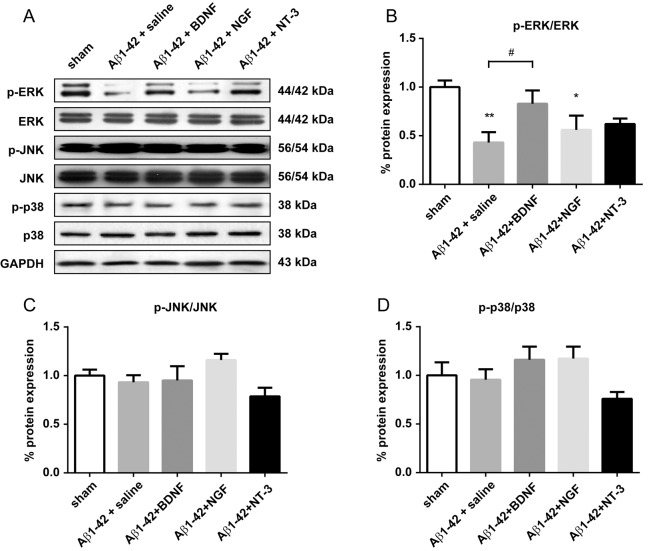
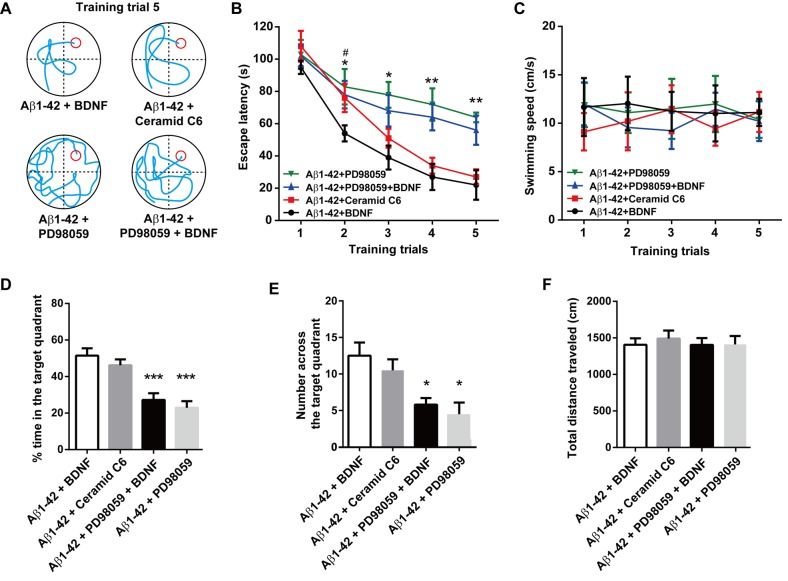
An emerging body of data suggests that the early onset of Alzheimer's disease (AD) is associated with decreased brain-derived neurotrophic factor (BDNF). Because BDNF plays a critical role in the regulation of high-frequency synaptic transmission and long-term potentiation in the hippocampus, the up-regulation of BDNF may rescue cognitive impairments and learning deficits in AD. In the present study, we investigated the effects of hippocampal BDNF in a rat model of AD produced by a ventricle injection of amyloid-β1-42 (Aβ1-42). We found that a ventricle injection of Aβ1-42 caused learning deficits in rats subjected to the Morris water maze and decreased BDNF expression in the hippocampus. Chronic intra-hippocampal BDNF administration rescued learning deficits in the water maze, whereas infusions of NGF and NT-3 did not influence the behavioral performance of rats injected with Aβ1-42. Furthermore, the BDNF-related improvement in learning was ERK-dependent because the inhibition of ERK, but not JNK or p38, blocked the effects of BDNF on cognitive improvement in rats injected with Aβ1-42. Together, our data suggest that the up-regulation of BDNF in the hippocampus via activation of the ERK signaling pathway can ameliorate Aβ1-42-induced learning deficits, thus identifying a novel pathway through which BDNF protects against AD-related cognitive impairments. The results of this research may shed light on a feasible therapeutic approach to control the progression of AD.
Conflict of interest statement
Figures
References
-
- Acosta D, Wortmann M (2009) Alzheimer’s Disease International World Alzheimer Report 2009. Prince, M: 1–92.
-
- Ferri C, Sousa R, Albanese E, Ribeiro W, Honyashiki M (2009) Alzheimer's Disease International World Alzheimer Report 2009. London: Alzheimer’s Disease International.
-
- Selkoe DJ (1999) Translating cell biology into therapeutic advances in Alzheimer's disease. Nature 399: A23–31. - PubMed
-
- Masliah E, Mallory M, Alford M, DeTeresa R, Hansen LA, McKeel DW Jr, et al. (2001) Altered expression of synaptic proteins occurs early during progression of Alzheimer's disease. Neurology 56: 127–129. - PubMed
-
- Selkoe DJ (2002) Alzheimer's disease is a synaptic failure. Science 298: 789–791. - PubMed
Publication types
MeSH terms
Substances
LinkOut - more resources
Full Text Sources
Other Literature Sources
Medical
Research Materials
Miscellaneous
