


Wnt acylation and its functional implication in Wnt signalling regulation
- PMID: 25849919
- PMCID: PMC4445369
- DOI: 10.1042/BST20140249
Wnt acylation and its functional implication in Wnt signalling regulation
Abstract
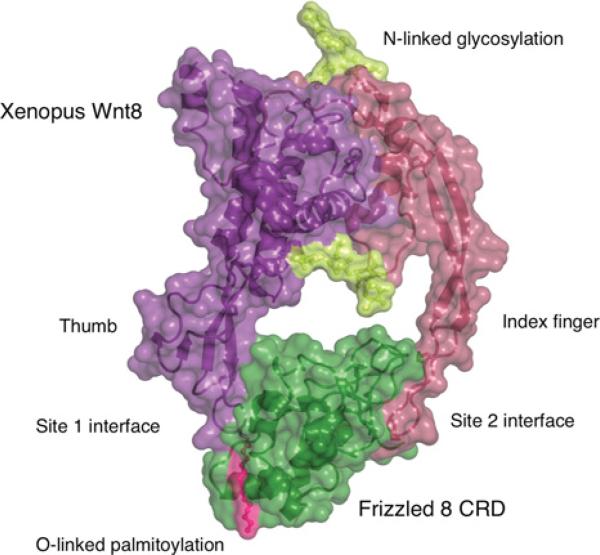
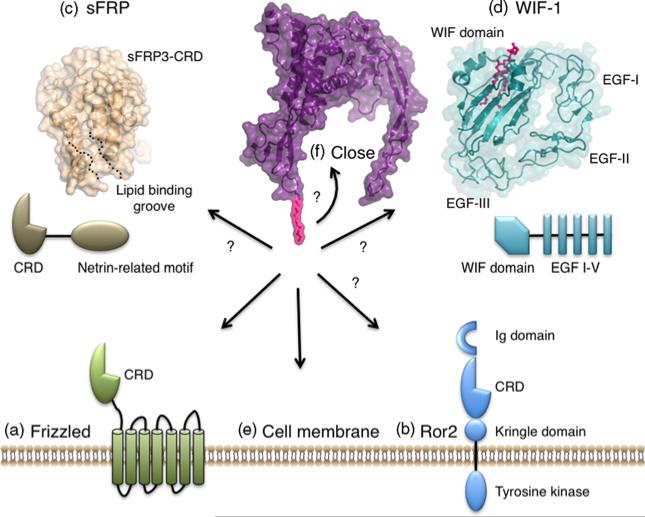
Wnt proteins are conserved signalling molecules that have an essential role in regulating diverse processes during embryogenesis and adult tissue homoeostasis. Wnts are post-translationally modified by palmitoylation, which is essential for Wnt secretion and function. Intriguingly, the crystal structure of XWnt8 in complex with the extracellular domain of the Frizzled 8 cysteine-rich domain (Fzd8-CRD) revealed that Wnts use the fatty acid as a 'hotspot' residue to engage its receptor, which is a unique mode of receptor-ligand recognition. In addition, there are several lines of evidence suggesting that Wnts engage several signalling modulators and alternative receptors by means of fatty acids as a critical contact residue. In the present article, we review our current understanding of Wnt acylation and its functional role in Wnt signalling regulation.
Figures
References
-
- Clevers H, Nusse R. Wnt/beta-catenin signaling and disease. Cell. 2012;149:1192–1205. CrossRef PubMed. - PubMed
-
- Angers S, Moon RT. Proximal events in Wnt signal transduction. Nat. Rev. Mol. Cell. Biol. 2009;10:468–477. PubMed. - PubMed
-
- Willert K, Brown JD, Danenberg E, Duncan AW, Weissman IL, Reya T, Yates JR, 3rd, Nusse R. Wnt proteins are lipid-modified and can act as stem cell growth factors. Nature. 2003;423:448–452. CrossRef PubMed. - PubMed
Publication types
MeSH terms
Substances
Grants and funding
LinkOut - more resources
Full Text Sources
